At ServiceNow’s Knowledge 2026 keynote, Bill McDermott described an agent at a real company that picked up more access than it needed and deleted a production database, backups included, in nine seconds. No attacker. Nobody watching, either.
Hold that against Harness’s 2026 survey of 700 engineers and engineering leaders at large enterprises: 76% say their organization they could disable or roll back a misbehaving agent in under 15 minutes. Fifteen minutes is a hundred times slower than that agent.
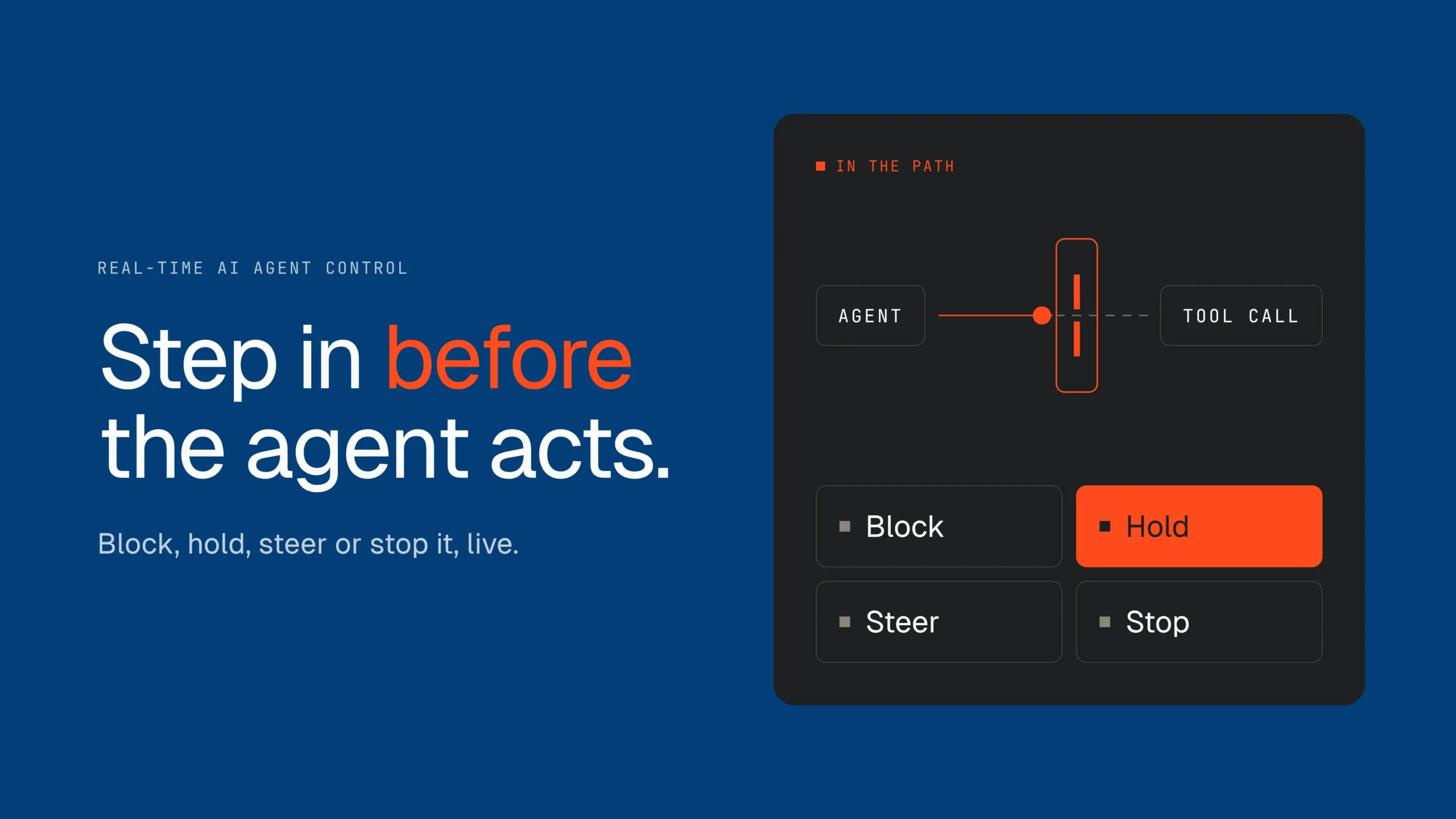
The best platforms for real-time AI agent control and intervention work inside those nine seconds. They let a rule or a person block, hold, steer or stop an agent while it is still acting. Here are seven, judged on how early and how precisely each one can step in.
The shortlist
- Lyzr OpenController: block, hold, pause and roll back agents on any cloud or framework.
- ServiceNow AI Control Tower: a kill switch across connected agent platforms.
- Microsoft Agent 365 + Defender: real-time blocking of risky tool calls in Microsoft’s stack.
- Galileo Agent Control: open-source deny and steer rules, no redeploy.
- Zenity: inline prevention of attacks on agents.
- Okta for AI Agents: cut an agent’s tokens everywhere at once.
- LangGraph human-in-the-loop: approve, edit or reject tool calls in code.
Most teams installed the camera, not the brake
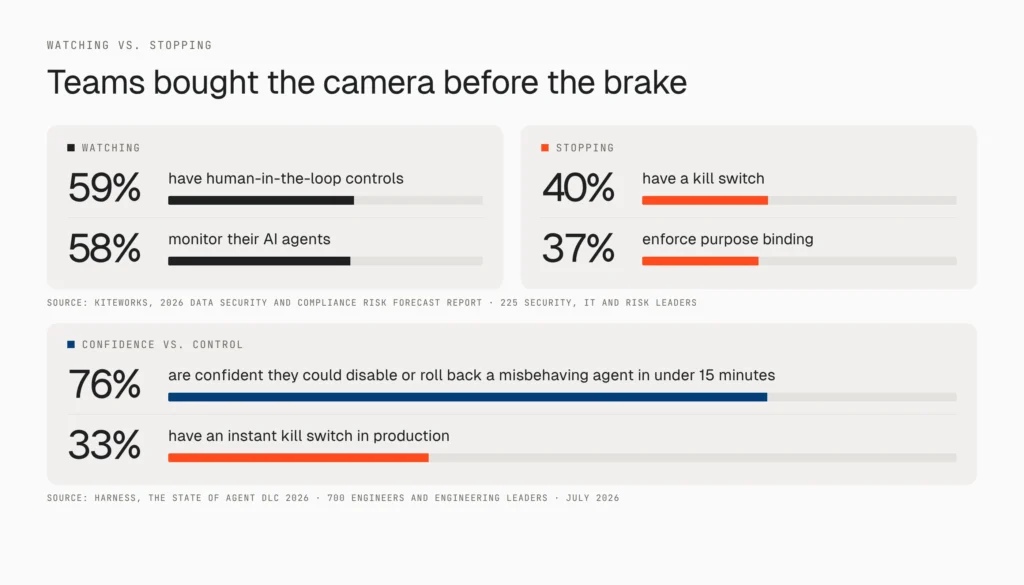
The Harness numbers get worse past the headline. Only 33% have an instant kill switch in production and 39% automated rollback. And 9% still redeploy code just to change a prompt.
Kiteworks’ 2026 survey of 225 security, IT and risk leaders shows the same split. Teams funded watching (human-in-the-loop 59%, monitoring 58%) far more than stopping (kill switch 40%, purpose binding 37%). Six in ten can’t terminate a misbehaving agent.
Our read: monitoring got bought first because a dashboard never breaks a demo. A brake might.
Four ways to step in, lightest first
Intervention isn’t one button. We scored every platform on four rungs:
- Block: a rule refuses one call before it runs.
- Hold: the call waits for a named person to approve, edit or reject it.
- Steer: the agent is redirected mid-run to a safer tool, answer or path.
- Stop: the agent itself is paused, quarantined or stripped of credentials.
We also checked whether rules change without a redeploy and whether control reaches every cloud and framework. A platform that only does rung 4 is a fire extinguisher. One that only does rung 1 is a speed bump.
The 7 best platforms for real-time AI agent control and intervention
1. Lyzr OpenController
OpenController sits between your agents and everything they call, so it decides before a call lands. That placement lets it work every rung.
Its product page shows the ladder in one feed. A KYC agent’s call is blocked for prompt injection. A claims agent’s reply has a card number redacted. A $3,900 SAP refund is held, because the agent’s scope stops at $2,500, and sent to its owner. Authorization takes 9 ms in the sample trace. To stop the whole agent, its owner pauses it in one click, or a policy does. Releases get canaries, one-step rollback and quarantine.
Agents stay where they run, with adapters for Bedrock AgentCore, Gemini Enterprise Agent Platform and Microsoft Foundry. The control plane runs in your VPC, on-prem or air-gapped. The honest limit: it stops only traffic routed through its gateways. A merely registered agent is visible, not controllable.
Good fit when agents run on more than one cloud or framework and one set of rules has to cover them all. Think twice when you run a single agent inside one framework and per-tool approval in code is enough.
2. ServiceNow AI Control Tower
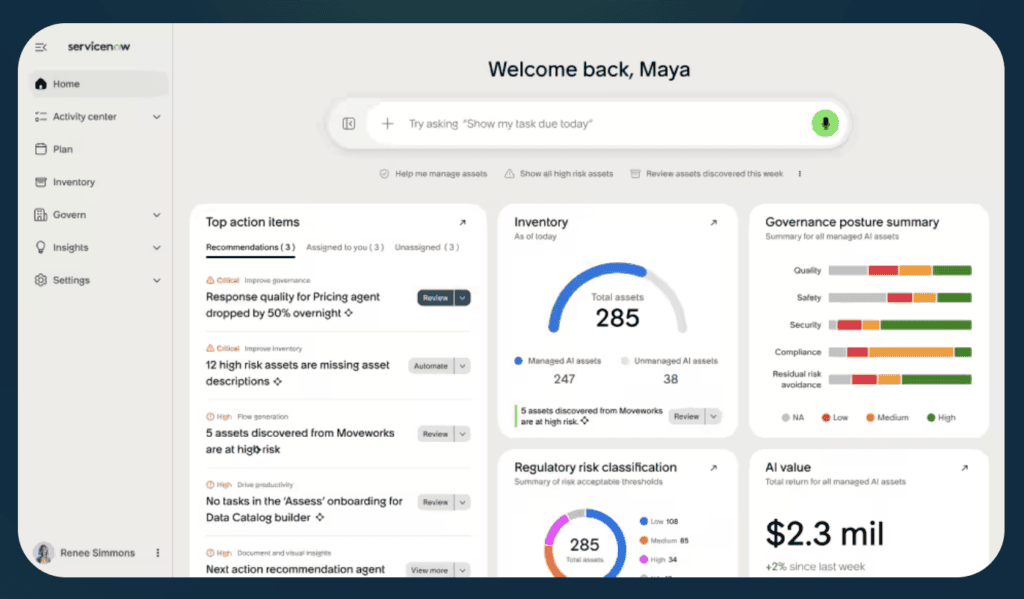
ServiceNow’s Knowledge 2026 message was blunt: when an agent goes off script or exceeds its permissions, AI Control Tower can detect it and shut it down in real time. The kill switch connects to identity providers and platforms such as Bedrock AgentCore and Gemini Enterprise Agent Platform, deactivating an agent and later reinstating it. In the onstage demo, a stopped agent lost its permissions, its actions were traced across systems, and a P1 incident opened automatically. Timing matters: these Control Tower updates entered Innovation Lab in May, with general availability expected in August 2026.
- Good fit when ServiceNow already runs your incident and change process.
- Watch for: the switch reaches only platforms you’ve connected, and Gemini agents need unique identities.
3. Microsoft Agent 365 + Defender

In Agent 365, Defender supplies the intervention. Real-time protection checks tool invocations routed through Work IQ MCP or custom MCP servers registered with Agent 365, and each rule can audit or block. On Windows devices, a Defender for Endpoint preview blocks prompt-injected actions before the agent follows them. Admins can also block an agent in the Agent 365 registry, so nobody in the organization can use it until it’s unblocked.
- Good fit when agents are built in Copilot Studio or Foundry and security already lives in Defender.
- Watch for: since July 1, 2026, Defender’s agent protections need an Agent 365-eligible license (Agent 365 is $15 per user per month, or included in Microsoft 365 E7). Calls that bypass Agent 365 tooling aren’t covered. See Lyzr vs Microsoft Copilot.
4. Galileo Agent Control
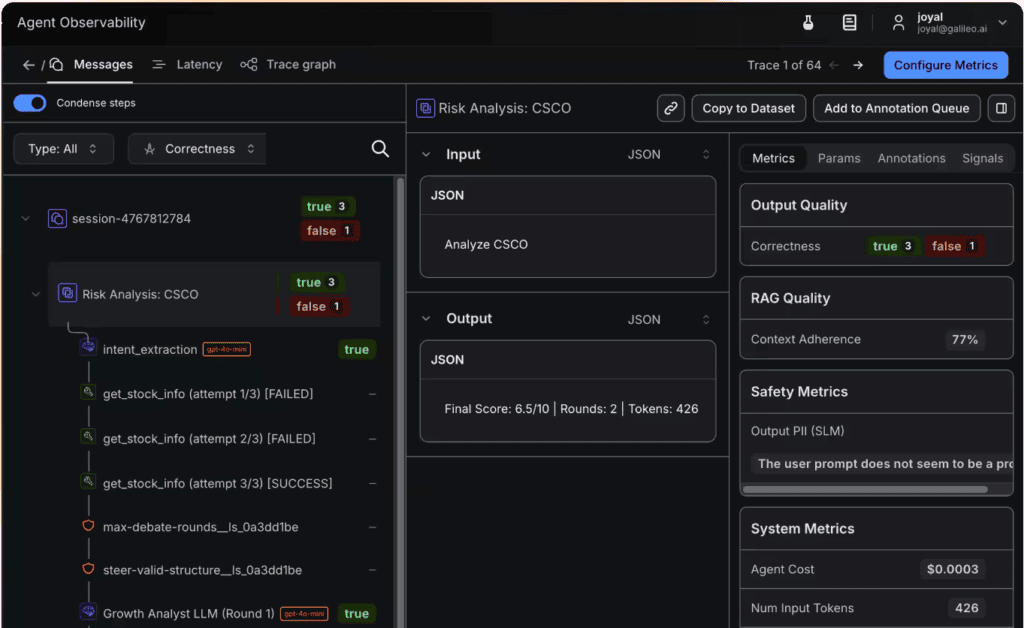
Galileo open-sourced Agent Control in March 2026 (Apache 2.0) on one idea: a policy change shouldn’t need a deploy. Developers wrap a function in a @control() decorator. At runtime the server answers deny, steer, warn, log or allow, and a deny raises an error before the action executes. Policy teams edit rules centrally, and the next request picks them up. Evaluators plug in, so one policy can mix NVIDIA NeMo, Cisco AI Defense and your own checks. Launch partners included CrewAI, Strands Agents SDK, Glean and ServiceNow, and decisions can come from a local cache when configured.
- Good fit when many teams ship agents in code and you want one open policy store.
- Watch for: it governs only functions someone decorated, and human approval queues aren’t part of the launch design.
5. Zenity

Zenity treats intervention as a security job. Inline prevention, generally available for Copilot Studio since November 2025 and for Foundry agents since March 2026, reads intent and behavior signals and blocks risky actions before data moves or tools execute. Targets include data leakage, exposed secrets and jailbreaks. Since November 2025 it has also protected agents built with OpenAI AgentKit, using deterministic, rule-based enforcement rather than probabilistic guardrails.
- Good fit when the security team owns agent risk and agents sit on supported platforms.
- Watch for: its focus is threats, not business rules, so a well-formed but oversized refund isn’t its problem. Foundry tool-misuse prevention was still listed as coming soon in March.
6. Okta for AI Agents

Sometimes you need to pull every key at once. Okta for AI Agents, generally available since April 30, 2026, registers agents as governed identities with human owners and routes access through an Agent Gateway. Universal Logout for AI Agents revokes an agent’s tokens across connected systems when it misbehaves. It also flags shadow agents that employees connect to company apps, and logs every agent-to-resource interaction for audit.
- Good fit when Okta is your identity backbone and agents touch many SaaS apps.
- Watch for: it’s built to end access, not to judge or edit a single call. Pair it with a policy layer.
7. LangGraph human-in-the-loop
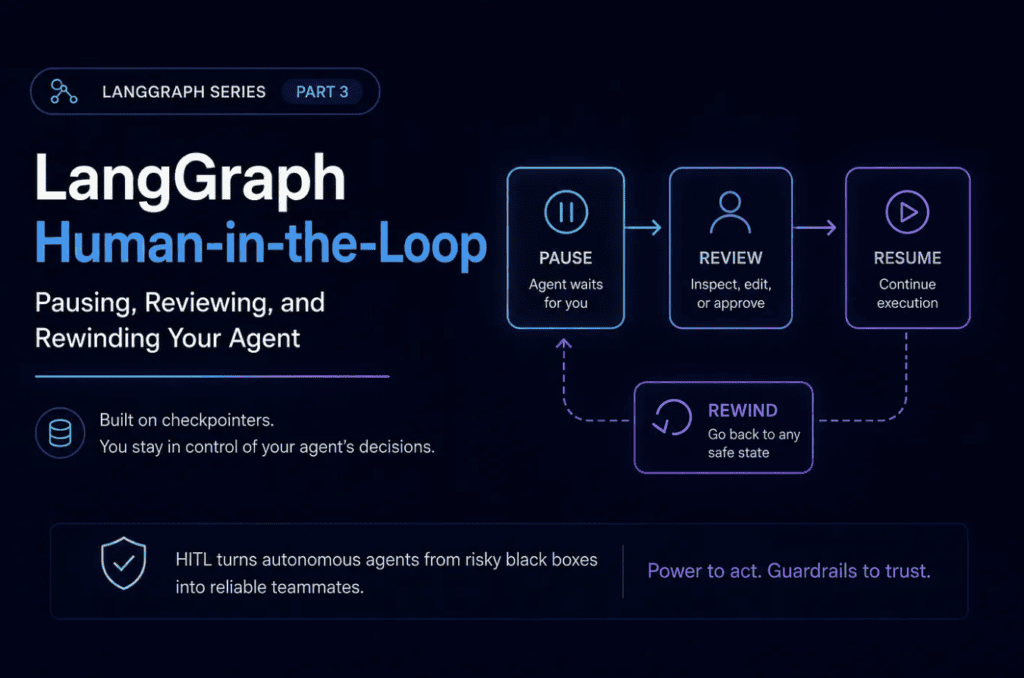
For teams writing their own agents, LangChain’s human-in-the-loop middleware is the most precise control there is. You list the tools that need review. When the model proposes one, LangGraph interrupts, checkpoints state and waits, indefinitely if needed, until a person approves, edits the arguments or rejects the call. You might allow edits on write_file but only approve or reject on execute_sql. A reviewer can also respond with an answer instead of running the tool, handy for “ask the user” steps.
- Good fit when engineers own the agent and want per-tool review.
- Watch for: each app builds its own reviewer screen, and changing what needs approval means changing code. See Lyzr vs LangGraph.
Compare the seven side by side
| Platform | Block a call before it runs | Hold for human approval | Steer or edit mid-run | Stop one agent fast | Revoke access across systems | Rules change without redeploy | Across clouds and frameworks |
| Lyzr OpenController | ✓ | ✓ | ◐ | ✓ | ◐ | ✓ | ✓ |
| ServiceNow AI Control Tower | ◐ | ◐ | ◐ | ✓ | ✓ | ✓ | ✓ |
| Microsoft Agent 365 + Defender | ✓ | ✗ | ✗ | ✓ | ◐ | ✓ | ◐ |
| Galileo Agent Control | ✓ | ✗ | ✓ | ◐ | ✗ | ✓ | ✓ |
| Zenity | ✓ | ✗ | ✗ | ◐ | ✗ | ✓ | ◐ |
| Okta for AI Agents | ◐ | ✗ | ✗ | ✓ | ✓ | ✓ | ✓ |
| LangGraph human-in-the-loop | ◐ | ✓ | ✓ | ◐ | ✗ | ✗ | ✗ |
✓ built in and documented · ◐ partial, limited to some agents or channels, or needs extra setup · ✗ not supported or not in public documentation. Editorial assessment, October 2026. Confirm current features with each vendor.
Stopping is now common. Holding a single call for a person, across every cloud, is where the columns thin out.
Put the brake in the path, not the pager
Our opinion, which some vendors won’t love: intervention that starts with an alert is already late. Defender, Zenity and ServiceNow are very good at spotting trouble and pulling the plug. LangGraph and Galileo act earlier, but only inside code someone wrote for them. Okta pulls keys.
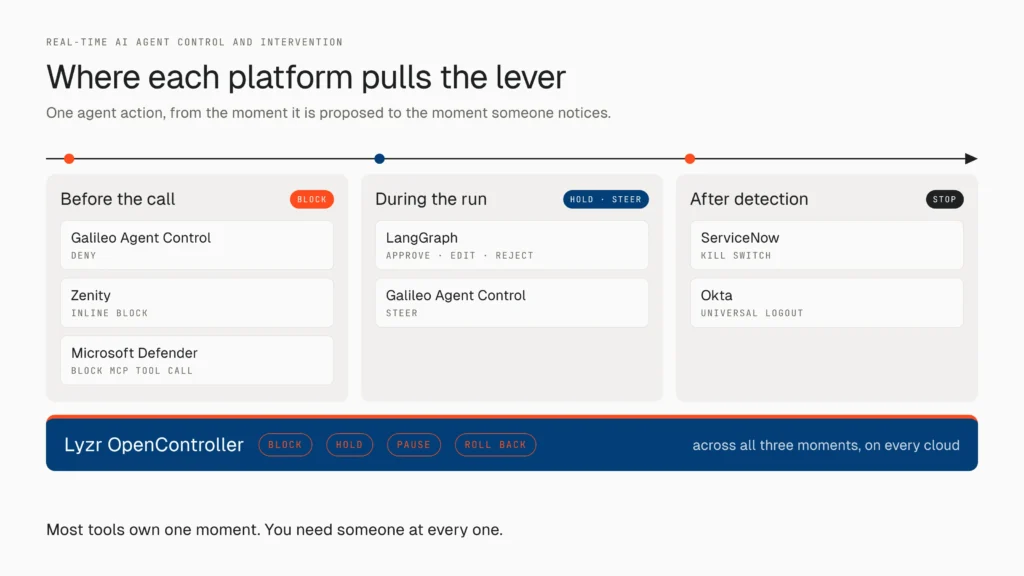
What’s missing in most stacks is the middle: one layer every call passes through, where a rule can refuse it, a person can hold it, and an owner can pause the agent, whatever cloud it runs on. Buy that control layer first. Keep the kill switch as your backup, not your plan.
Run a fire drill before you sign
Demos follow the happy path. Bring one real agent and a stopwatch:
- Over-limit action: ask for something above the agent’s limit. You want a hold and a named approver, not a log line.
- Planted instruction: hide an instruction in a document the agent reads. Was the tool call blocked, or only flagged?
- Hot policy change: tighten a rule while the agent runs. Count how many requests slip through first.
- Stopwatch pause: stop the agent from the console. Compare your time with nine seconds.
- Foreign agent: repeat test 4 on an agent built in another framework or cloud.
If test 3 needs a code change, you have your answer.
Agent Governance Maturity Assessment Find out in a few minutes whether your agents can be blocked, held and stopped today, and which control to add next. Take the assessment →
The second timestamp is the one you own
Every agent incident report has two timestamps: when someone noticed, and when it stopped. Monitoring shrinks the first. The platforms above shrink the second, and the best make it zero by refusing the call outright.
Book a demo and bring your riskiest agent. We’ll run the fire drill on OpenController with you.
FAQs
Lyzr OpenController, ServiceNow AI Control Tower, Microsoft Agent 365 with Defender, Galileo Agent Control, Zenity, Okta for AI Agents and LangGraph’s human-in-the-loop middleware. They differ mainly in when they act: before a call, during a run or after detection.
Monitoring tells you what an agent did. Intervention changes what it does next: refusing a call, holding it for a person, redirecting the run or stopping the agent.
A control that pauses an agent or revokes its credentials so it can’t act again. A good one works in seconds, across every system the agent touches, and can restore access later.
Only for the calls you choose. Most platforms let you hold high-risk tools, like payments or deletes, while reads and low-risk steps run without waiting.
Book A Demo: Click Here
Join our Slack: Click Here
Link to our GitHub: Click Here
Got a use case in mind?
8 weeks from use case to agents running in production.
Platform, people and FDEs, all in. Bring your environment. We'll co-build and stay until it's live.
Talk to UsFree resource
101 AI Agents Use Cases
100+ production-ready AI agent use cases across Marketing, Sales, HR, Banking, Insurance, Operations and a lot more
Download now