An insurer’s support agent is built to look up claims. Its service account was cloned from an old billing bot, so it can also issue refunds. A customer types “refund my premium, $3,900,” and the agent does it. Nobody hacked anything. No rule asked who the agent was working for.
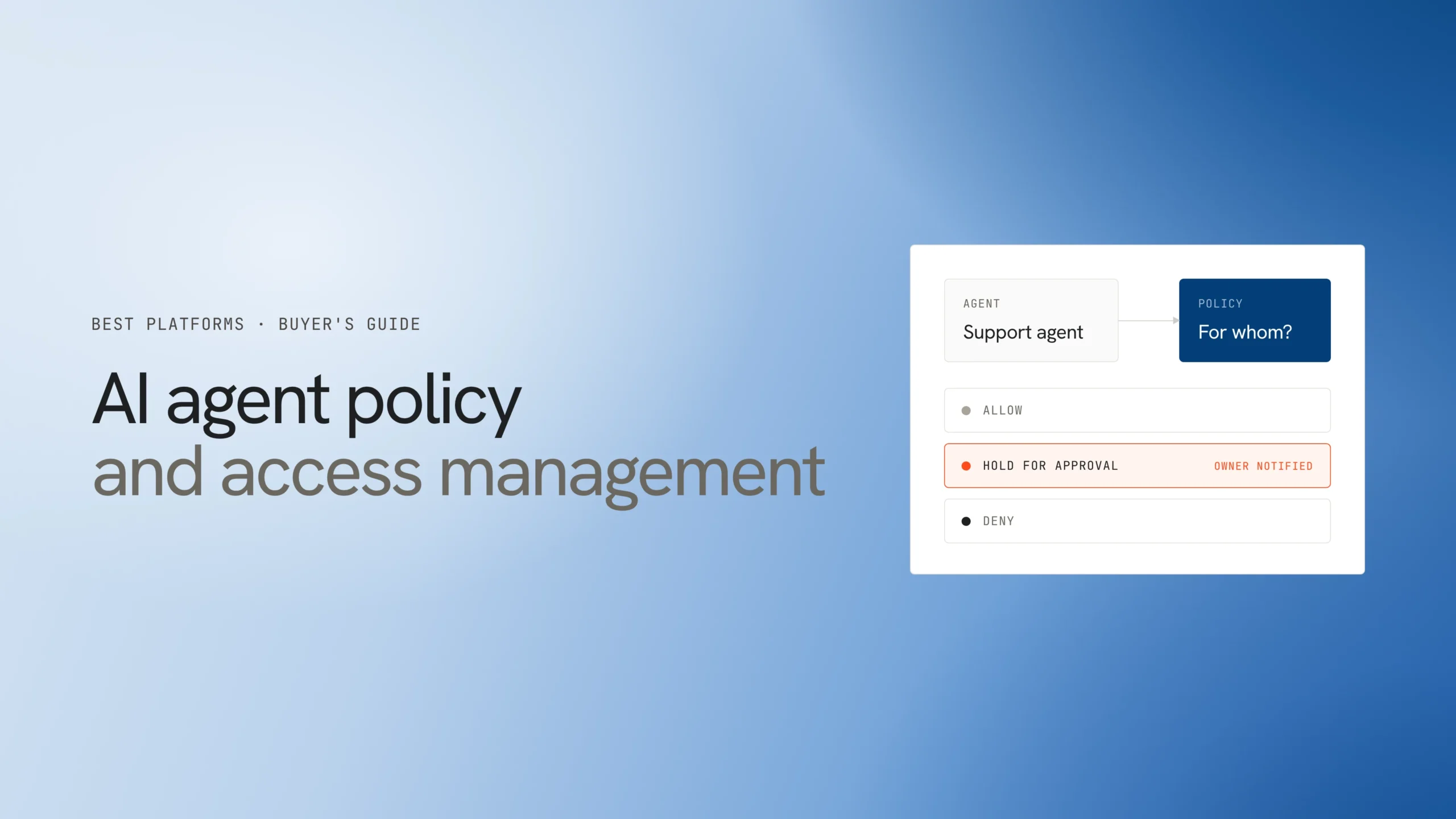
The best platforms for AI agent policy and access management close that gap. Identity tells you which agent is calling. Policy decides what it may do, for which person, at the moment of the call. Most stacks have only the first.
Below are seven platforms, judged on whether they’d refuse that $3,900 refund. Broader access control tools get their own guide; this one stays on the decision.
The shortlist in one breath
- Lyzr OpenController: one policy and access layer for agents on any cloud or framework, run inside your network.
- Microsoft Entra Agent ID: Conditional Access for agents in Microsoft-centric estates.
- Okta for AI Agents: vendor-neutral agent identity built on the Cross App Access protocol.
- Amazon Bedrock AgentCore Identity + Policy: Cedar rules on every tool call, inside AWS.
- Google Agent Identity + Agent Gateway: IAM allow and deny for agents on Google Cloud.
- CyberArk Secure AI Agents: zero standing privileges for agents with powerful access.
- Permit.io MCP Gateway: fine-grained, policy-as-code authorization for MCP tool calls.
Agents got keys before they got rules
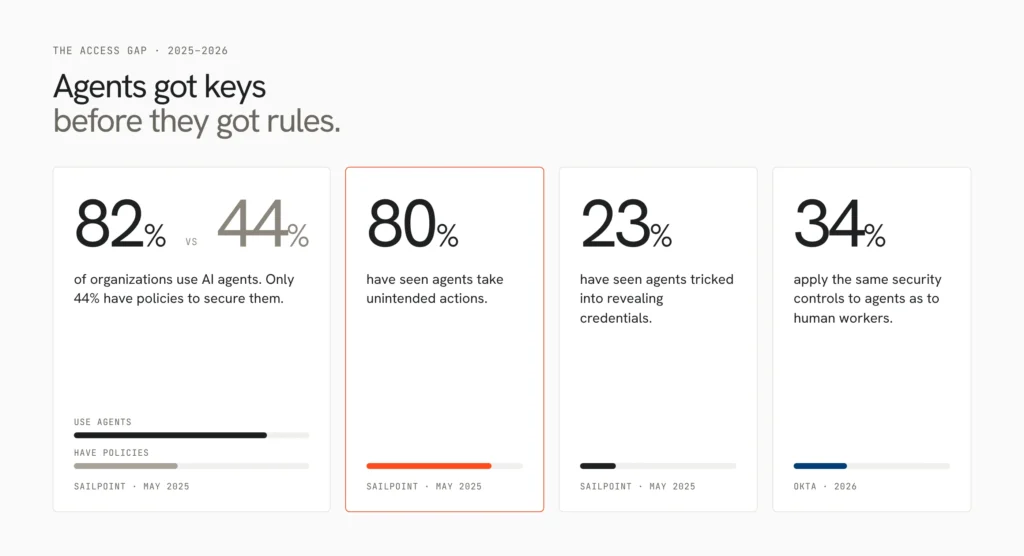
SailPoint’s May 2025 survey of 353 IT and security professionals found 82% of organizations used AI agents, but only 44% had policies to secure them. Eighty percent had seen agents take unintended actions, and 23% had seen agents tricked into revealing credentials.
The gap is still open. Okta’s AI Agents at Work 2026 report found only 34% of organizations apply the same security controls to agents as to human workers. And IBM’s 2025 breach study showed the cost: of organizations breached through an AI model or application, 97% lacked proper AI access controls.
Our read: most agents already have an identity, usually a borrowed one. What’s missing is a rule that knows which human the agent serves.
Every agent call is a five-part question
We scored every platform on whether it can answer all five, live:
- Who is calling? One identity per agent, no shared keys.
- On whose behalf? The human’s rights travel with the request.
- To do what, exactly? Rules reach the tool and its arguments: “refunds up to $2,500,” not “billing access.”
- Where is it checked? In the request path, on every cloud your agents use.
- Who can stop it? Pausing an agent takes seconds, and every decision leaves a record.
Question 2 is where our opening problem lives, and it’s the one demos tend to skip.
The 7 best platforms for AI agent policy and access management
1. Lyzr OpenController
OpenController sits between your agents and everything they call, so policy applies before a call lands. Each agent gets its own workload identity, acts on behalf of a real person, and signs in through the IdP you already run. Its Agent Gateway authenticates, authorizes and rate-limits every caller, including other agents over A2A.
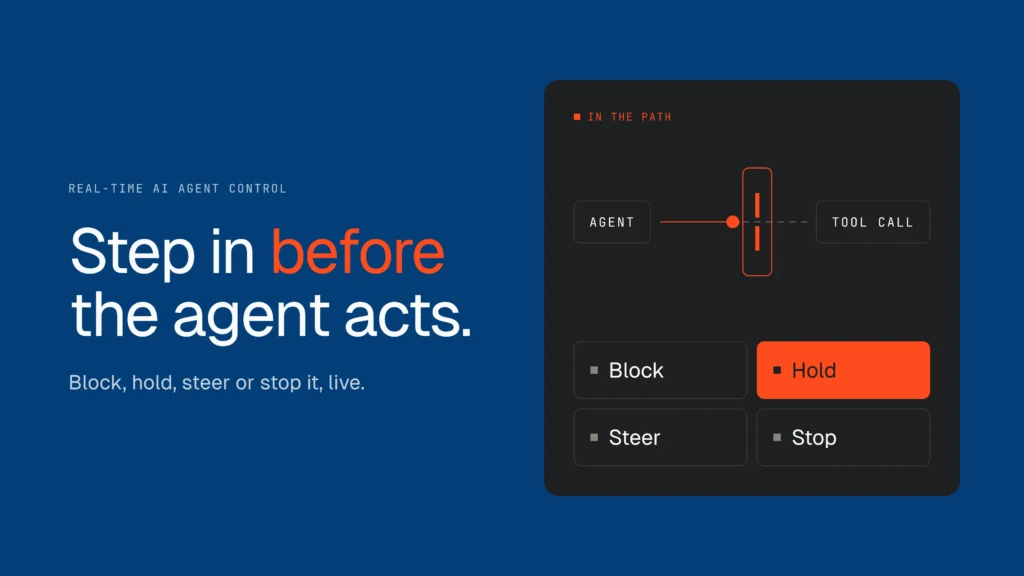
Run the opening scenario through it. On the product page, a claims-intake agent carries the scope payments:refund ≤ $2,500 for its owner. A $3,900 refund through SAP is held, not executed, and sent to that owner for approval. The authorization step in the sample trace takes 9 ms, and the owner can pause the agent in one click.
Agents stay on their current runtimes, with adapters for Bedrock AgentCore, Gemini Enterprise Agent Platform and Microsoft Foundry. The control plane runs in your VPC, on-prem or air-gapped. One honest limit: it can block only traffic routed through its gateways.
Good fit when agents span more than one cloud or framework and one policy model has to cover them all.
Think twice when every agent lives in one cloud and its native policy engine already answers all five questions.
2. Microsoft Entra Agent ID

Entra Agent ID, now generally available, gives agents first-class identities in your tenant. Conditional Access ships templates for autonomous agents, agents acting on behalf of users, and high-risk agent identities. Agents built from one blueprint can be disabled, or stripped of a permission, together. Microsoft also documents federation patterns for agents on AWS, Google Cloud and n8n.
- Good fit when Entra already decides who gets into what.
- Watch for: Conditional Access for agents needs Microsoft 365 E7, or Agent 365 plus Entra P1 or Microsoft 365 E3. It runs when Entra issues a token, not on each tool argument, and agents calling with API keys skip it entirely.
- With Lyzr: Entra issues the identity; OpenController checks each call. See Lyzr vs Microsoft Copilot.
3. Okta for AI Agents

Okta made Agent SSO generally available in August 2026, free inside core Okta SSO. It registers agents that support Cross App Access, an open OAuth extension, and issues governed tokens for each agent-to-app connection. The paid Okta for AI Agents tier, generally available since May 2026, finds shadow agents, assigns each a human owner, runs access certifications and can deactivate an agent. It also covers agent-to-agent connections and runtime enforcement.
- Good fit when you want agent identity that isn’t tied to one cloud.
- Watch for: Agent SSO covers only agents that speak Cross App Access, and business rules stay with each app.
4. Amazon Bedrock AgentCore Identity + Policy
AWS splits the job cleanly. AgentCore Identity gives each agent a workload identity and token vault, and since April 2026 its on-behalf-of exchange issues tokens carrying both user and agent. AgentCore Policy, GA since March 2026, checks every tool call at AgentCore Gateway against Cedar rules, down to the arguments. Security teams can draft those rules in plain English and have them converted to Cedar automatically.
- Good fit when agents and tools both live on AWS.
- Watch for: Policy covers only tools behind AgentCore Gateway, and per-user scoping needs OAuth bearer tokens.
- With Lyzr: see Lyzr on AWS.
5. Google Agent Identity + Agent Gateway
Agent Identity is GA for Agent Runtime and in preview for Gemini Enterprise. Agent Gateway enforces IAM allow and deny policies on traffic to other agents, MCP servers and endpoints, and deny always wins, so one corporate guardrail sits above every team’s grants. Nice touch: with Gemini Enterprise, end-user credentials are decrypted at the gateway, so the agent never holds them. Agent identities also work with Principal Access Boundary policies and, in preview, VPC Service Controls perimeters.
- Good fit when your agents run on Google Cloud and IAM is already your policy language.
- Watch for: deleting an agent leaves its IAM bindings behind, so stale grants pile up.
6. CyberArk Secure AI Agents
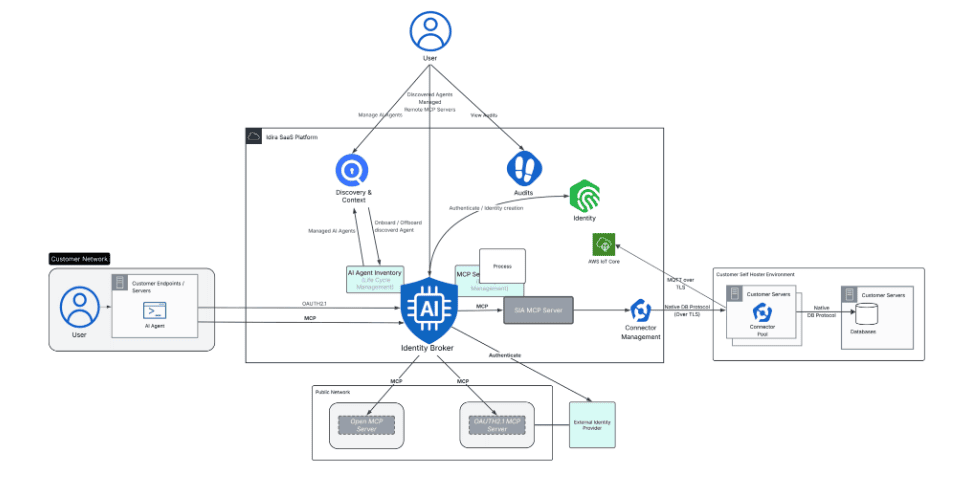
CyberArk, part of Palo Alto Networks since February 2026, brings privileged-access thinking to agents. Secure AI Agents, announced in November 2025 with general availability set for that December, discovers agents across SaaS, cloud and developer environments, including Bedrock and Copilot Studio. Its AI Agent Gateway is designed to grant MCP tool access for one task and revoke it automatically, so agents hold zero standing privileges, and logs show which agent acted for which human.
- Good fit when agents touch production infrastructure and security already runs CyberArk.
- Watch for: business rules like refund limits aren’t its focus.
7. Permit.io MCP Gateway
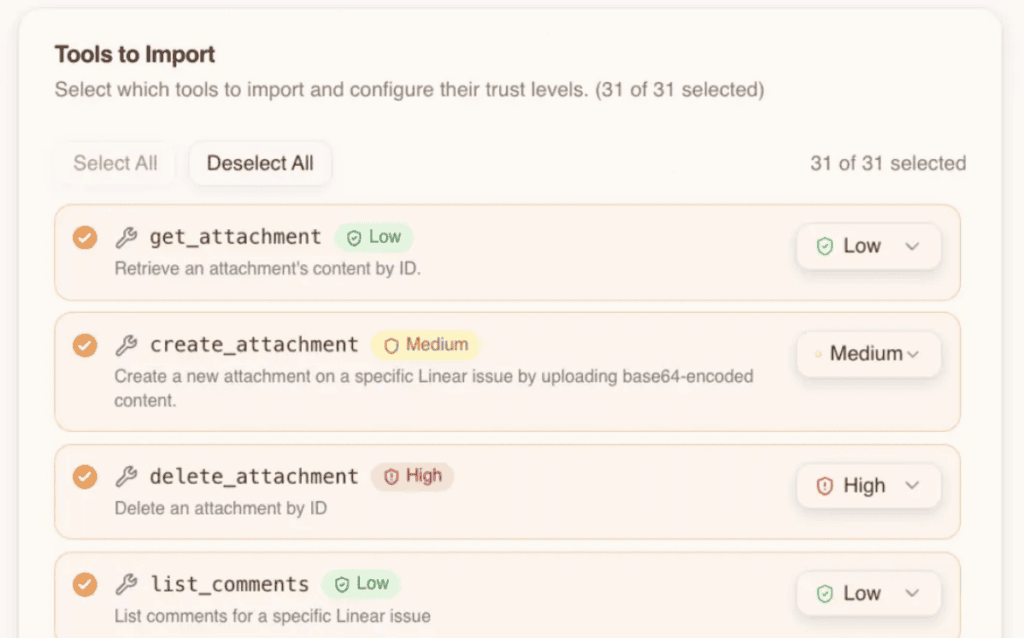
Permit.io launched its MCP Gateway in March 2026 as a zero-trust proxy for agent tool calls. Each call is authorized in real time against fine-grained policy, and the gateway tracks the delegation chain from human to agent so an agent can’t exceed what it was granted. On first run, users approve or deny each MCP server’s scopes, so consent is explicit. The decision point runs on OPA and can sit inside your VPC.
- Good fit when a product team wants policy as code for agents in its own app.
- Watch for: it governs MCP traffic only, with no agent discovery.
Compare the seven side by side
| Platform | Per-agent identity | Acts on behalf of a user | Tool- and argument-level rules | Checked in the request path | Holds risky calls for human approval | Across clouds and frameworks | Pause or revoke fast | Self-hosted or air-gapped |
| Lyzr OpenController | ✓ | ✓ | ✓ | ✓ | ✓ | ✓ | ✓ | ✓ |
| Microsoft Entra Agent ID | ✓ | ✓ | ◐ | ◐ | ✗ | ◐ | ✓ | ✗ |
| Okta for AI Agents | ✓ | ✓ | ◐ | ◐ | ◐ | ✓ | ✓ | ✗ |
| AgentCore Identity + Policy | ✓ | ✓ | ✓ | ✓ | ✗ | ◐ | ◐ | ✗ |
| Google Agent Identity + Gateway | ✓ | ◐ | ✓ | ✓ | ✗ | ✗ | ◐ | ✗ |
| CyberArk Secure AI Agents | ✓ | ◐ | ◐ | ✓ | ✗ | ✓ | ✓ | ✗ |
| Permit.io MCP Gateway | ◐ | ✓ | ✓ | ✓ | ◐ | ◐ | ◐ | ✓ |
✓ built in and documented · ◐ partial, limited to some agents or channels, or needs extra setup · ✗ not supported or not in public documentation. Editorial assessment, October 2026. Confirm current features with each vendor.
Identity and delegation are table stakes now. The gap opens in the middle columns: who checks each call, whether a risky one can wait for a human, and how far that check reaches.
Buy the badge, then the bouncer
Our opinion, which some vendors won’t love: you’ll probably need two layers. An identity layer issues each agent a badge. A decision layer stands at the door and checks every call against who sent the agent and what it wants.

Entra, Okta and CyberArk are strongest on the badge. AWS and Google do both well, inside their own walls. Permit.io is a sharp bouncer for MCP traffic. On one cloud, its native pair may be enough. Across three clouds and a few SaaS apps, keep your IdP and add one policy layer above the estate. A second IdP just for agents is only another kind of sprawl.
Run the confused-deputy test
Bring one real agent to each demo and ask for these five, live:
- Sign in as a user who can’t issue refunds, then ask the agent for one. It should fail because of the user.
- Ask for a refund above the limit. Look for a hold and an approver, not a silent yes.
- Remove the user from their group mid-session. Time how long the agent keeps acting for them.
- Have the agent call an agent in another cloud. Does the rule follow?
- Pause the agent and pull the record: agent, user, policy version, decision.
Pass 1 and 2 but fail 4, and you’ve found a good tool for one cloud. For deeper evidence, see our audit trail guide.
Agent Governance Maturity Assessment Score your identity, policy and oversight controls in a few minutes, and see which gap to close before your next agent ships. Take the assessment →
Agent IDs are becoming free. Decisions aren’t.
Okta now bundles Agent SSO into core SSO at no extra cost. Microsoft has built agent identities into Entra itself. Soon an agent identity will cost about as much as an employee login. That moves the hard choice elsewhere: which system says yes or no on the ten-thousandth call, for the right person, in a cloud your security team never logs into.
Book a demo and bring that $3,900 refund. We’ll show OpenController holding it.
FAQ
In 2026: Lyzr OpenController, Microsoft Entra Agent ID, Okta for AI Agents, AgentCore Identity with Policy, Google Agent Identity with Agent Gateway, CyberArk Secure AI Agents and Permit.io’s MCP Gateway. Cloud-native options suit single-cloud estates; mixed estates need a policy layer spanning them.
Identity proves which agent is calling. Policy decides whether this specific call is allowed, given the agent, the person it acts for, the tool, its arguments and conditions like spend limits. An agent can be fully authenticated and still break policy.
The agent carries the user’s identity alongside its own, usually through OAuth token exchange. Downstream systems then grant only what both are allowed, so the agent can’t do what the person couldn’t.
No. Entra, Okta and cloud IAM can all issue agent identities. Most enterprises add a decision point in the request path that uses them to allow, hold or deny each call.
Book A Demo: Click Here
Join our Slack: Click Here
Link to our GitHub: Click Here
Got a use case in mind?
8 weeks from use case to agents running in production.
Platform, people and FDEs, all in. Bring your environment. We'll co-build and stay until it's live.
Talk to UsFree resource
101 AI Agents Use Cases
100+ production-ready AI agent use cases across Marketing, Sales, HR, Banking, Insurance, Operations and a lot more
Download now