The Agent Development Lifecycle: What Actually Happens After the AI Demo Works
The First AI Agent Usually Gets Built Faster Than Expected. That’s honestly what surprises most teams.
A few prompts get added. A model gets connected. Some tools are plugged in. Memory gets configured.
And suddenly the agent works. The demo looks great.Everyone gets excited.
Then someone asks:
“Okay… how do we actually run this in production?”
That’s usually the moment the conversation changes completely.
Because building the agent turns out to be only one small part of the problem.
The harder part is everything that comes after:
- managing changes
- handling deployments
- monitoring behavior
- coordinating across teams
- maintaining governance
- avoiding operational chaos
This is where the Agent Development Lifecycle becomes important.
And honestly, this is the layer most teams underestimate initially.
AI Agents Are Starting to Look More Like Software Systems
A year ago, most AI agents were still experimental. They mostly lived inside innovation teams and lightweight internal pilots.

Today, that’s changing quickly. AI agents are increasingly connected to customer operations, internal workflows, finance systems, procurement processes, compliance reviews, and support automation.
As their role inside enterprises expands, expectations are changing too. Teams no longer just want AI agents that can complete tasks or generate responses.
They need agents that are reliable during production use, governable across teams, maintainable over time, deployable through structured workflows, and auditable when something changes or fails.
And those requirements introduce an entirely new operational layer.
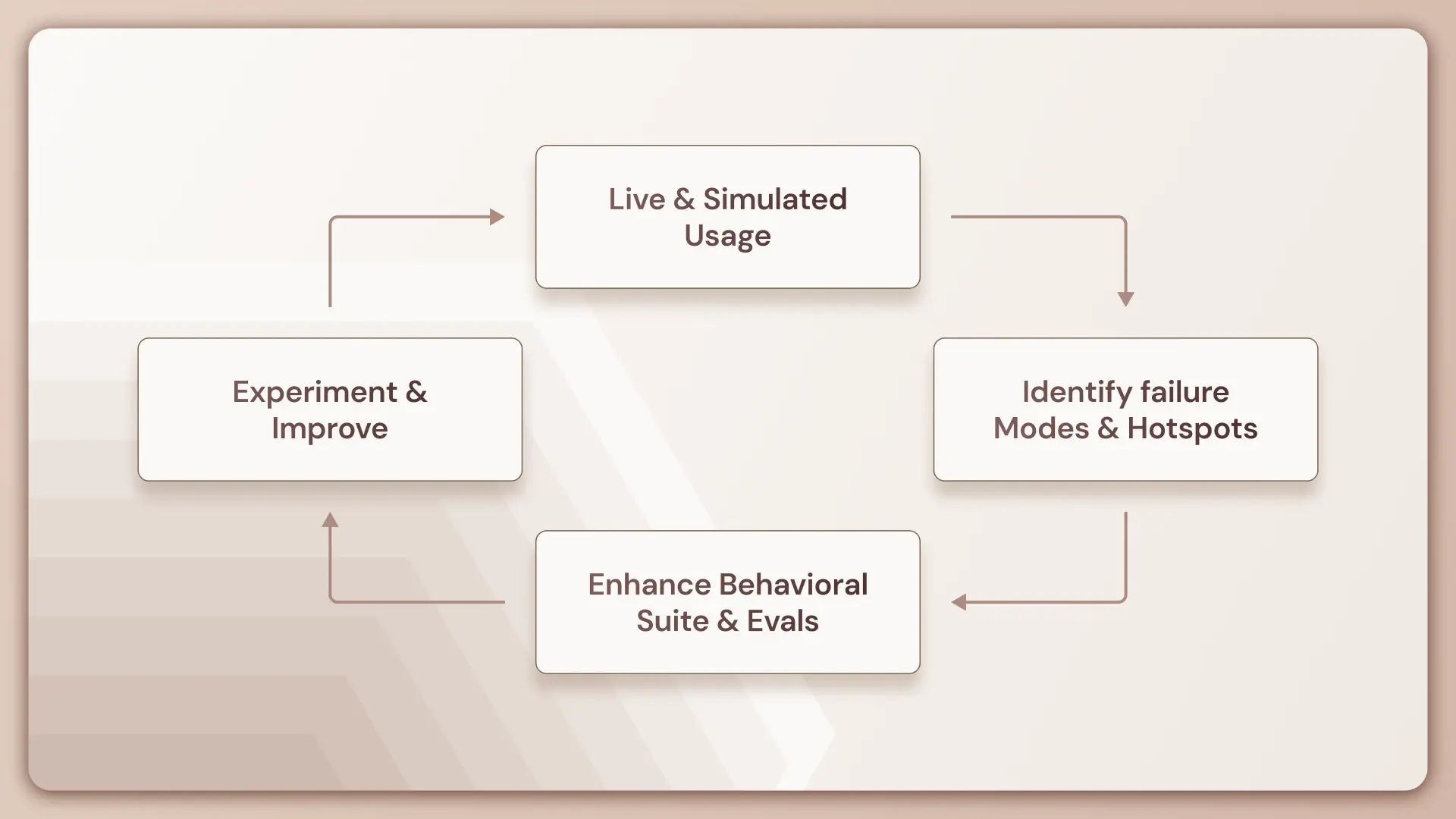
What the Agent Development Lifecycle Actually Looks Like?
Most people think AI development starts and ends with prompts.
In reality, production AI systems go through a much longer lifecycle.
| Stage | What Teams Focus On | What Usually Becomes Difficult |
| Design | Defining workflows and goals | Handling permissions and boundaries |
| Development | Building prompts and orchestration | Managing constant changes |
| Testing | Validating outputs | Handling edge cases consistently |
| Deployment | Moving agents into production | Versioning and rollback |
| Monitoring | Tracking reliability | Understanding failures |
| Governance | Adding controls and approvals | Maintaining auditability |
| Iteration | Improving workflows | Coordinating across teams |
The interesting part is this:
Most AI tooling today focuses heavily on only one phase:
development.
But operational complexity usually appears much later.
“The Agent Worked in Staging” Doesn’t Mean Much Anymore
This is becoming a very common problem.
The prototype works perfectly.
Then production happens.
And suddenly:
- prompts evolve weekly
- workflows expand rapidly
- multiple developers start editing logic
- governance requirements appear
- deployments become risky
The operational surface area grows extremely fast.
Here’s what that transition usually looks like inside enterprises:
| During Prototyping | During Production |
| One developer owns the workflow | Multiple teams collaborate |
| Prompt edits happen manually | Changes require review |
| Failures are acceptable | Reliability matters |
| Governance is ignored | Auditability becomes mandatory |
| One environment exists | Staging + production workflows appear |
| Memory is lightweight | Long-term context grows rapidly |
This is the point where teams realize: AI agents need operational discipline. Not just orchestration.
The Real Problem Isn’t Building the Agent
It’s managing constant change.
Because AI agents evolve much faster than traditional applications. Prompts change. Policies shift. Memory expands. Tools get replaced. Models change. Workflows get rewritten. Without structured lifecycle management, things become difficult to track surprisingly quickly.
And this creates some very real operational problems:
| Problem | What Starts Happening |
| No version control | Nobody knows what changed |
| Manual deployments | Rollback becomes risky |
| Weak governance | Audit gaps appear |
| Runtime-heavy workflows | Collaboration becomes messy |
| Framework lock-in | Portability becomes difficult |
This is why lifecycle management is becoming such a major topic in enterprise AI.
Testing AI Agents Is Much Harder Than Teams Expect
Traditional software testing focuses heavily on deterministic behavior.
AI agents don’t behave that way.
The challenge isn’t only:
“Did the workflow execute?”
| Testing Area | What Teams Need to Validate |
| Reasoning Consistency | Whether the agent behaves reliably across scenarios |
| Memory Retrieval | Whether the right context is retrieved accurately |
| Policy Adherence | Whether workflows follow defined rules and controls |
| Failure Handling | Whether the agent fails safely during errors |
| Output Compliance | Whether responses remain compliant and appropriate |
| Evaluation Systems | Continuous performance validation |
| Regression Testing | Detecting behavior changes after updates |
| Observability | Monitoring workflows and failures |
| Workflow Simulation | Testing real-world execution scenarios |
| Approval Checkpoints | Reviewing changes before deployment |
Without these layers, production deployments become difficult to trust consistently.
Deployment Is Quietly Becoming the Hardest Layer
Most AI conversations still focus heavily on model intelligence.
But operationally, deployment is becoming the real bottleneck.
Because deploying AI agents introduces challenges traditional software didn’t fully have:
- prompt versioning
- memory migrations
- workflow rollback
- orchestration updates
- model switching
- policy enforcement
And most teams are still managing these workflows manually.
That becomes difficult very quickly at scale.
This Is Where Git-Native AI Operations Start Making Sense
This is also why Git-native AI infrastructure is gaining attention.
Because engineering teams already know how to manage operational complexity using:
- Git
- pull requests
- branching
- rollback
- CI/CD workflows
- approvals
The question many teams are now asking is:
“Why aren’t AI agents managed the same way?”
That’s the exact problem GitAgent is solving.
GitAgent Treats AI Agents Like Version-Controlled Infrastructure

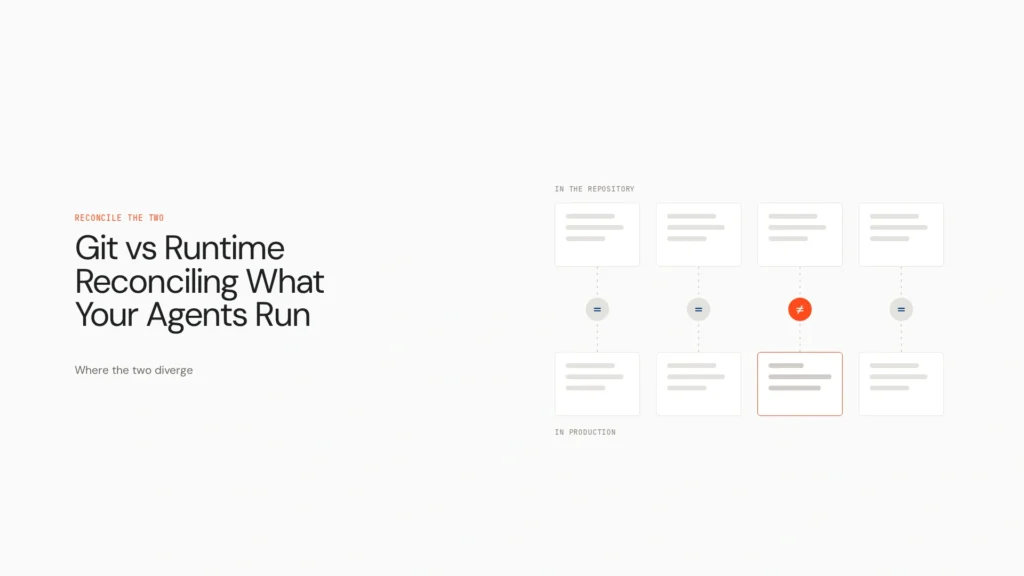
Instead of treating agents like isolated runtime workflows, GitAgent treats the repository itself as the agent.
Everything lives inside Git:
- prompts
- workflows
- memory
- hooks
- policies
- deployment logic
- runtime configuration
That creates something many AI teams currently lack:
operational transparency.
Here’s how the difference looks in practice:
| Traditional AI Workflow | GitAgent Workflow |
| Runtime-heavy configuration | Git-native structure |
| Hidden prompt edits | Version-controlled changes |
| Manual deployment handling | Branch-based deployments |
| Limited rollback visibility | Full Git rollback |
| Fragmented governance | Built-in auditability |
| Difficult collaboration | Pull request workflows |
| Framework lock-in | Multi-framework portability |
The operational difference becomes huge once multiple teams start managing agents together.
Git Workflows Become Agent Workflows
This is probably the biggest mindset shift.
With GitAgent:
- updates can go through pull requests
- deployments can happen through branches
- rollback becomes a Git operation
- agent reviews happen before production deployment
- memory changes become trackable
For engineering teams, this feels much more natural operationally.
Instead of inventing completely new workflows for AI systems, GitAgent reuses systems teams already trust.
The Agent Development Lifecycle Is Becoming an Operational Discipline
This is the larger shift happening across enterprise AI right now.
The conversation is moving away from:
“How do we build AI agents?”
toward:
“How do we manage AI agents reliably at scale?”
That includes:
- governance
- deployment workflows
- observability
- lifecycle management
- collaboration
- operational reliability
And honestly, this shift was inevitable.
Because once AI systems become operational infrastructure, they need operational infrastructure around them too.
Wrapping Up
The first wave of AI focused heavily on intelligence.
The next wave is focusing on operational maturity.
Because building the agent is no longer the hardest part.
Managing the full Agent Development Lifecycle is.
That’s why workflows around:
- version control
- deployment
- rollback
- governance
- collaboration
- portability
…are becoming critical parts of the modern AI stack.
GitAgent helps teams operationalize that lifecycle through Git-native workflows built specifically for production AI operations.
And as enterprise AI systems continue scaling, those workflows will become much harder to ignore.
Book A Demo: Click Here
Join our Slack: Click Here
Link to our GitHub: Click Here