TL;DR
- Every request hides three routing decisions: model, provider or key, and GPU replica.
- Lyzr OpenController: model choice, quality-checked escalation, fallback and budgets as one policy, inside your network.
- Kong AI Gateway: the widest menu of balancing algorithms.
- Bifrost: balancing that re-weights itself from live health signals.
- LiteLLM Router: the Python default, with two 2026 supply-chain incidents to plan around.
- OpenRouter: hosted routing across hundreds of models.
- llm-d: cache-aware balancing for GPUs you own.
Routing teams are learning that token price is only part of what an answer costs. OpenRouter put numbers on it in October: in a test across 24 million requests, routing on price plus waiting time and retries cut median time to first token by 16.9% and total 429 events by 67%, at about 6% higher cost per request.
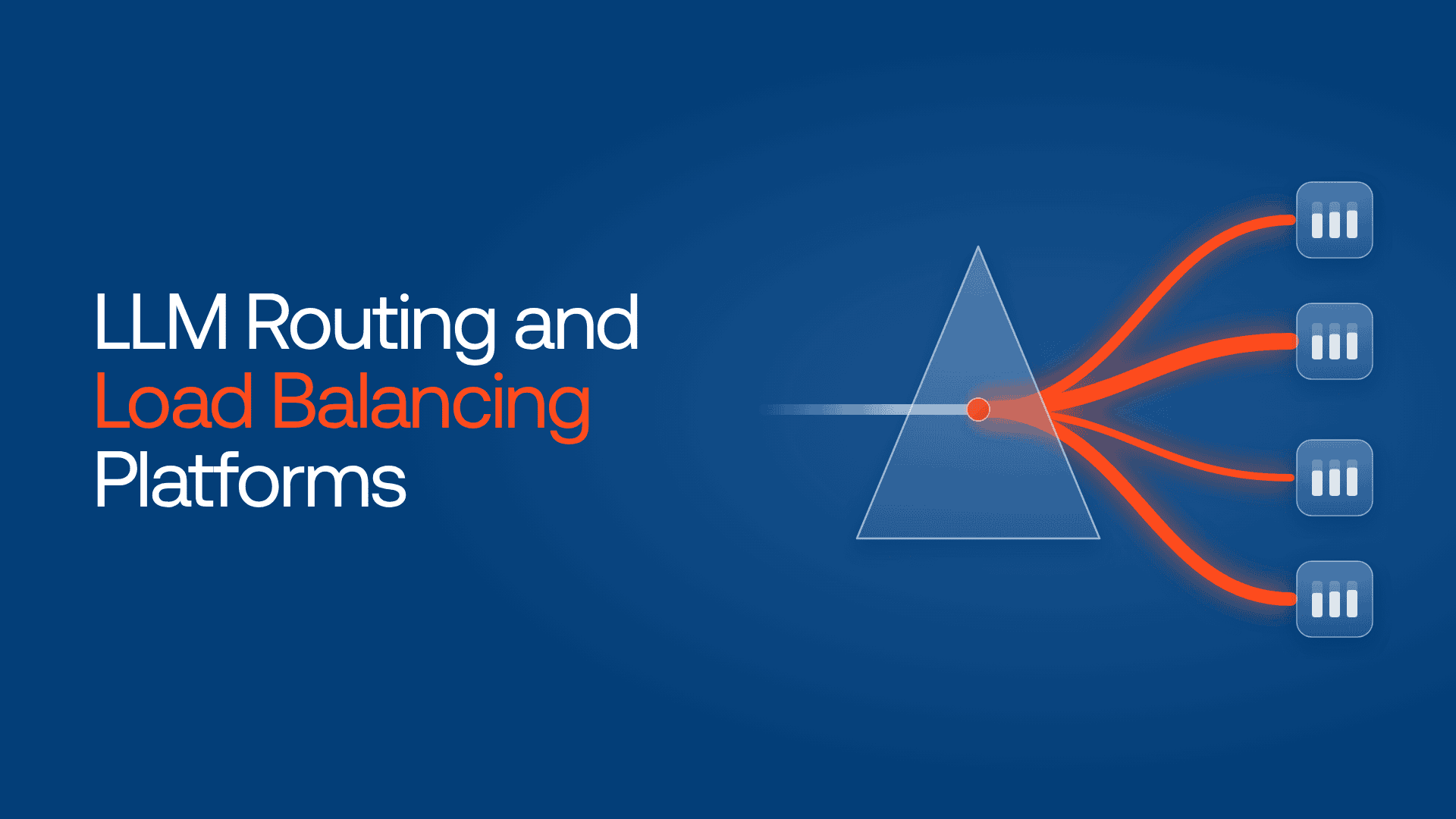
Speed, reliability and price pull against each other on every request. LLM routing and load balancing is how you decide which one wins.

One request, three routing decisions
Which model answers? This is where the money is. In Vercel’s September production index, open-weight models ran 56% of August’s gateway tokens but took only 14% of spend. Gartner’s name for the idea is inference tiering: send each agent step to the cheapest model that can handle it.
Which provider, region or key serves it? Classic load balancing, except rate limits attach to keys and accounts, and a 429 is a routing problem, not an app bug.
Which replica runs it? Only if you serve your own models. Round robin treats requests as equal, and LLM requests aren’t. A follow-up turn that lands on the replica holding its conversation prefix skips the costly prefill step; anywhere else, it pays again.
Most platforms below own one layer well. Know which one is on the invoice.
Five questions to ask in the demo
- What signal does it route on? Weights, latency, token usage, cost, prompt meaning or cache locality.
- Does the conversation stay put? Switching providers mid-thread can throw away a warm prompt cache.
- Does the budget take part in routing? A cap that blocks or reroutes is control. A cost attribution report next month is history.
- Where does it run, and who holds the keys? If data sovereignty rules apply, a hosted router may be out on day one.
- Can you see why a request went where it did? Ask for a trace showing each model tried and what each hop cost.
The Measurement Gap Between AI Pilots and Production Deployments: Routing pays off only if you measure cost per finished task. Most pilots never do. Read the white paper →
The 6 best platforms for LLM routing and load balancing
1. Lyzr OpenController: routing as a policy decision
OpenController launched in September as a control plane for enterprise agents Its LLM gateway handles virtual keys, team budgets, rate limits, routing, fallback and caching across providers, locally hosted models included. In the product page’s sample trace, a claude-sonnet-4.5 call hits a 429 and lands on gpt-4.1 in 212 ms, billed to the team’s key.
The idea worth stealing is shadow routing. A task goes first to a small open-weight model, and the gateway checks the answer against rules, a classifier or other validation. If it fails, the original task goes, unmodified, to a frontier model, and the trace records each attempt and its token cost. That’s Gartner’s tiering, enforced once at the gateway instead of by every app team.
Per-agent rules set which models an agent may call, with guardrails on the same hop. It deploys in your VPC, on-prem or air-gapped, and credentials never need to reach Lyzr.
| What works | What to check |
| Model choice, escalation, fallback and budgets on one hop | Public docs don’t detail key-level load balancing; ask to see it |
| Runs inside your network, air-gapped if needed | Self-hosted replicas still need their own scheduler |
Pick it if routing has to follow agents, teams and budgets, not just latency. Skip it if you run one app against one provider.
2. Kong AI Gateway: the widest menu of balancing algorithms

Kong’s AI Proxy Advanced plugin offers the most balancing choices here: weighted round robin, lowest latency, lowest usage (in tokens or cost), consistent hashing for sticky sessions, semantic routing that matches prompts to model descriptions, and priority groups that spill to a lower tier only on failure.
| What works | What to check |
| One gateway for API and LLM traffic, self-managed or on Konnect | AI Proxy Advanced needs Kong’s AI license |
| Semantic and cost-based routing built in | One algorithm per route; no blended health score |
Pick it if Kong already fronts your APIs. Skip it if you don’t run Kong; the value is the gateway around the plugin.
3. Bifrost: load balancing that re-weights itself

Maxim AI’s open-source Go gateway splits traffic across keys by fixed weights. Enterprise adds adaptive load balancing: it scores providers for a model, then keys within the winner, and recalculates weights every five seconds. A circuit breaker pulls failing routes. Maxim puts scoring overhead under 10 microseconds, a vendor figure worth rerunning.
| What works | What to check |
| Traffic drains from a degrading key before it fails | Adaptive balancing is Enterprise-only |
| Virtual keys with budgets in the open-source build | Scoring weights aren’t configurable, by design |
Pick it if you juggle many keys and want the gateway to tune itself. Skip it if your team wants to own the scoring formula.
4. LiteLLM Router: the familiar default, with a security asterisk
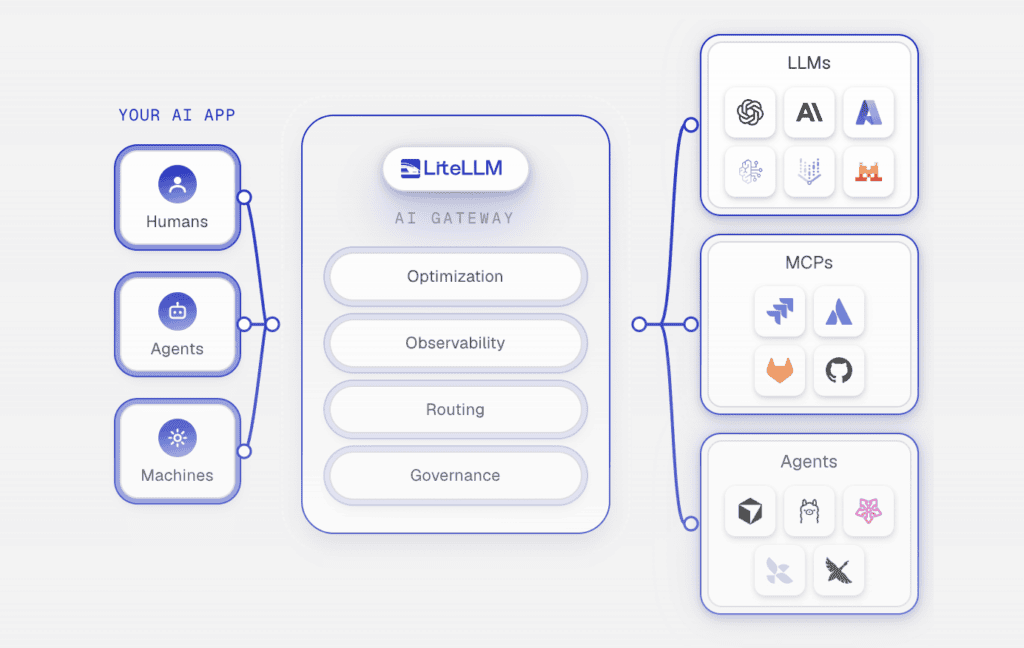
LiteLLM’s Router docs list weighted pick (simple-shuffle, the recommended default), latency-based, rate-limit-aware, least-busy, lowest-cost and custom strategies, with cooldowns and cross-region retries. A beta adaptive router learns which model handles each request type best and trades quality against cost.
The asterisk: on October 21, attackers hijacked LiteLLM’s release pipeline, and a credential-stealing 1.107.0 sat on PyPI for under two hours. It was the project’s second supply-chain compromise of 2026, after a separate March incident. A router is a key vault, whether you treat it like one or not.
| What works | What to check |
| Every common strategy, MIT-licensed | Pin versions by hash; rotate any key a 1.107.0 host could reach |
| 100+ providers behind one API | Usage-based routing adds Redis latency; docs advise against it in production |
Pick it if you’re already on it and can harden the install. Skip it if nobody on the team owns dependency hygiene.
5. OpenRouter: hosted routing across hundreds of models

The October 28 default covers any request that doesn’t set its own provider order or sort, about 77% of traffic by OpenRouter’s count. Since August 10, the Auto Router picks the model itself from a rolling seven-day signal of community spend, in named cost tiers. And Stripe agreed in August to acquire OpenRouter, in a deal reported at more than $7 billion.
| What works | What to check |
| Hundreds of models and providers behind one key | Prompts and keys leave your network |
| Provider balancing that learns capacity limits | Default routing can quietly pick a pricier provider |
Pick it if you’re testing many models and want zero infrastructure. Skip it if regulated data is in the prompts.
6. llm-d: load balancing for the GPUs you own
llm-d doesn’t choose providers. It sits in front of vLLM or SGLang replicas on Kubernetes, where an endpoint picker scores pods on prefix-cache hits and load before placing each request. Version 1.0 shipped October 20. On an agentic coding workload, Google reports prefix-aware routing plus cache offload cut median time to first token by over 85% and lifted throughput 2.4 times versus a plain Kubernetes Service.
| What works | What to check |
| Big latency wins on multi-turn and agent traffic | Self-hosted models only; no cross-provider routing |
| Open source, any cloud, air-gapped if needed | You run the cluster, upgrades and on-call |
Pick it if you serve open models on your own GPUs. Skip it if everything you call is an API.
Six platforms on one grid
| Platform | Picks the model per request | Escalates when a quality check fails | Fails over across providers | Load-aware balancing | Budgets enforced in the path | Runs in your network | Per-agent model rules |
| Lyzr OpenController | ✓ | ✓ | ✓ | ◐ | ✓ | ✓ | ✓ |
| Kong AI Gateway | ✓ | ✗ | ✓ | ✓ | ◐ | ✓ | ◐ |
| Bifrost | ◐ | ✗ | ✓ | ✓ | ✓ | ✓ | ◐ |
| LiteLLM Router | ◐ | ✗ | ✓ | ✓ | ✓ | ✓ | ◐ |
| OpenRouter | ✓ | ✗ | ✓ | ✓ | ◐ | ✗ | ✗ |
| llm-d | ◐ | ✗ | ✗ | ✓ | ✗ | ✓ | ✗ |
✓ built in · ◐ partial, paid tier, beta or not documented end to end · ✗ not offered or not the focus. llm-d’s strength, cache-aware placement, sits below the layer this grid scores. Editorial assessment, October 2026.
OpenController alone checks an answer before paying for a frontier model. No gateway here places requests by KV cache, so the strongest setups pair a policy layer with a replica scheduler.
How the layers stack for one support agent
Take a customer-support agent answering billing questions:
- Identify. The agent’s virtual key sets its allowed models and budget.
- Try small. An open-weight model on your cluster drafts the reply; llm-d picks the replica holding that conversation.
- Check. A classifier scores the draft; anything below the bar goes, unchanged, to a frontier model.
- Absorb the 429. The frontier provider rate-limits, and the gateway fails over to a second one.
- Read the bill. The trace lists every model tried and what each hop cost.
After a month, check cost per resolved ticket. If it hasn’t moved, fix the quality bar, not the router; that’s cutting LLM spend without touching a prompt.
Agentic AI Maturity Assessment for Enterprises: Is your agent program ready for routing policies and budgets in production? Take the assessment →
Route on the price of a good answer
A payments company just agreed to pay billions for a router. That’s where AI spend gets decided now.
Our view: route on cost per finished task, not per-token price, keep the policy inside your network, and let a scheduler handle the GPUs. Then count the agents that skip the router entirely; they’re usually the ones blowing the budget. Book a demo and we’ll mirror a slice of your traffic through OpenController.
FAQs
Lyzr OpenController, Kong AI Gateway, Bifrost, LiteLLM Router, OpenRouter and llm-d. llm-d alone balances your own GPU replicas rather than providers.
Routing decides which model answers a request. Load balancing decides which provider, key or replica serving that model takes it.
Send each request to a smaller model first, check the answer against a quality bar, and escalate only the failures to a frontier model. Then track cost per finished task, not price per token.
Yes. Lyzr OpenController, Kong, Bifrost, LiteLLM and llm-d can all run in your environment. OpenRouter is hosted, so prompts and keys leave your network.
Related reading: Open-source LLM observability platforms · Best tools for real-time AI agent monitoring · Best tools for AI policy enforcement at scale
Book A Demo: Click Here
Join our Slack: Click Here
Link to our GitHub: Click Here
Got a use case in mind?
8 weeks from use case to agents running in production.
Platform, people and FDEs, all in. Bring your environment. We'll co-build and stay until it's live.
Talk to UsFree resource
101 AI Agents Use Cases
100+ production-ready AI agent use cases across Marketing, Sales, HR, Banking, Insurance, Operations and a lot more
Download now