You’re probably not starting from zero. Your team may already use IAM, API gateways, cloud security, or AI governance tools. But AI agents introduce a different access problem: what should an autonomous system be allowed to access and do?
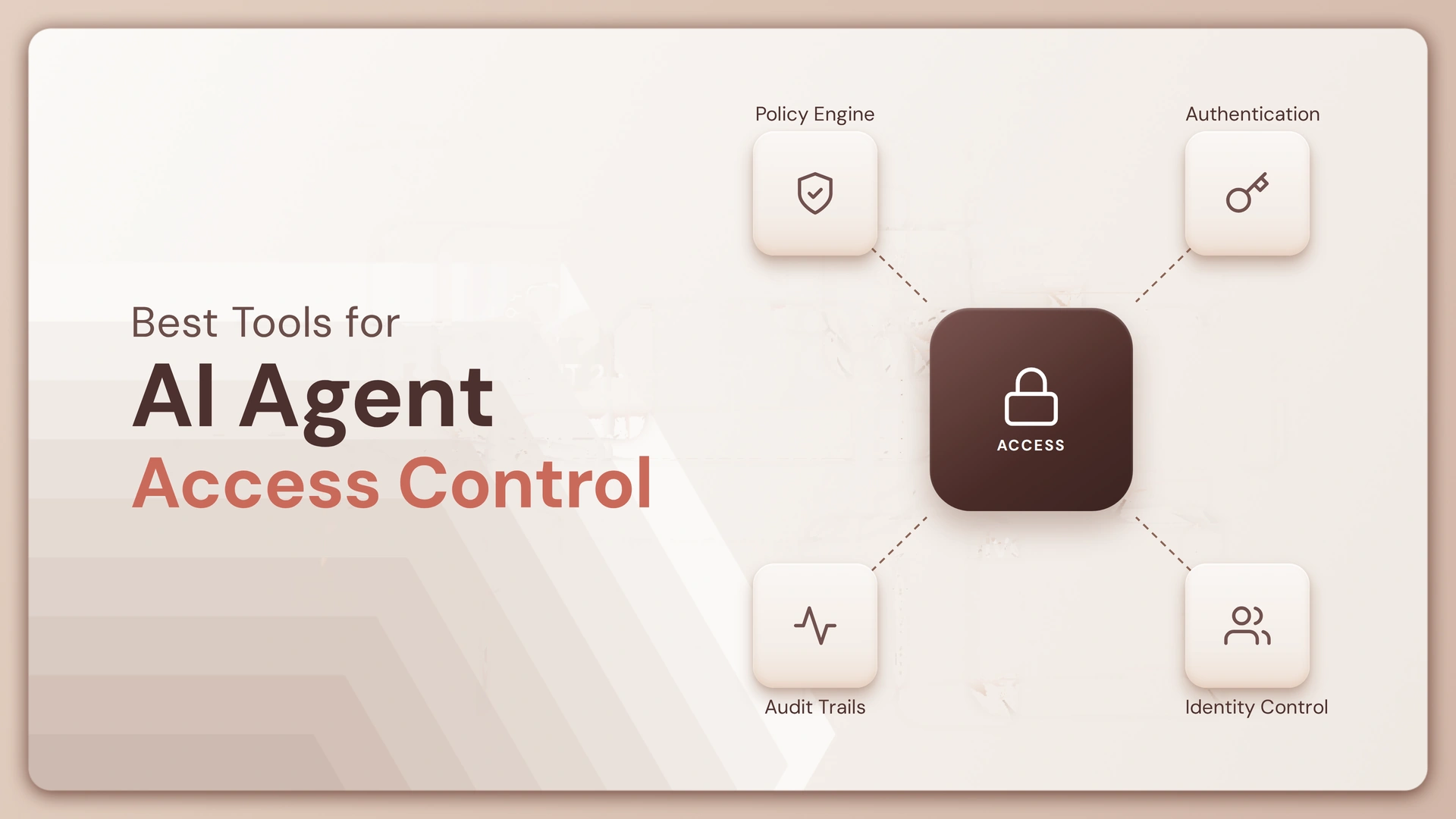
Agents can call APIs, use tools, access sensitive data, trigger workflows, and operate across clouds. The right access-control platform needs to cover more than user permissions. It needs to manage agent identity, permissions, policies, and actions.
Here are the platforms worth evaluating based on how your agent environment is built.
Quick comparison
| Platform | Best for | Agent identity | Access control | Runtime enforcement | Multi-cloud |
|---|---|---|---|---|---|
| Lyzr OpenController | Cross-platform agent governance | ✅ | ✅ | ✅ | ✅ |
| Microsoft Agent 365 | Microsoft-heavy enterprises | ✅ | ✅ | ✅ | Partial |
| ServiceNow AI Control Tower | Enterprise AI governance | ✅ | ✅ | ✅ | ✅ |
| Salesforce Agent Fabric | Salesforce-centric agents | ✅ | ✅ | Partial | Partial |
| SailPoint | Identity-first governance | ✅ | ✅ | Partial | ✅ |
The key difference is where access control sits. Some platforms extend an existing identity or enterprise ecosystem to agents. Others provide a broader control layer across agents, tools, models, and environments.
1. Lyzr OpenController
Best for teams running agents across multiple clouds, frameworks, and environments.
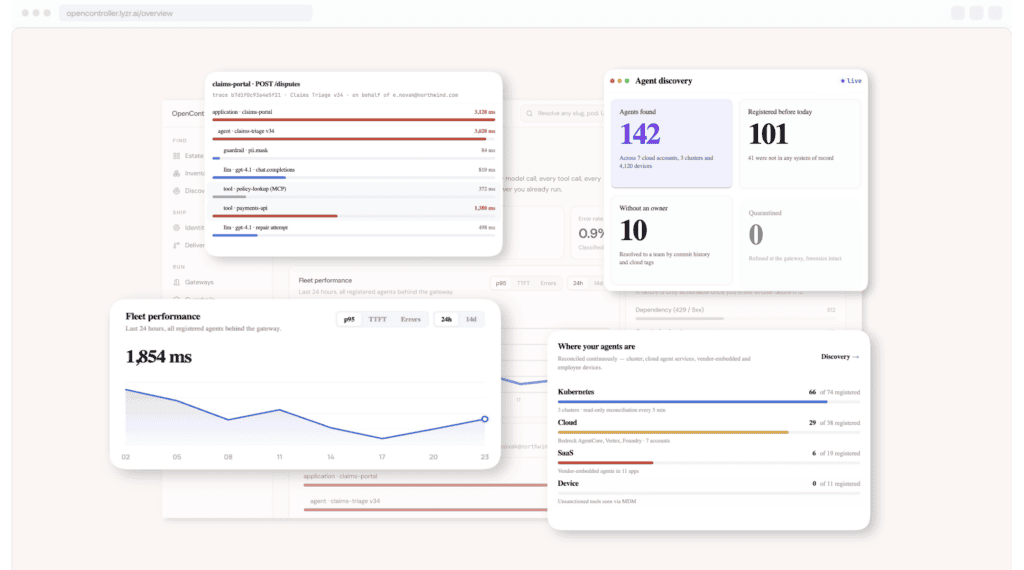
Lyzr OpenController is designed as a control layer above the infrastructure and runtimes where agents already operate. It is aimed at organizations that don’t want access policies tied to one cloud, framework, or AI platform.
What it covers:
- Agent identity: Give agents attributable identities instead of relying on shared credentials.
- Access policies: Define which agents can access specific tools, resources, and environments.
- Runtime enforcement: Apply policies when an agent makes a request rather than relying only on post-action monitoring.
- Cross-stack visibility: Bring agents, models, tools, and activity across different environments into one control layer.
Consider OpenController if: your agents already span multiple clouds, frameworks, models, or runtimes and you need one place to govern them without replacing the infrastructure underneath.
2. Microsoft Agent 365
Best for enterprises already standardized on Microsoft.
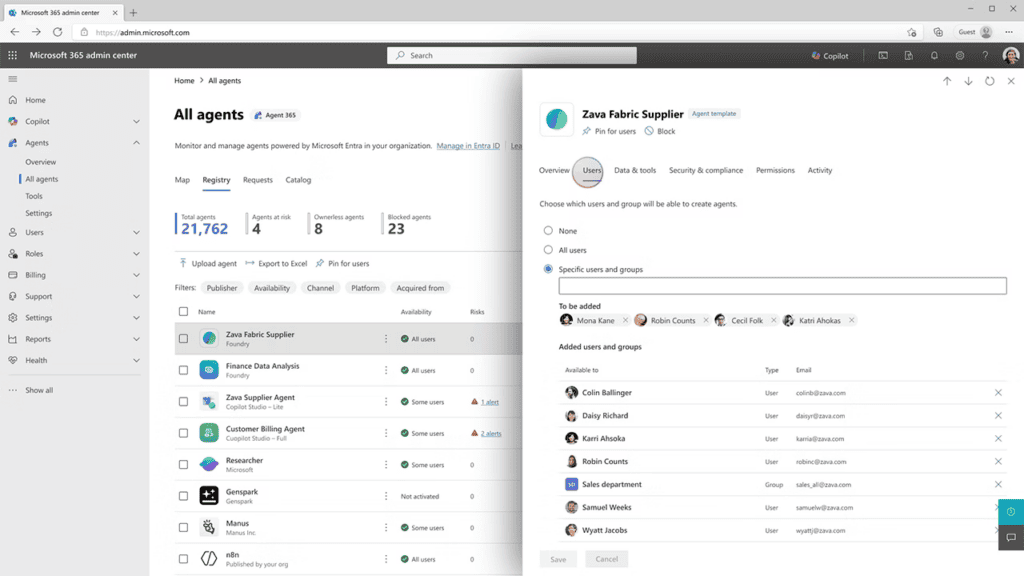
Microsoft Agent 365 extends Microsoft’s existing identity, security, and compliance infrastructure to AI agents. It connects agent governance with services such as Microsoft Entra, Purview, Defender, and Microsoft 365.
What it covers:
- Agent identities: Agents can have identities and scoped permissions through Microsoft Entra.
- Access policies: Existing identity and conditional-access controls can be extended to agents.
- Tool governance: Organizations can control which tools, connectors, and MCP servers agents can use.
- Lifecycle management: Teams can manage ownership, onboarding, permissions, and retirement.
Consider Agent 365 if: Microsoft Entra and Microsoft 365 are already central to your security architecture and most of your agent activity sits within that ecosystem.
3. ServiceNow AI Control Tower
Best for organizations looking for centralized AI governance and operational oversight.
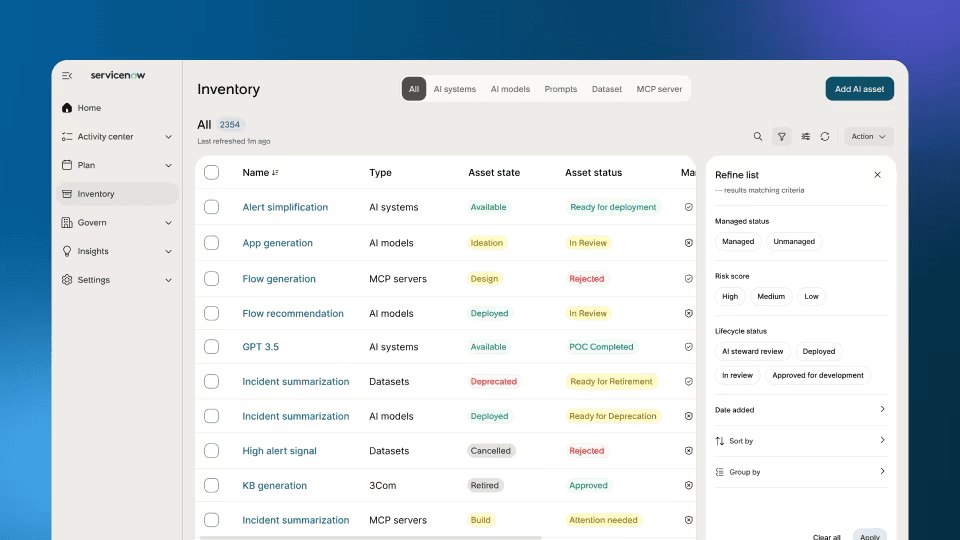
ServiceNow’s AI Control Tower approaches agent access as part of a broader enterprise governance system. It provides a central place to discover AI assets, monitor activity, manage risk, and apply controls.
What it covers:
- AI discovery: Inventory agents, models, and MCP servers across the organization.
- Identity and access: Track agent identity, access, and exposure.
- Runtime controls: Apply least-privilege controls and restrict certain AI actions.
- Governance: Connect AI governance with lifecycle management, compliance, and existing ServiceNow workflows.
Consider it if: ServiceNow is already a major part of your IT, security, or governance stack and you want agent controls connected to those workflows.
4. Salesforce Agent Fabric
Best for organizations building and managing agents around Salesforce.
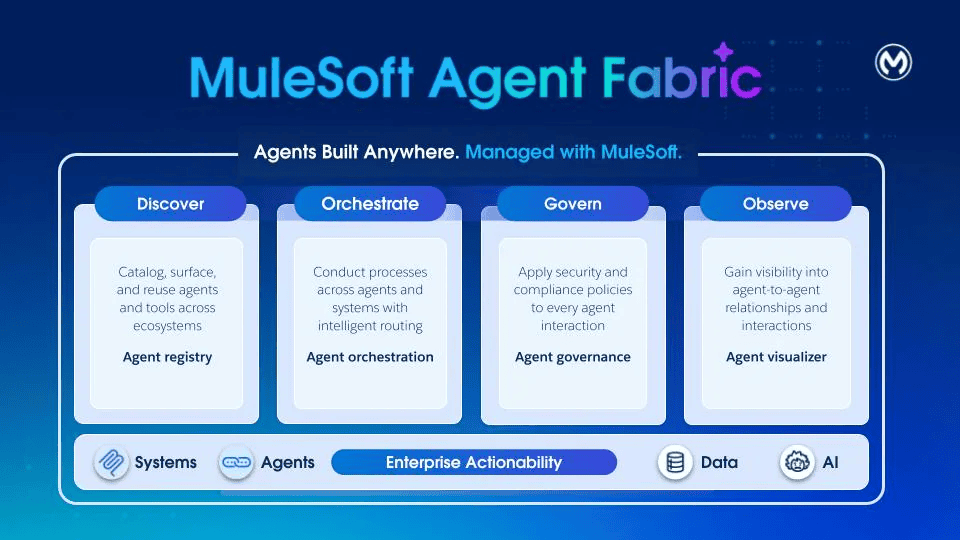
Salesforce Agent Fabric centers agent identity, governance, and interoperability around the Salesforce ecosystem. This makes it particularly relevant when Agentforce and Salesforce data are already central to your AI strategy.
What it covers:
- Agent identity: Establish identity and control around agents operating in the Salesforce environment.
- Access management: Connect agent actions with existing Salesforce permissions and data controls.
- Governance: Provide visibility into agents and their interactions across the Salesforce environment.
- Interoperability: Help agents work across systems while remaining connected to Salesforce.
Consider it if: Salesforce is already where most of your customer data, workflows, and agents live. If your agents are distributed across unrelated clouds and frameworks, evaluate how much of that estate the platform can govern directly.
5. SailPoint

Best for teams approaching agent access primarily as an identity-governance problem.
SailPoint treats AI agents as another category of identity that needs ownership, access controls, lifecycle management, and accountability.
What it covers:
- Agent discovery: Identify AI agents across different systems and environments.
- Ownership: Connect agents with responsible people and organizational context.
- Least privilege: Apply identity-governance principles to agent access.
- Accountability: Maintain an auditable relationship between agents, owners, and resources.
Consider SailPoint if: your security organization already uses SailPoint for identity governance and wants to extend that model to AI agents.
How to choose the right AI agent access-control platform
The easiest way to narrow down your options is to look at your environment first, not the product list.
1. If most of your agents are inside one ecosystem
If your organization is heavily invested in Microsoft, start by evaluating Microsoft Agent 365. If Salesforce or ServiceNow is where most of your agents and business workflows live, their native agent governance capabilities may cover a large part of your requirements.
Your situation: One dominant enterprise platform → start with its native agent controls.
2. If your agents run across multiple clouds and frameworks
This is where the architecture matters more.
If you have agents running across AWS, Azure, GCP, private infrastructure, or different frameworks, a platform closely tied to one ecosystem may leave parts of your agent estate outside the same control layer.
Your situation: Multiple clouds + multiple frameworks → prioritize a cloud- and framework-agnostic control layer.
3. If you need enforcement, not just visibility
A registry can tell you that an agent exists. An observability platform can tell you what happened. Neither necessarily decides whether an agent should be allowed to make a particular request.
Look for controls that can answer:
- Who is this agent?
- What is it allowed to access?
- What resource is it trying to reach?
- What policy applies?
- Can the request be blocked when it violates that policy?
Your situation: You need to stop unauthorized actions → prioritize runtime policy enforcement.
4. If identity and ownership are the main concern
If your biggest problem is knowing who owns an agent, what permissions it has, and how those permissions change over time, an identity-first platform may be the better starting point.
Your situation: Identity, ownership, permissions, and lifecycle → prioritize agent identity governance.
5. If you need one control layer for the entire agent estate
If agents are spread across clouds, frameworks, models, and environments, you need more than individual agent identities.
You need a platform that can bring together agents, models, tools, data, environments, policies, activity, and cost without requiring every team to rebuild its existing agents.
Your situation: Heterogeneous agent estate + centralized governance → evaluate a dedicated agent control plane.
A simple decision matrix
Use these questions to evaluate your environment:
| What describes your environment? | Start by evaluating |
|---|---|
| Most agents run on Microsoft | Microsoft Agent 365 |
| Most agents run around Salesforce | Salesforce Agent Fabric |
| ServiceNow is central to your enterprise workflows | ServiceNow AI Control Tower |
| Identity governance is your primary requirement | SailPoint |
| Agents run across multiple clouds | Lyzr OpenController |
| Teams use multiple agent frameworks | Lyzr OpenController |
| You need policies enforced at runtime | Lyzr OpenController |
| You want to govern existing agents without rebuilding them | Lyzr OpenController |
Why Lyzr OpenController is a strong fit for multi-platform agent access control
The main reason to consider Lyzr OpenController is its architecture.
It is designed to sit above the infrastructure where your agents already run instead of requiring you to move everything into a new cloud, framework, or runtime.
That matters when your environment looks like this:
- Multiple clouds: Agents don’t all live in one cloud account or environment.
- Multiple frameworks: Teams use LangGraph, CrewAI, custom agents, or other frameworks.
- Multiple environments: Agents run across different infrastructure and deployment environments.
- Runtime control: You need policies to influence what an agent can actually do, not simply record what happened.
- Existing agents: You want to bring your current agent fleet under governance without rewriting every agent.
The important distinction is that OpenController is intended as a control layer, not a replacement for your existing cloud infrastructure, models, frameworks, CI/CD, identity providers, or observability systems.
So if your agent environment is relatively simple and concentrated inside one vendor ecosystem, that vendor’s native controls may be enough.
But if your agent estate is becoming multi-cloud, multi-framework, and increasingly difficult to govern from one place, OpenController is built for that scenario.
The question then shifts from “Which tool gives my agents permissions?” to something more useful:
“Which control layer can govern every agent, wherever it runs, and enforce the policies I define when those agents act?”
For organizations facing that problem, that’s the role OpenController is designed to fill.
Book A Demo: Click Here
Join our Slack: Click Here
Link to our GitHub: Click Here