Your research agent asks a pricing agent for a quote. The pricing agent asks a supplier agent for stock levels. The supplier agent times out, then retries forty more times. Every call is billed. None is stopped.
Each agent in that chain passed its security review. But here’s the problem: nobody reviewed the conversation between them.
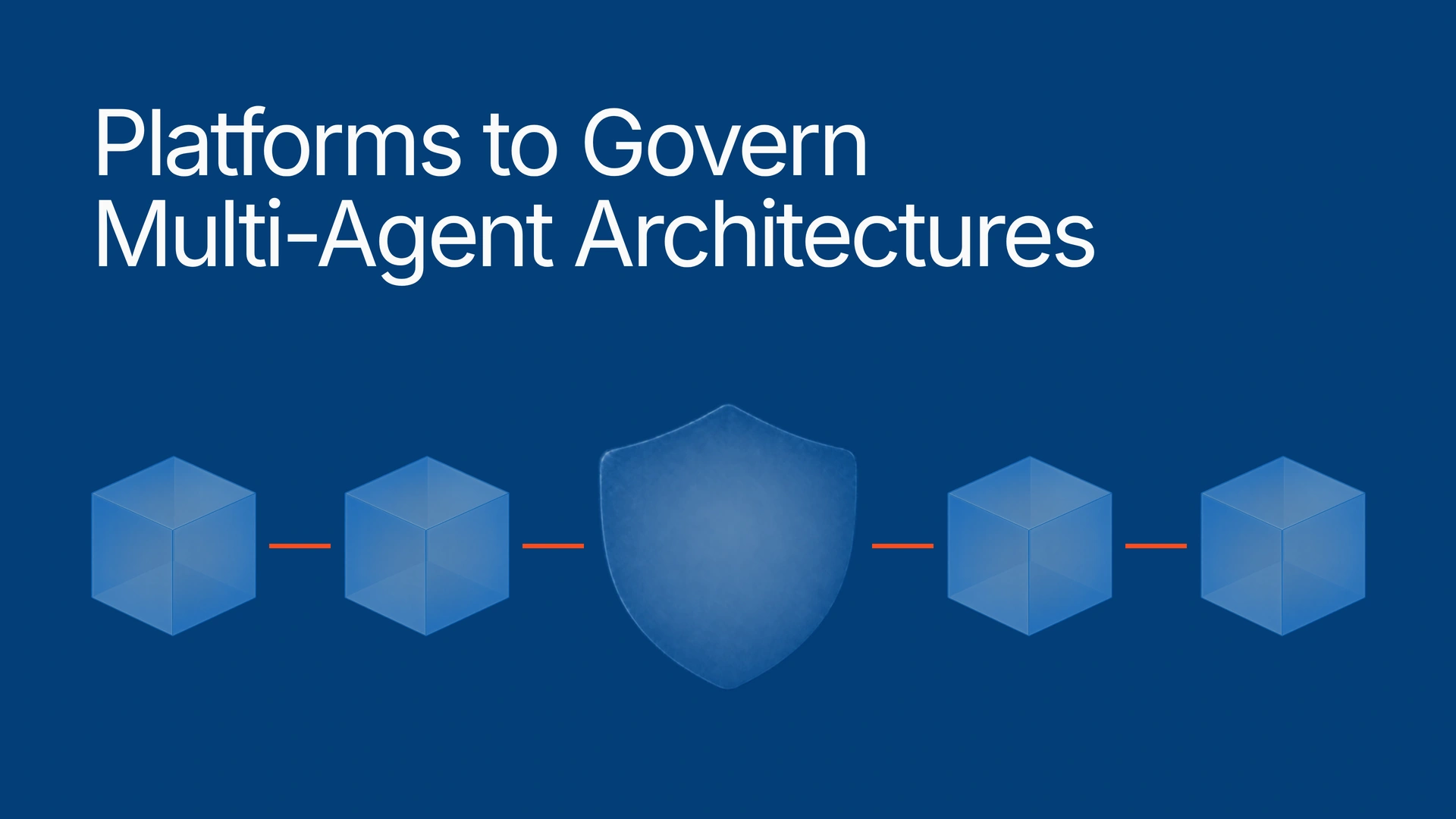
The best platforms for governing multi-agent architectures control those conversations. They give every agent its own identity, decide which agent may call which, keep delegated requests inside the original user’s permissions, and can stop a misbehaving agent mid-workflow. These practices make it easier for an enterprise to manage and control numerous agents running in their organization.
Get the short answer
- Lyzr Opencontroller: one control plane for AI agents on any cloud, framework or model.
- Microsoft Agent 365 + Entra Agent ID: estates built on Microsoft 365 and Foundry.
- Gemini Enterprise Agent Platform: new agent builds on Google Cloud.
- Amazon Bedrock AgentCore: AWS-first teams wanting tool policy outside agent code.
- MuleSoft Agent Fabric: Salesforce shops routing work across vendors’ agents.
- ServiceNow AI Control Tower: risk and IT teams already running governance in ServiceNow.
- IBM watsonx Orchestrate: hybrid estates wanting orchestration and governance in one console.
Why one agent is easy and ten are not
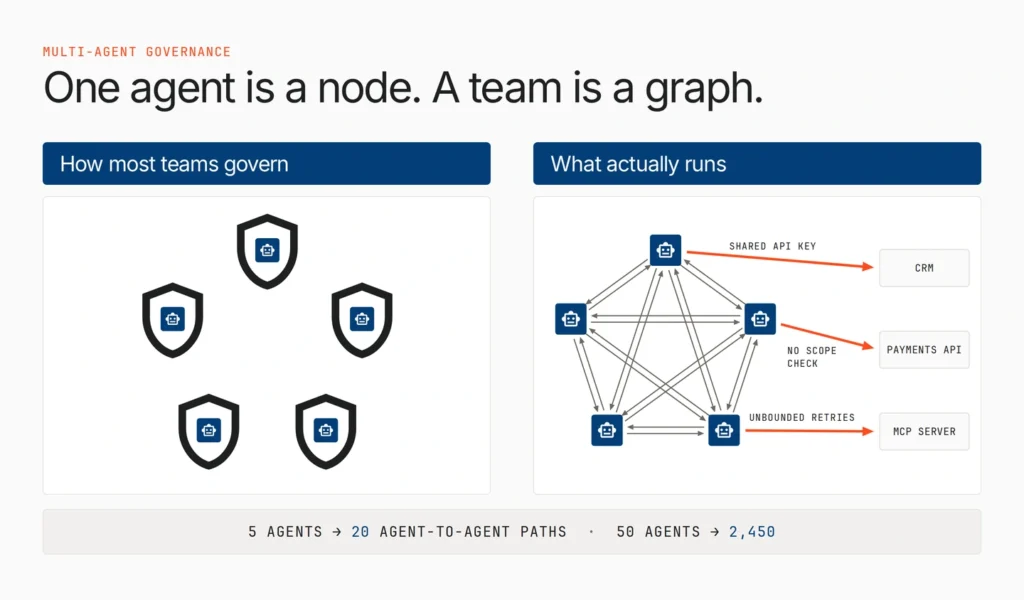
A single agent is a node whereas a team of agents is a graph. Five agents that can all call each other create 20 possible connections; fifty create 2,450, where each one is a route for data, authority and spend.
The growth curve is steep. Gartner predicts that by 2028 the average global Fortune 500 company will run more than 150,000 agents, up from fewer than 15 in 2025. Only 13% of organizations in the same research believe their agent governance is right today.
The complexity of governance too, increases with the number of AI agents running. Single-agent guardrails ask whether an agent is behaving. A multi-agent system raises four harder questions:
- Who is this agent? Its own identity, not a key shared across the swarm.
- Which agent may call which? Explicit rules for agent-to-agent (A2A) and agent-to-tool traffic.
- Whose authority does it carry? A sub-agent should act within the original user’s scope, never a wider one.
- Who can stop the chain? A budget that cuts off a retry loop long before the fortieth attempt, and a kill switch that isolates one agent while the rest keep working.
Based on the above four questions, plus spend controls and whether it can run inside your network, we scored seven platforms using public documentation as of October 2026.
The seven platforms for governing multi-agent architectures compared
1. Lyzr Opencontroller
Opencontroller is an AI agent control plane that sits between your agents and everything they call: models, MCP tools, enterprise APIs and other agents. Agents stay where they run today, on Bedrock AgentCore, Microsoft Foundry, Google Cloud or LangGraph on Kubernetes, and Opencontroller applies policy as their traffic passes through its gateways.
Lyzr builds agents for banks and insurers, and the hard part there was never one agent. It was dozens of agents, built by different teams on different stacks, calling each other.
Once agents delegate in Opencontroller, three pieces carry the load: Agent Gateway authenticates and rate-limits every caller (other agents included), Delegated identity lets each agent act for a named person with scopes like payments:refund ≤ $2,500 and Tool-level guardrails block or hold a risky call before it executes.
Read-only discovery finds shadow agents, so the agent registry starts from what you actually run. It deploys in your VPC, on-prem or air-gapped.
Releases are gated on evals, with canary rollouts and one-step rollback, and every model call is budgeted by agent and team. A runaway chain shows up as a line item with an owner, not a surprise invoice.
Pick it if agents span more than one cloud, framework or model provider.
Skip it for now if every agent lives in one hyperscaler whose native controls satisfy your auditors.
2. Microsoft Agent 365 + Entra Agent ID
Agent 365, generally available since May 1, 2026, is Microsoft’s central registry for agents from Copilot Studio, Foundry, third-party platforms and custom frameworks. Entra Agent ID supplies the identity layer, with sponsors, owners and Conditional Access for agents. Agent 365 is sold standalone or inside Microsoft 365 E7, and it can now discover agents on AWS Bedrock and Google Cloud, though that cross-cloud sync is still in public preview.

- Best for: organizations standardized on Microsoft 365, Entra and Purview.
- Watch for: Entra’s identity controls only cover agents that hold an Entra Agent ID, and registry entries don’t get one automatically.
- Where Opencontroller fits: it signs agents in through Entra and adds budgets and tool policy for agents outside Microsoft. See Lyzr vs Microsoft Copilot.
3. Gemini Enterprise Agent Platform
Launched at Cloud Next on April 22, 2026 as Vertex AI’s successor, it gives each agent a cryptographic identity, catalogues approved agents in Agent Registry and enforces policy on connections through Agent Gateway. Model Armor screens traffic alongside the gateway, and partner agents from vendors such as Salesforce, ServiceNow and Workday reach employees only after an admin approves them.

- Best for: new agent builds on Google Cloud that want governance on by default.
- Watch for: ask how a policy follows an agent once it calls a system outside Google Cloud.
- Where Opencontroller fits: its Gemini adapter puts Google-hosted agents in the same inventory as everything else. See Lyzr vs Google Agentspace.
4. Amazon Bedrock AgentCore
AgentCore Policy went GA on March 3, 2026: rules written in plain language become Cedar, and AgentCore Gateway checks every agent-to-tool request against them. AWS Agent Registry followed on August 31, 2026, with approvals and CloudTrail audit. Each record carries an A2A agent card, and registries can be shared across accounts through AWS Resource Access Manager.
- Best for: AWS-first teams keeping governance outside agent code.
- Watch for: auto-detection covers AgentCore-hosted agents only.
- Where Opencontroller fits: its AgentCore adapter puts AWS agents under the same rules as Azure and on-prem ones.
5. MuleSoft Agent Fabric
Agent Fabric pairs a registry with Agent Broker for routing tasks across agents, per-interaction governance and a network Visualizer. An April 2026 update added Trusted Agent Identity, with mobile authorization for high-risk actions. Agent Scanners, generally available since January 2026, find agents running in Agentforce, Amazon Bedrock, Vertex AI and Copilot Studio, and Flex Gateway applies policy to MCP and A2A traffic.
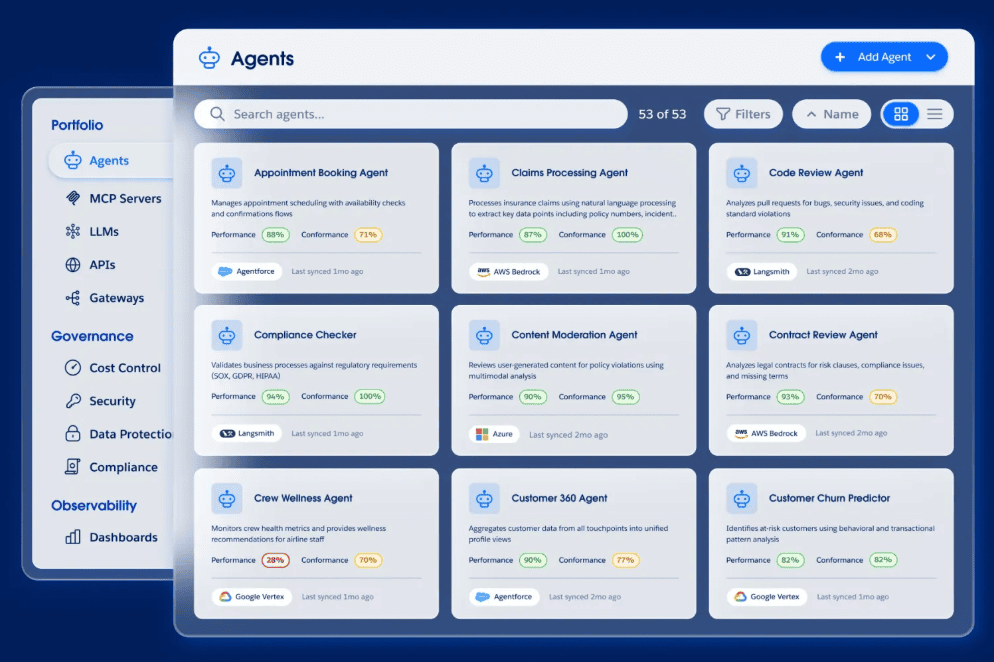
- Best for: Salesforce and MuleSoft customers coordinating agents from several vendors.
- Watch for: value tracks your MuleSoft footprint.
- Where Opencontroller fits: model budgets, release gates and agents that never touch MuleSoft. See Lyzr vs Agentforce.
6. ServiceNow AI Control Tower
Expanded at Knowledge 2026, Control Tower now governs AI across AWS, Azure, Google Cloud, SAP, Oracle and Workday, with runtime monitoring from its Traceloop acquisition and an Agent 365 integration. Action Fabric lets outside agents, including ones built on Claude or Copilot, trigger governed ServiceNow flows and approvals over MCP, and the release adds a kill switch for agents doing critical work.
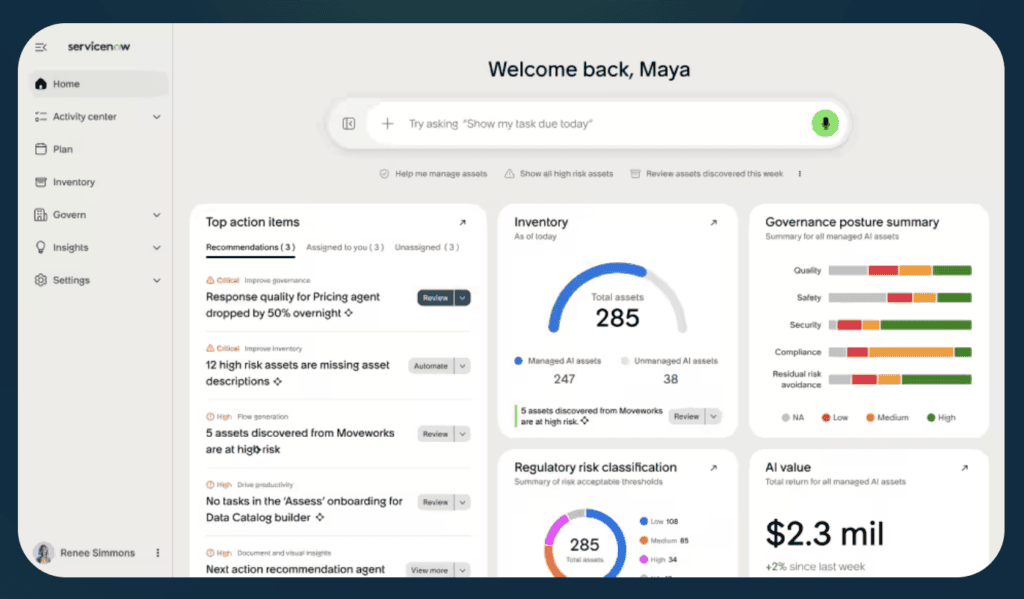
- Best for: enterprises whose risk and audit processes already live in ServiceNow.
- Watch for: enforcement is deepest on ServiceNow-native workflows.
- Where Opencontroller fits: keep Control Tower as the risk register and use Opencontroller as the real-time enforcement point.
7. IBM watsonx Orchestrate
IBM recast Orchestrate as an agentic control plane at Think 2026, shipping it on AWS and IBM Cloud that June. It supervises and routes work across agents built in watsonx, LangGraph or CrewAI. The control plane puts an agent and tool catalog, analytics on usage and reliability, and governance controls in one screen, and IBM pairs it with watsonx.governance for model risk.
- Best for: hybrid estates already on watsonx.governance and watsonx.data.
- Watch for: the next-generation orchestration began in private preview, so check what is generally available.
- Where Opencontroller fits: the same identity and budget rules for agents outside IBM’s stack.
Compare all seven side by side
| Platform | Cross-vendor discovery | Per-agent identity | A2A authorization | In-path tool policy | Model spend budgets | Kill switch | Built-in evaluations | Native agent builder |
| Lyzr Opencontroller | ✓ | ✓ | ✓ | ✓ | ✓ | ✓ | ✓ | ◐ |
| Microsoft Agent 365 + Entra | ◐ | ✓ | ◐ | ◐ | ✗ | ◐ | ◐ | ✓ |
| Gemini Enterprise Agent Platform | ◐ | ✓ | ✓ | ✓ | ◐ | ◐ | ◐ | ✓ |
| Amazon Bedrock AgentCore | ◐ | ✓ | ◐ | ✓ | ◐ | ◐ | ✓ | ✓ |
| MuleSoft Agent Fabric | ✓ | ◐ | ✓ | ✓ | ◐ | ◐ | ✗ | ◐ |
| ServiceNow AI Control Tower | ✓ | ◐ | ◐ | ◐ | ◐ | ✓ | ◐ | ✓ |
| IBM watsonx Orchestrate | ◐ | ◐ | ✓ | ◐ | ◐ | ◐ | ◐ | ✓ |
✓ built in · ◐ partial, preview or companion product needed · ✗ not a focus. Opencontroller governs agents rather than building them; Lyzr’s builder is the separate Lyzr Studio. Editorial assessment, October 2026.
Choose by where your agents run
A hyperscaler’s registry is a good registry for that hyperscaler. It has little reason to govern a rival cloud’s agents as well as its own, and the preview labels on cross-cloud features show it. Futurum Group’s June 2026 analysis makes a similar point, describing hyperscaler registry ownership as a driver of platform stickiness. If your agents already live in more than one place, put the control plane above the clouds.
Unsure which branch you’re on? Take the AI Agent Sprawl Audit.
Break it on purpose before you buy
Demos show the happy path. Run these on your messiest agent chain.
- Shared-key test: a sub-agent calls another with a shared service key. Is it refused?
- Escalation test: a low-privilege user triggers an orchestrator that calls a high-privilege agent. Does the delegated call keep the user’s scope?
- Loop test: two agents fall into a retry loop. Does a budget stop it, or does a dashboard just turn red?
- Stop test: quarantine one agent mid-workflow. How many seconds until all its calls fail?
- Outsider test: register an agent built outside the vendor’s ecosystem. How much control do you really get?
If a vendor won’t let you run the outsider test during a trial, that tells you how the platform treats agents it didn’t build.
Before you score vendors, score yourself with the help of below assessment. Find out how far your ownership, identity and policy controls go today, and what to fix before agents start calling agents.
Opencontroller is built to pass all five for any agent, whatever its framework, once that agent’s traffic runs through its gateways.
Book a demo and connect one environment to see every agent, its owner, its access and its spend.
FAQs
The best platforms for governing multi-agent architectures in 2026 include Lyzr Opencontroller, Microsoft Agent 365, Gemini Enterprise Agent Platform, Amazon Bedrock AgentCore, MuleSoft Agent Fabric, ServiceNow AI Control Tower and IBM watsonx Orchestrate. Cross-cloud estates need a vendor-neutral control plane; single-cloud estates can start native.
Multi-agent governance is the set of controls that decide what each agent in a system may do: which agents and tools it can call, whose permissions it carries, how much it can spend and who can stop it. It extends single-agent guardrails to the connections between agents.
A2A (Agent2Agent) is an open protocol that lets agents discover each other and delegate work. It standardizes how agents talk, not who may talk to whom. Authorization, budgets and audit still have to come from a gateway or control plane sitting in the path.
Not if every agent runs on that cloud. Most enterprises run agents across several clouds and SaaS platforms, and each vendor’s registry fully governs only its own. A cross-vendor control plane keeps one inventory and one rulebook.
Yes, if it enforces policy at the gateway rather than inside agent code. A framework-agnostic control plane such as Opencontroller applies the same identity, budget and tool rules to LangGraph, CrewAI, Bedrock and Foundry agents by changing an endpoint, not the application.
It should isolate one agent within seconds by refusing every call it makes, leave healthy agents in the same workflow running, and record who triggered the stop and why.
Related reading:
Best platforms for AI agent control plane management
Best tools for real-time AI agent monitoring
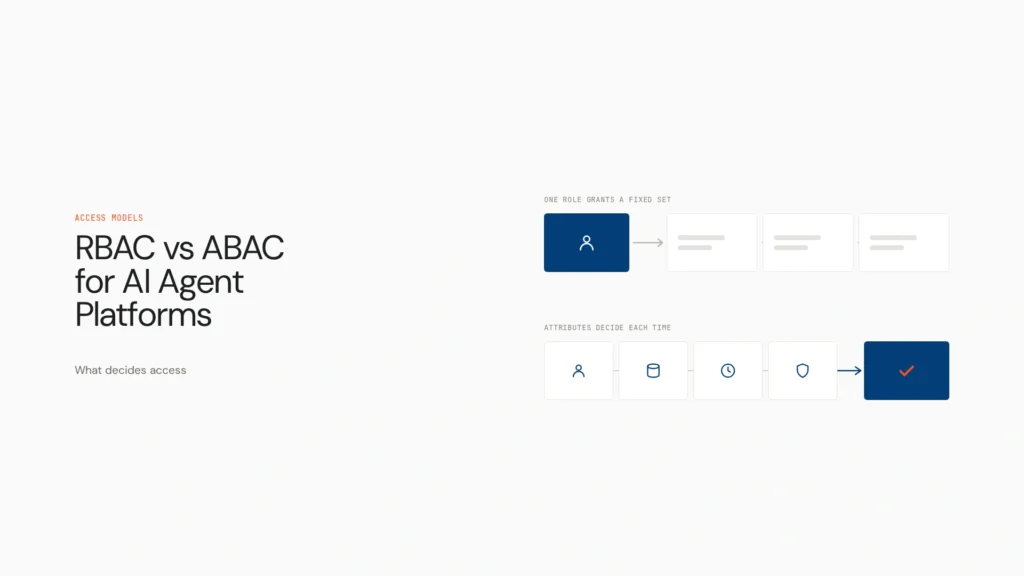
RBAC vs ABAC for AI agent platforms
Book A Demo: Click Here
Join our Slack: Click Here
Link to our GitHub: Click Here