Here’s something most AI vendors will never say out loud:
Most of the beautiful multi-agent AI systems celebrated on LinkedIn and Twitter are not running in production.
Not even close.
After years of working with Fortune 500 companies, hedge funds, telcos, biotech firms, and global agencies, one pattern keeps repeating:
- CEOs frustrated that AI roadmaps stalled
- CIOs overwhelmed by agent sprawl
- Developers stuck with demos that collapse in real-world conditions
The reality is simple: Building an AI agent is easy but Shipping one reliably into production is hard
This article breaks down the 10 biggest enterprise AI agent challenges companies face today , and the architectures, governance systems, and deployment models that actually work in production.
Quick Summary: 10 Enterprise AI Agent Challenges
| Challenge | What Enterprises Experience | What Actually Works |
| #1 — Shipping Agents | Great demos, no production rollout | Agent Simulation Engine + CI/CD |
| #2 — Multi-Agent Systems | Work in prototypes, fail at scale | Human-in-the-loop orchestration |
| #3 — Agent Sprawl | No governance or visibility | Centralized control plane |
| #4 — Automation Discovery | Teams struggle to identify use cases | No-code agent prototyping |
| #5 — Strategy vs Execution | Consultants theorize, nothing ships | Parallel consultant + engineer sprints |
| #6 — Agent Drift | Stable agents suddenly degrade | Continuous evaluation + failover |
| #7 — AI Bias Risks | Fear of legal/compliance issues | Decision review inboxes |
| #8 — Enterprise Data Chaos | Data modernization takes years | Just-in-time agent data layers |
| #9 — Framework Lock-In | Migration becomes painful | Portable agent standards |
| #10 — Small Models Underperform | Regulated industries can’t use frontier models | Distributed micro-agent architectures |
1. “We Built It. We Just Can’t Ship It.”
This is probably the most common enterprise AI problem today.
Frameworks like LangChain, CrewAI, the OpenAI SDK, Google ADK, and Microsoft Agent Framework made building AI agents dramatically easier.
A developer can now build a working AI agent in a few hours. And honestly, that changed the industry overnight. Suddenly every company had an AI roadmap, every team had a prototype, and every leadership conversation somehow came back to agents.
But this is where most enterprises hit reality. Because getting an agent to work in a demo is one thing. Getting it to survive real production environments, with messy inputs, unpredictable users, compliance constraints, and scale, is a completely different challenge.
Traditional software engineering evolved with operational discipline around it:
- Unit testing
- Integration testing
- QA pipelines
- Monitoring systems
AI agents entered enterprises without any equivalent maturity layer. That is the real gap. Most enterprises are not struggling to build AI agents. They are struggling to trust them in production.
What Actually Worked: Agent Simulation Engine
We built an Agent Simulation Engine that:
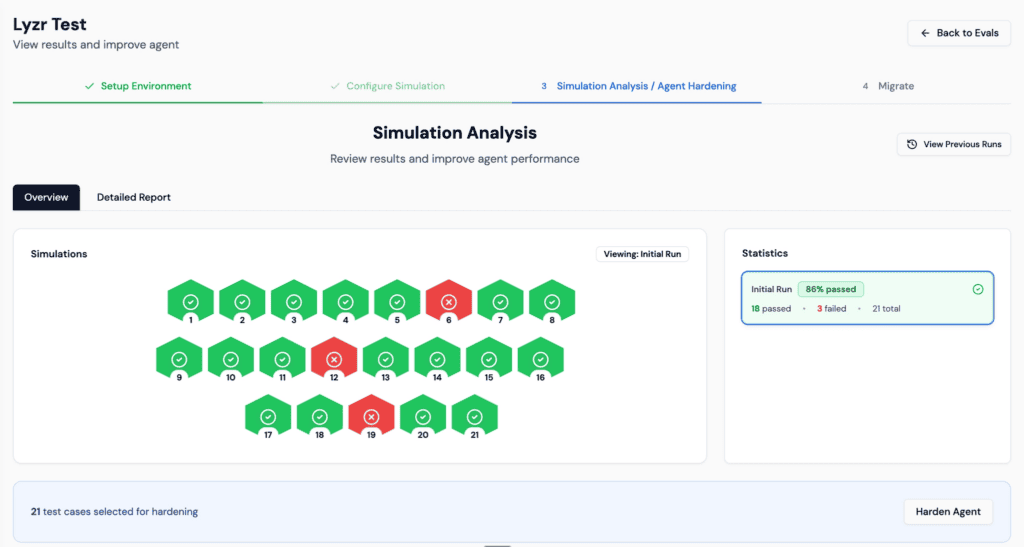
- Reads prompts, tools, and knowledge bases
- Generates production-like scenarios automatically
- Simulates customer conversations and edge cases
- Runs evaluations before deployment
- Reinforces prompts using failure feedback loops
Key Shift in Thinking
Stop treating agent deployment like pushing code. Start treating it like certifying behavior.
We also open-sourced the CI/CD layer at: langship.sh

2. The Multi-Agent Myth
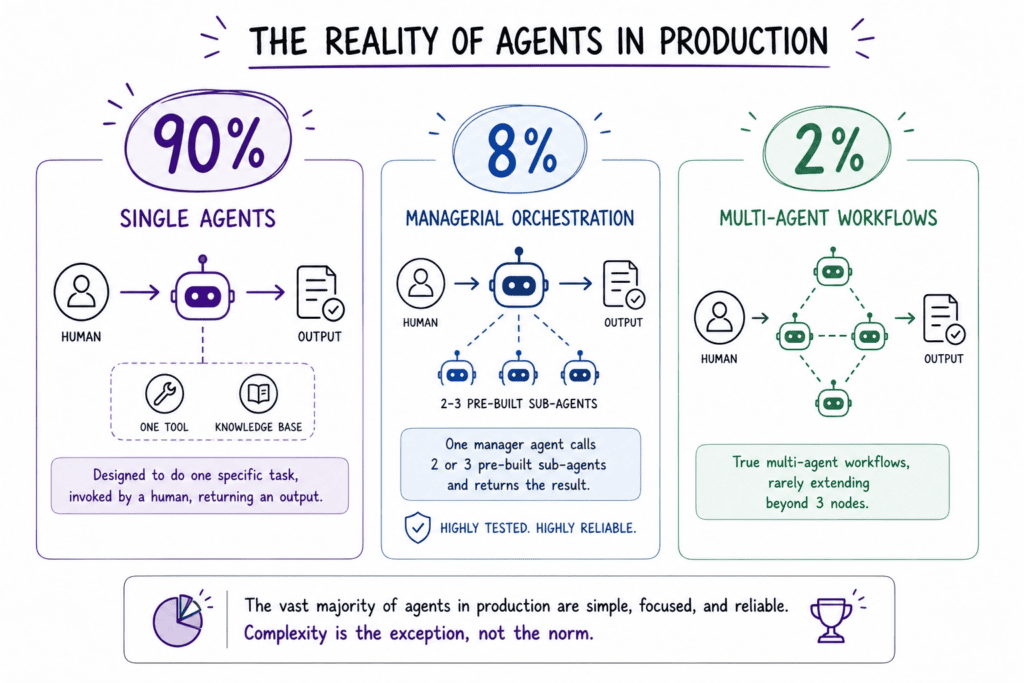
One of the biggest misconceptions in enterprise AI: Autonomous multi-agent systems are not widely deployed in production.
A senior industry analyst put it plainly:
“I have not seen those beautiful multi-agent workflows deployed successfully at scale.”
Even enterprises with advanced AI programs largely deploy:
Why Simpler AI Architectures Win
The companies succeeding with AI today focus on:
- Narrow task scope
- Predictable outputs
- Human review checkpoints
- Specialized agents
Examples include platforms like: Harvey, Legora. These systems succeed because they avoid uncontrolled orchestration complexity.
What Actually Worked: Agentic Workbench

Instead of autonomous agents managing everything, we built:
Human-in-the-Loop Agentic Workbench
Where:
- Specialized agents execute tasks
- Humans review outputs
- Multi-agent orchestration happens underneath
- Decision-making remains auditable
This human-in-the-loop model is equally valuable in high-stakes online assessments. AI-assisted live proctoring can detect suspicious behavior at scale while qualified human proctors review incidents, intervene when necessary, and support fair exam-integrity decisions.

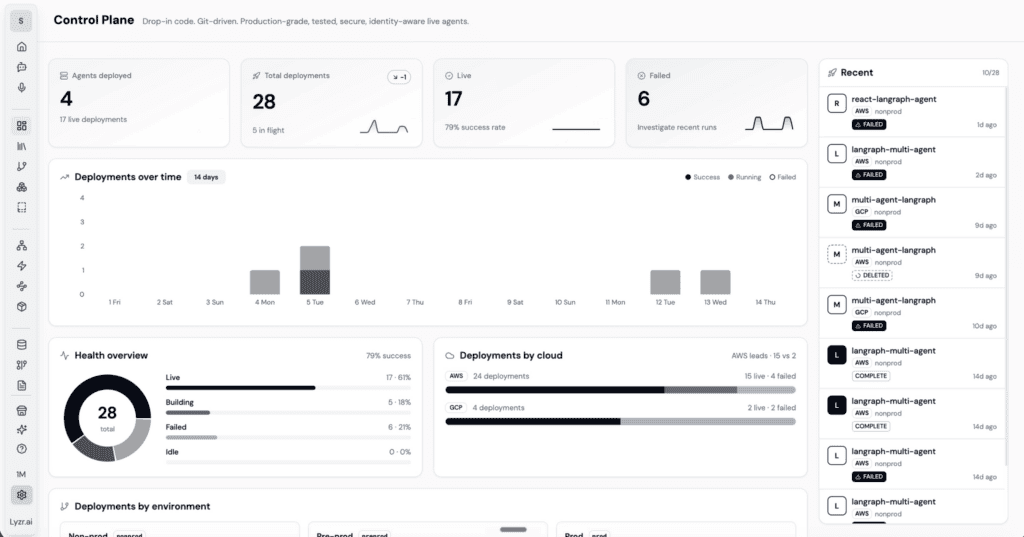
3. The Enterprise Agent Sprawl Problem
Today, most large enterprises are operating with fragmented AI ecosystems.
| What Enterprises Have Today | What It Creates |
|---|---|
| Multiple agent frameworks across teams | Fragmented development standards |
| Multiple cloud environments | Operational complexity |
| Different AI model providers | Inconsistent behavior and governance |
| Unregistered internal agents | Security and visibility gaps |
| Duplicate workflows being rebuilt repeatedly | Wasted engineering effort |
| No centralized governance layer | Compliance and audit risks |
| Rapid experimentation without oversight | Agent sprawl across the organization |
| Isolated AI initiatives across departments | Lack of shared visibility and coordination |
This is why agent sprawl is becoming one of the biggest operational challenges in enterprise AI adoption.
What Actually Worked: Open Governance Layer
Core Requirements
- Centralized agent registry
- Mandatory simulation gates
- Approval workflows
- Full audit logging
- Cross-framework portability
OpenGAP — Portable Agent Governance
We built the GitAgent Protocol (OpenGAP):
Think of it like Docker for AI agents.
It allows enterprises to:
- Govern agents centrally
- Port agents across frameworks
- Avoid vendor lock-in
- Standardize deployment
Learn more:

4. Why Enterprises Struggle to Find AI Use Cases?
A major misconception in AI transformation:
Business users struggle to describe automation opportunities in technical language.
Even when enterprises run:
- Workshops
- Brainstorming sessions
- Consulting engagements
- Innovation programs
Very few usable AI ideas emerge.
The Real Problem
| Business Teams Think In | AI Teams Think In |
|---|---|
| Processes | Orchestration frameworks |
| Operational bottlenecks | Prompt architectures |
| Customer pain points | Multi-system integrations |
| Workflow inefficiencies | Agent workflows and tool chains |
| Business outcomes | Model selection and optimization |
What Actually Worked: Architect No-Code AI Agent Builder

Users simply describe problems in plain language.
The platform works conversationally. Users describe the problem in plain language, the system asks clarifying questions, selects the right models, designs the prompts, builds the orchestration workflow, and generates a deployable agent application automatically.
This unlocked organization-wide automation discovery without requiring technical expertise.
5. Why AI Agents Alone Won’t Transform Enterprises
Many companies simply bolt agents onto existing workflows. That rarely creates transformation.
The better question is:
If this process were redesigned today with AI agents as first-class participants, what would it look like?
Critical Enterprise AI Design Principle: Build Agent-Native First
| Design Around What AI Agents Do Best | Add Structured Control Layers Where Needed |
|---|---|
| Judgment | Deterministic code blocks |
| Pattern recognition | Human approval layers |
| Synthesis | Compliance checkpoints |
| Parallel processing | Audit and governance controls |
Real Enterprise Example
For Accenture Ventures:
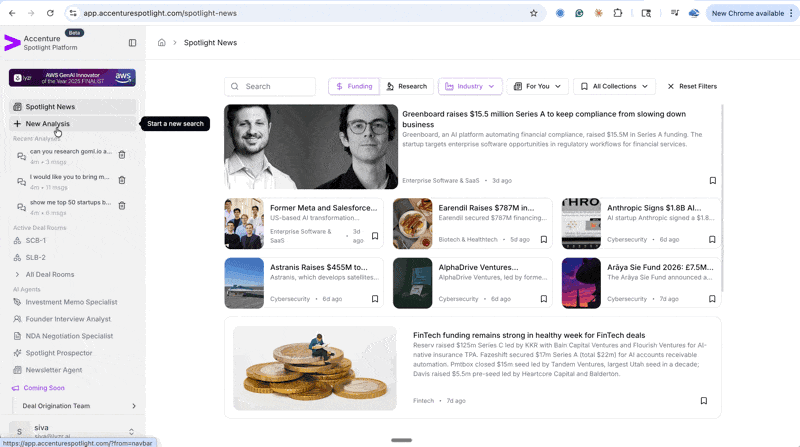
- Consultants + engineers worked together from day one
- 24–48 hour deployment cadence
- Parallel execution instead of sequential planning
Result
In 16 weeks they deployed:
- Startup intelligence agents
- Investment evaluation agents
- Memo generation agents
- Founder interview analysis agents
If you’re still getting your bearings on how these systems work in the first place, an
agentic ai for beginners course is a quick way to learn how agents plan, use tools, and make decisions
before tackling the harder production challenges below.
6. The Silent Enterprise AI Killer: Agent Drift
One of the least discussed production AI issues:
| What Teams Experience | What Hasn’t Changed |
|---|---|
| Outputs start degrading | Prompts remain unchanged |
| Precision begins dropping | Tools remain unchanged |
| Agent behavior feels inconsistent | Data remains unchanged |
| Responses become less reliable over time | Workflows remain unchanged |
Why This Happens
Model providers continuously update configurations behind the scenes.
That means:
- Output behavior shifts
- Latency changes
- Reasoning quality fluctuates
without enterprises realizing immediately.
What Actually Worked: Resilient Agent Infrastructure

If evaluations fail:
- Anthropic → OpenAI → Gemini
- Automatic failover activates
We also learned very quickly that resilience cannot depend on a single provider. That is why critical agents run with multi-cloud redundancy across AWS, GCP, and Azure, allowing workloads to shift automatically if one environment fails.
Alongside that, continuous evaluations run daily benchmark tests against production baselines, helping teams detect model drift and performance degradation before business users ever notice something is wrong.
7. Enterprise AI Bias and Compliance Risks
This becomes critical in:
- HR
- Healthcare
- Financial services
- Insurance
- Legal workflows
The biggest fear from enterprise leaders:
“What happens if the agent makes a biased decision?”
What Actually Worked: Agent Decision Inbox
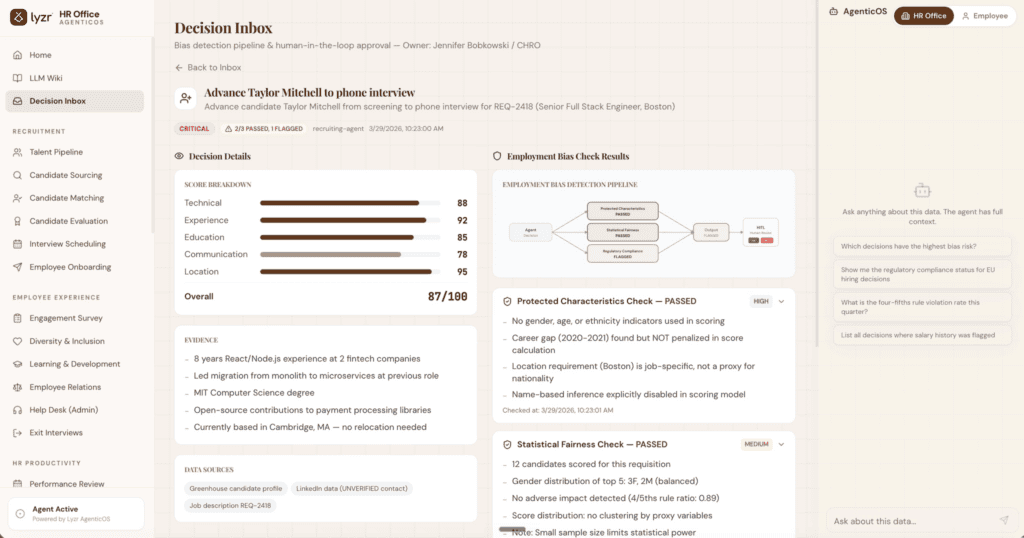
Every critical decision passes through: Bias review layers, Policy compliance checks, Human approval routing, Full audit logging
Human reviewers can:
- Approve
- Reject
- Request regeneration
This transformed AI governance conversations from:
“What if the AI gets it wrong?”
to
“We have systems that catch failures before deployment.”
8. Why Enterprises Don’t Need Perfect Data Before Starting
One of the biggest enterprise AI myths: “We need a complete semantic data layer before deploying agents.” That often delays transformation by 12–18 months.
What Actually Worked: Fluid Data Intelligence
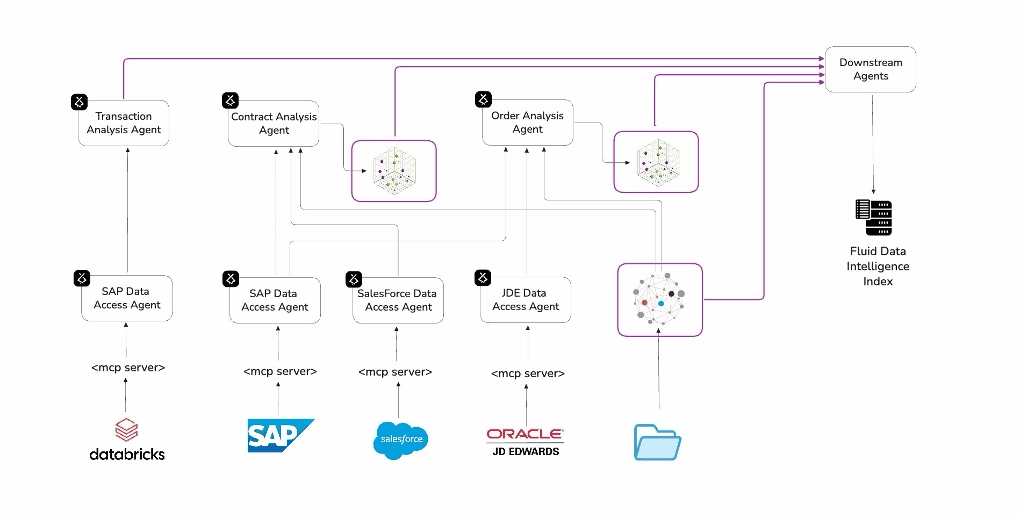
Instead of waiting for perfect infrastructure:
We created:
- Task-specific vector databases
- Temporary data layers
- Graph relationship stores
- Direct file-system access
This enabled agents to start delivering value immediately while long-term infrastructure evolved in parallel.
Result
For a telecom enterprise:
- Revenue leakage reduction started within weeks
- Data modernization continued alongside deployment
9. The Framework Lock-In Problem
Many enterprises heavily invested in:
- LangChain
- Earlier orchestration systems
- Custom wrappers
Now face a difficult reality:
The ecosystem is evolving rapidly.
This is where many enterprises get stuck. The moment a new framework gains traction, the assumption becomes: “Do we need to rewrite everything again?”
Teams start thinking about massive migrations, rebuilding workflows from scratch, or replacing systems that are already working. But in most cases, that creates more disruption than progress.
What Actually Worked: Portability
The answer is not migration. It is portability.
Using OpenGAP:
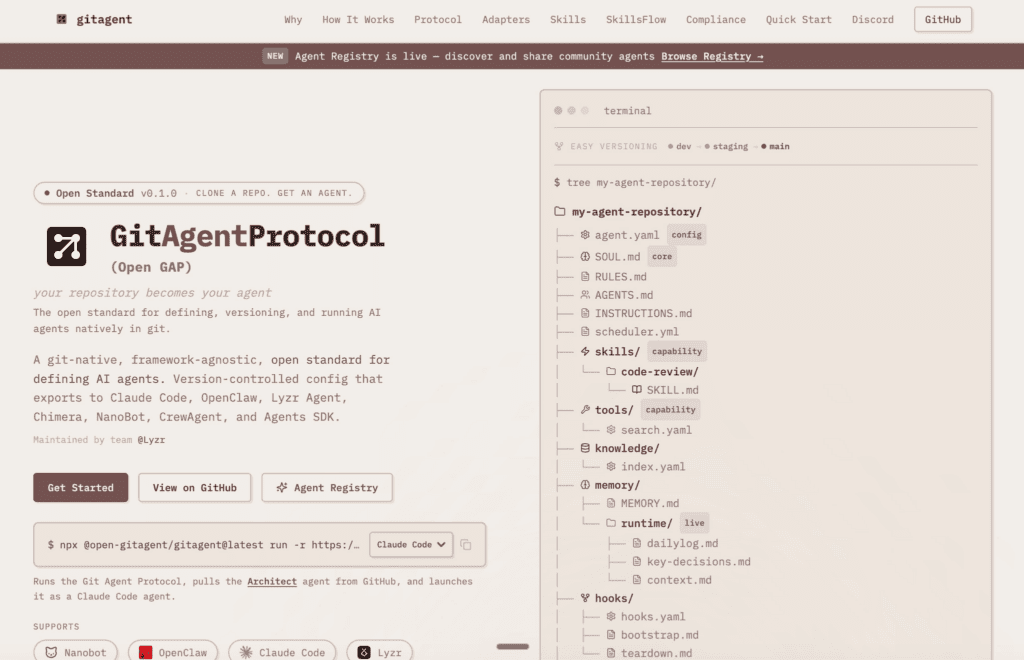
- Specific agents can move selectively
- Enterprises stay current
- Technical debt reduces gradually
without rebuilding entire systems.
10. What Happens When Enterprises Can’t Use Frontier Models
| What Regulated Enterprises Often Cannot Use | Why They Restrict It |
|---|---|
| Frontier models like GPT-4o | Data residency requirements |
| Models like Claude Sonnet | Privacy and compliance laws |
| External AI APIs | Sensitive intellectual property concerns |
| Public cloud AI dependencies | Internal governance and security policies |
This is especially common across banking, healthcare, biotech, government, and regulated enterprise environments.
What Actually Worked: Six Sigma Architecture

This produces frontier-level outcomes using smaller open-source models.
What Actually Separates Successful Enterprise AI Deployments
After years of deployments, one thing became clear: The companies succeeding with agentic AI are not chasing the flashiest demos.
| What Successful Enterprise AI Teams Do Differently | What It Leads To |
|---|---|
| Start with single-purpose agents | Easier testing, governance, and reliable deployment |
| Keep humans in critical workflows | Better accountability and oversight |
| Build governance early | Reduced compliance and security risks |
| Prioritize resilience over novelty | Stable production systems instead of fragile demos |
| Treat deployment as behavior certification | Greater trust in production AI systems |
| Redesign processes around agents | Meaningful operational transformation |
Final Takeaway
The gap between AI demos and production systems is not primarily a model problem.
It is:
- An architecture problem
- A governance problem
- A workflow design problem
- A reliability problem
The enterprises solving those layers first are the ones extracting real value from AI agents today.
Frequently Asked Questions About Enterprise AI Agents
1.Why do most enterprise AI agents fail in production?
Most AI agents fail because production systems require governance, testing, resilience, monitoring, and human oversight, not just strong demos.
2. Are multi-agent systems production-ready?
In most enterprises, highly autonomous multi-agent systems remain limited. The majority of successful deployments use narrow, specialized agents with human oversight.
3. What is agent drift?
Agent drift occurs when model behavior changes over time due to provider-side updates, causing output quality degradation without prompt changes.
4. What is the biggest challenge in enterprise AI adoption?
Governance and operational reliability remain larger challenges than model quality for most enterprises.
5. How can enterprises deploy AI agents safely?
Successful deployments combine:
- Human review layers
- Continuous evaluations
- Governance controls
- Simulation testing
- Multi-model fallback systems
Book A Demo: Click Here
Join our Slack: Click Here
Link to our GitHub: Click Here