Customer expectations for support have changed dramatically over the last few years. Customers expect immediate assistance, faster resolutions, and seamless support experiences regardless of the complexity of their issue.
For enterprises operating at global scale, meeting these expectations is often easier said than done.
As support ecosystems grow, information becomes distributed across multiple systems, documentation repositories, and operational platforms. Even highly skilled support teams can struggle to access the right information quickly enough to maintain efficient service levels.
Verifone, a global leader in payment and commerce solutions, faced a similar challenge. Supporting merchants, payment devices, banking integrations, and retail operations across multiple geographies required agents to access information from numerous internal systems during every customer interaction.
To improve support efficiency and reduce resolution times, Verifone partnered with Lyzr to implement an AI-driven customer support ecosystem combining conversational AI, intelligent escalation, and real-time agent assistance.
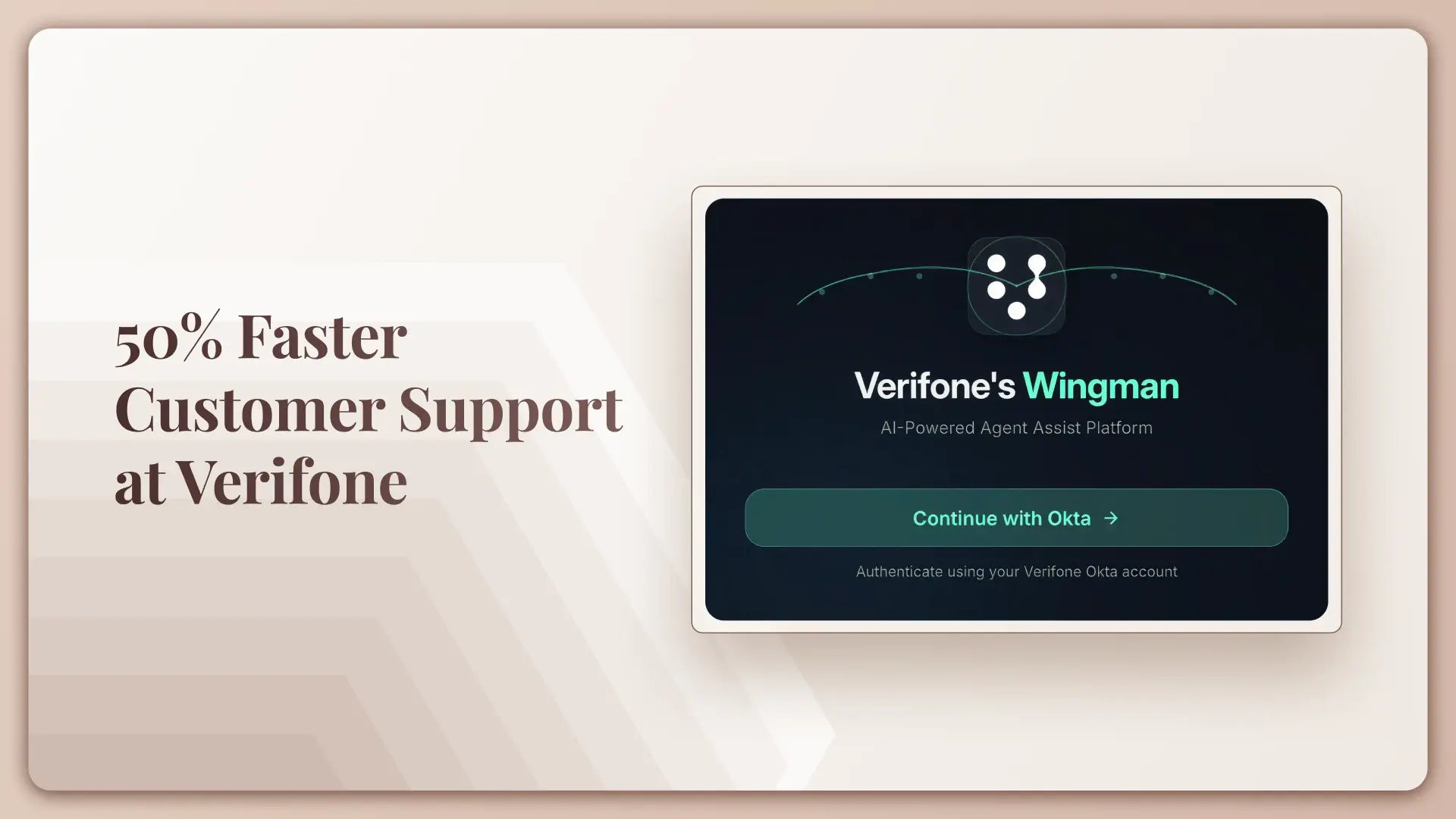
The result was a 50% reduction in average handle time while significantly improving agent productivity and operational efficiency.
The Customer Support Challenge: Too Much Information, Too Many Systems
Verifone’s support agents possessed the expertise needed to resolve customer issues effectively. The challenge was not knowledge, it was accessibility.
Every customer interaction required agents to gather information from multiple internal systems before they could begin troubleshooting.
Depending on the nature of the issue, agents frequently navigated between:
- Salesforce
- VHQ
- Commander Central
- GitBook
- Confluence
- Internal knowledge repositories
- Device-specific documentation platforms
While each system served an important purpose, the lack of a unified support experience created significant operational friction.
A simple customer inquiry often triggered a sequence of manual actions:
- Understand the issue.
- Identify the relevant product or device.
- Search across documentation systems.
- Retrieve troubleshooting procedures.
- Validate customer information.
- Return to the conversation with a response.
During this process, customers were frequently placed on hold while agents searched for the required information.
| Challenge Area | Impact on Support Operations |
| Rising Average Handle Times (AHT) | Support interactions took longer than necessary because agents spent a significant portion of each call searching for information across multiple systems instead of focusing on issue resolution. |
| Repetitive Queries Consuming Skilled Resources | Experienced support agents were frequently handling routine and repetitive customer inquiries, limiting their availability for more complex technical issues that required specialized expertise. |
| Fragmented Knowledge Access | Critical information was distributed across platforms such as Salesforce, VHQ, Commander Central, GitBook, and Confluence, forcing agents to switch between systems during live customer interactions. |
| Operational Scalability Constraints | As customer support volumes increased, maintaining service quality would require additional hiring and operational investment unless agent productivity and support efficiency improved. |
Defining the Ideal Support Experience
Before evaluating solutions, Verifone identified several key requirements.
Any solution would need to improve customer support efficiency while preserving the quality of human-assisted interactions.
Specifically, the organization needed a system that could:
- Resolve common support requests automatically
- Reduce unnecessary escalations
- Maintain conversation context during handoffs
- Deliver instant access to knowledge resources
- Integrate with existing support platforms
- Improve agent productivity without disrupting workflows
Traditional chatbots addressed only a portion of these requirements.
Verifone needed a solution that could assist both customers and support agents throughout the entire support lifecycle.
How Lyzr Designed a Two-Layer AI Support Ecosystem
To address these challenges, Lyzr implemented a comprehensive AI architecture designed to improve both customer interactions and agent workflows.
Rather than focusing exclusively on customer-facing automation, the solution was designed to optimize every stage of the support journey.
The architecture consisted of two integrated layers:
- AI Voice and Chat Assistant
- Wingman Real-Time Agent Assist Platform
Together, these systems created a seamless support experience from first contact through issue resolution.
Layer 1: AI Voice and Chat Assistant
The first layer introduced an AI-powered conversational assistant that became the initial point of contact for incoming customer requests.
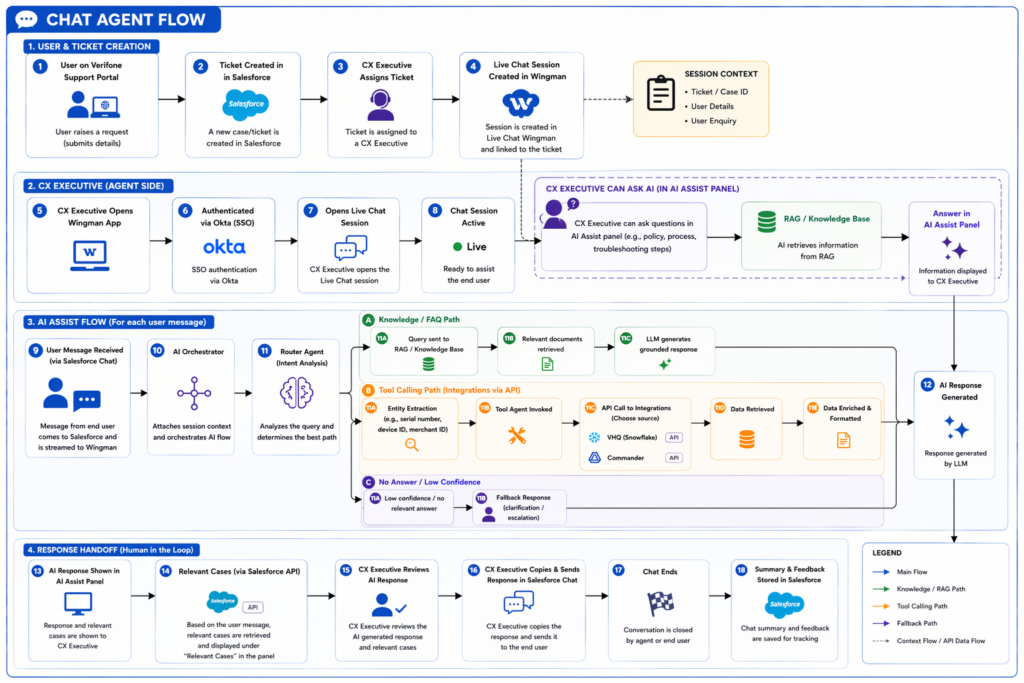
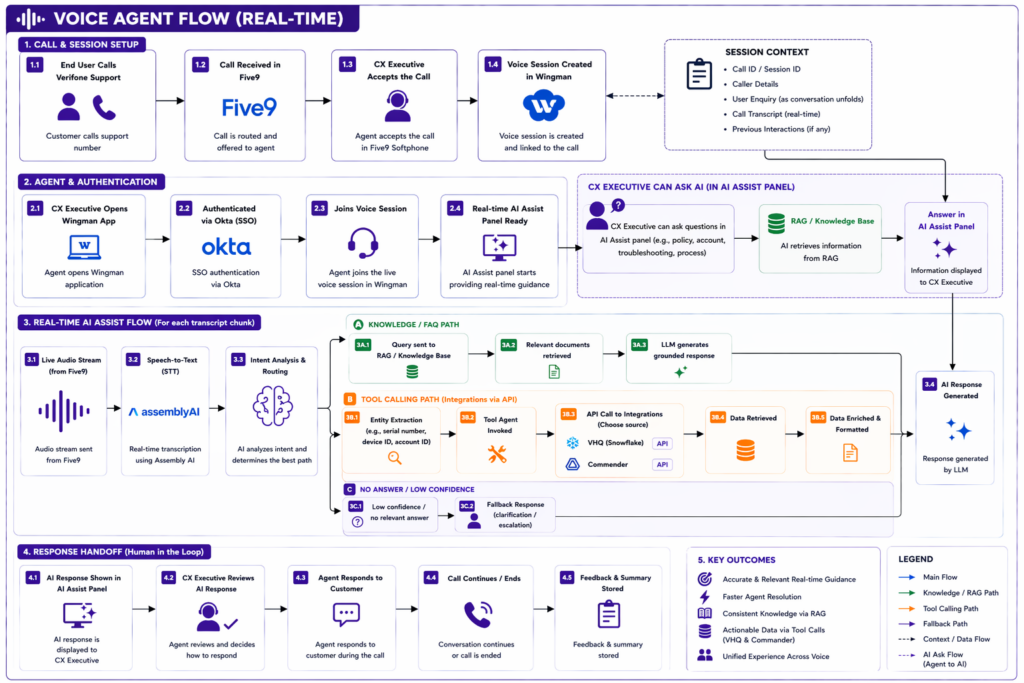
The assistant was designed to understand customer intent, identify the nature of the issue, and provide immediate assistance for routine support requests.
By handling common inquiries independently, the AI reduced the volume of tickets requiring human intervention.
Examples included:
- Basic troubleshooting guidance
- Product information requests
- Frequently asked operational questions
- Standard support workflows
When customer issues required deeper technical expertise, the AI automatically initiated an escalation.
Unlike traditional routing systems, the AI preserved the complete context of the interaction before transferring the session to a support agent.
This eliminated the need for customers to repeat information and significantly improved handoff efficiency.
Layer 2: Wingman — Real-Time Agent Assistance
While automation improved the front end of the support process, Verifone also wanted to improve how agents handled escalated cases.
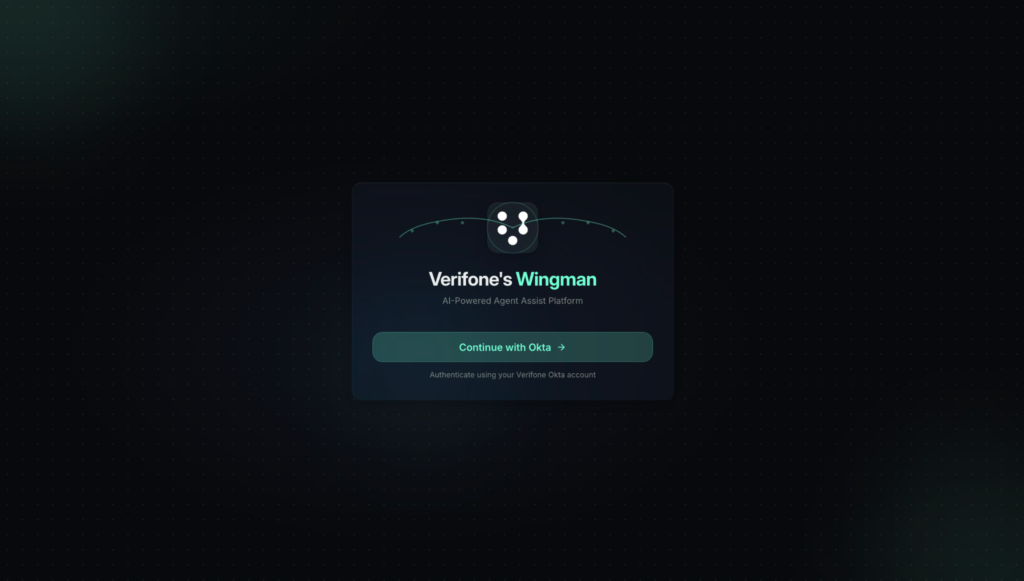
To achieve this, Lyzr developed Wingman, an AI-powered agent assistance platform.
Wingman functions as a real-time support copilot for agents.
As conversations occur, the platform continuously analyzes customer interactions and identifies relevant intent, products, devices, and troubleshooting requirements.
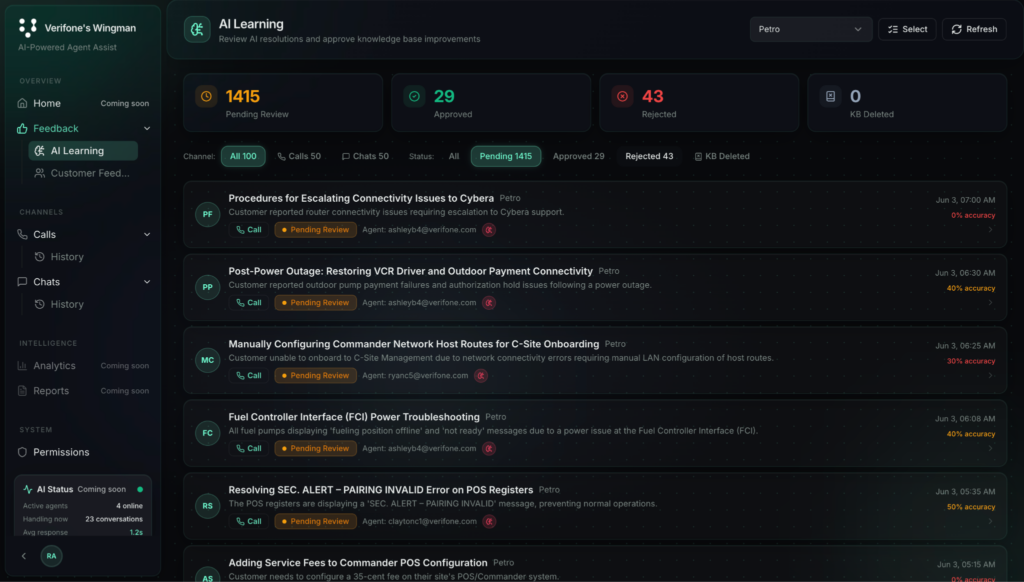
Based on this understanding, Wingman automatically retrieves information from Verifone’s internal systems.
Instead of manually searching across multiple platforms, agents receive:
- Relevant documentation
- Product-specific information
- Device configuration details
- Troubleshooting procedures
- Internal knowledge articles
all within a single interface.
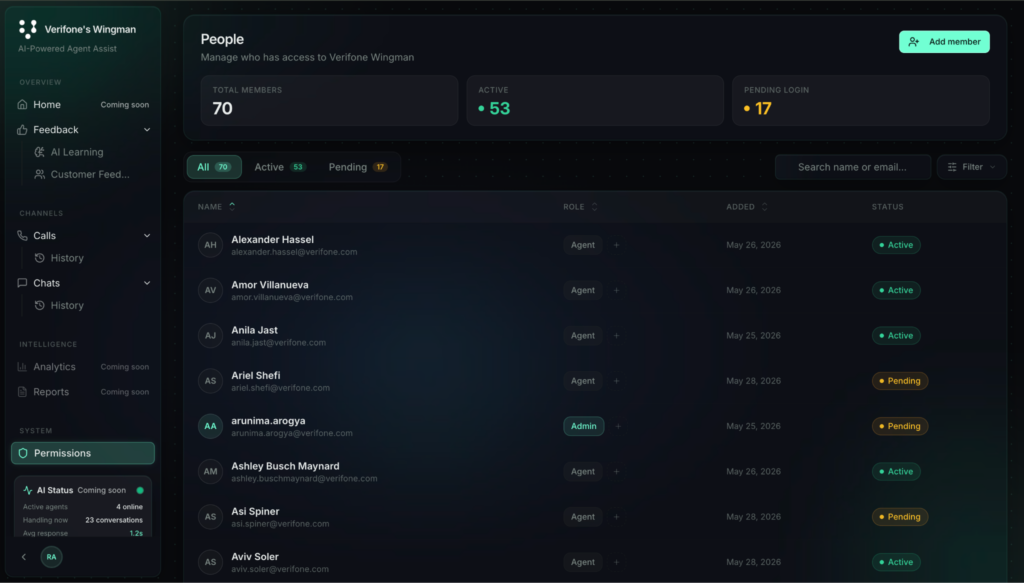
This dramatically reduces context switching and allows agents to focus entirely on solving customer issues.
The result is a more efficient support workflow and a significantly improved agent experience.
Business Impact and Measurable Results
The combined impact of conversational AI and agent assistance produced measurable improvements across Verifone’s support operations.
| Metric | Before Lyzr | After Lyzr |
| Average Handle Time | 30 Minutes | 15 Minutes |
| Knowledge Retrieval | Manual Search Across Systems | AI-Powered Retrieval |
| Agent Focus | Routine + Complex Queries | Primarily Complex Issues |
| Support Workflow | Fragmented | Unified |
- 50% Reduction in Average Handle Time
Support sessions were reduced from approximately 30 minutes to 15 minutes, allowing agents to handle more customer interactions within the same operating capacity.
- Improved Agent Productivity
By automating repetitive support requests and providing real-time assistance during escalations, support teams could focus on higher-value technical issues.
- Faster Access to Enterprise Knowledge
Agents gained immediate access to the information they needed without navigating multiple platforms during live customer interactions.
- Better Resource Utilization
Support resources were allocated more effectively, allowing experienced personnel to spend more time solving complex customer problems.
- Stronger Foundation for Future Growth
The new support architecture positioned Verifone to scale support operations more efficiently while maintaining service quality.
Wrapping Up
Customer support teams are often measured by how quickly they resolve issues, but resolution speed is ultimately determined by how quickly agents can access the information they need.
For Verifone, the challenge was not a lack of expertise, it was the operational friction created by fragmented systems and manual information retrieval.
By implementing an AI-powered voice and chat assistant alongside the Wingman real-time agent assistance platform, Lyzr helped Verifone remove those bottlenecks and create a more efficient support operation.
The outcome was a 50% reduction in average handle time, improved agent productivity, and a scalable support model capable of delivering faster and more consistent customer experiences across a global support environment.
This version feels much closer to a 3–4 page enterprise case study and gives prospects enough detail to understand both the business problem and the architecture behind the solution.
Book A Demo: Click Here
Join our Slack: Click Here
Link to our GitHub: Click Here