Many companies adopted ChatGPT Enterprise and did not get the outcome they expected.
Not because it is a weak product. It is one of the most influential AI products ever released. It changed how individuals interact with AI.
But there is a gap between:
- A tool that helps individuals
- A system that works at enterprise scale
That gap shows up when organizations deal with:
- Compliance requirements
- Data governance expectations
- Auditability and regulatory scrutiny
This is where frustration begins.
And this is why the search for a true alternative has become a serious enterprise conversation.
Why This Search Starts in the First Place
Most teams do not explore alternatives out of curiosity. They do it because something does not add up.
Typical questions that come up internally:
- Where does our data go when employees use this
- Can we prove client data is not exposed externally
- How many of our paid seats are actually used
- Why are certain teams unable to adopt it
- What happens if pricing changes suddenly
These are valid enterprise questions.
And they reveal a mismatch between what ChatGPT is built for and what large organizations require.
The Three Walls Enterprises Hit
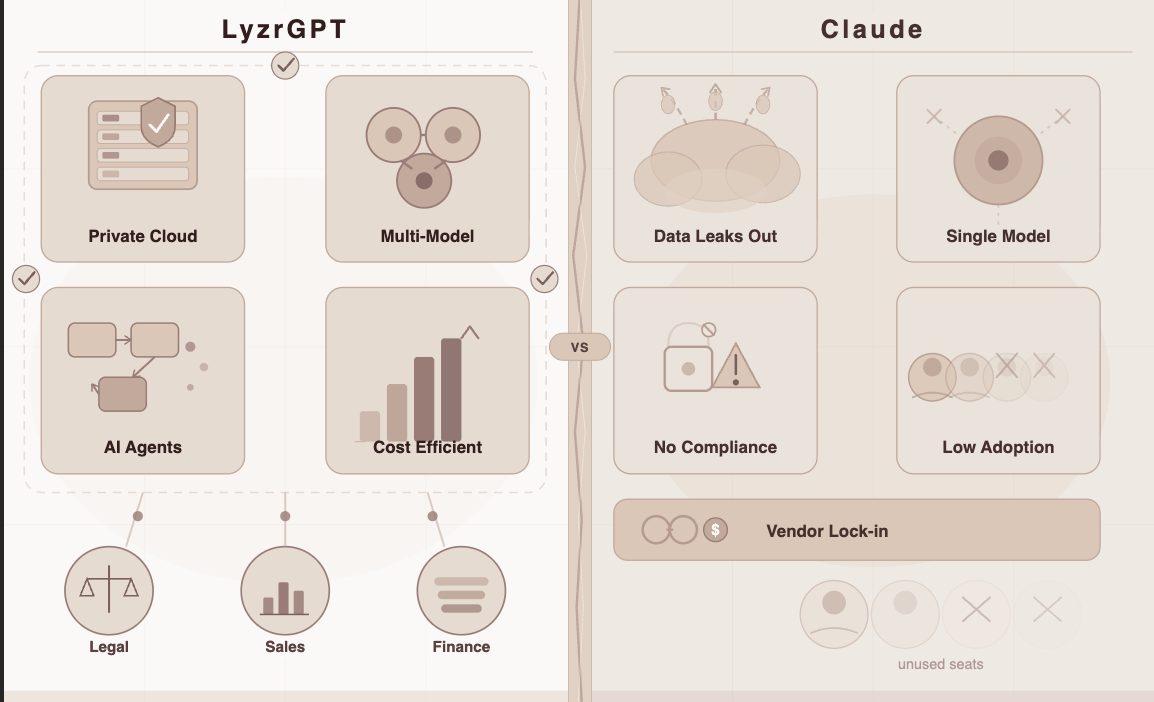
1. Data Leaves the Environment
ChatGPT operates as a SaaS platform.
- Prompts are processed on external servers
- Responses are returned to the user
Even with strong vendor assurances, the fact remains:
Data leaves the organization’s environment.
For regulated industries, this introduces:
- Compliance risks
- Data control concerns
- Legal exposure
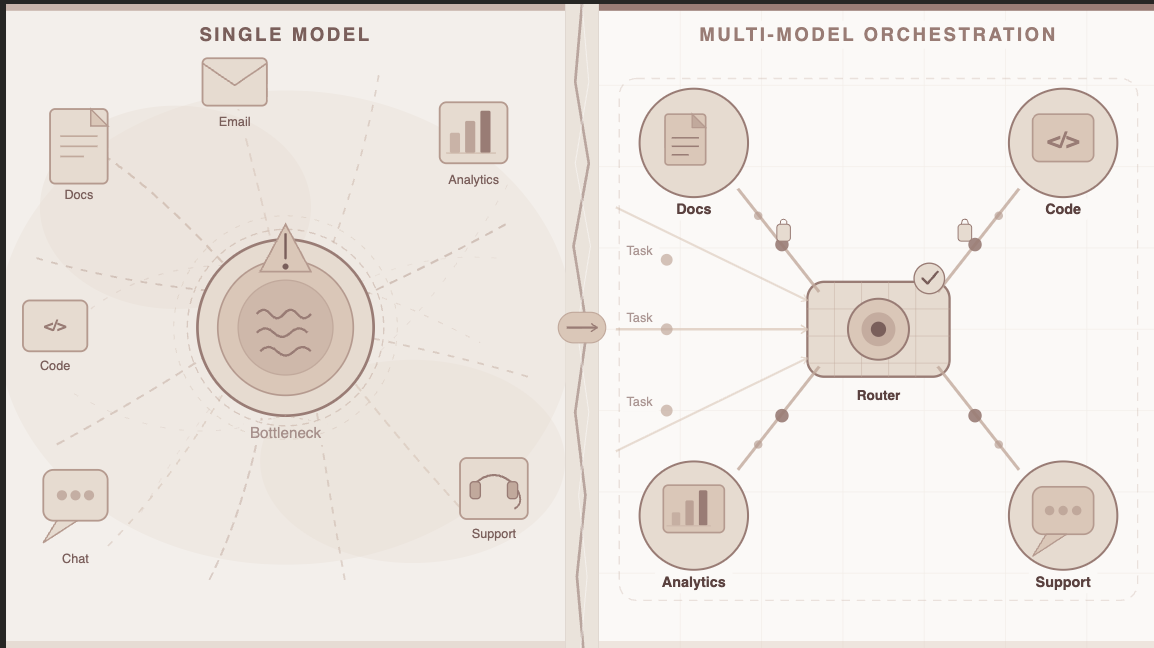
2. Locked Into a Single Model
The AI landscape is no longer dominated by one model.
| Model Type | Strength Areas |
| GPT models | General performance |
| Claude | Reasoning, document analysis |
| Gemini | Multimodal capabilities |
| Llama | Open-source flexibility |
With a single-model setup:
- There is no flexibility
- Switching is not immediate
- Strategy depends on one vendor
3. The Seat License Problem
AI usage inside organizations is uneven.
| Usage Type | Behavior |
| Power users | Heavy usage, high value |
| Casual users | Occasional interaction |
| Dormant users | Minimal or no usage |
Typical enterprise pattern:
- 25 to 35 percent active users
- Majority underutilized
This leads to:
- High wasted spend
- Poor ROI visibility
- Misleading adoption metrics
Why Most Alternatives Fall Short
Common enterprise alternatives include:
Microsoft Copilot
- Strong integration with Microsoft ecosystem
- Still SaaS-based
- Still tied to OpenAI models
Google Gemini
- Good for Google-native environments
- Data perception concerns in regulated sectors
- Stronger lock-in to Google ecosystem
Other AI Platforms
- Often wrappers around existing models
- Limited architectural differentiation
Key issue:
Most alternatives do not solve the core problems. They only adjust the surface experience.
Why LyzrGPT Stands Out
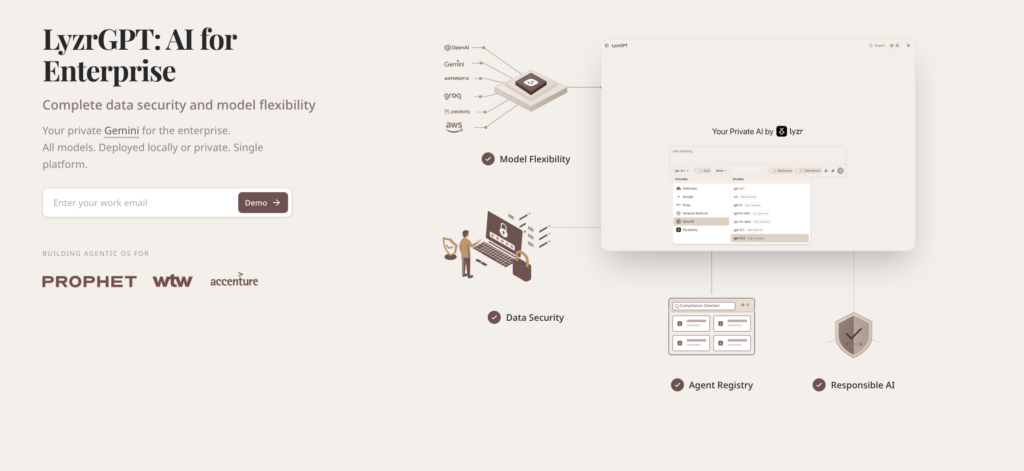
LyzrGPT approaches the problem differently.
Instead of improving the interface, it rethinks the architecture.
Core Capabilities
- Deployment inside your infrastructure
- Access to multiple AI models
- Consumption-based pricing
- Built-in agent framework for workflows
What This Means
| Area | Traditional Approach | LyzrGPT Approach |
| Deployment | External SaaS | Internal environment |
| Model access | Single vendor | Multi-model |
| Pricing | Per seat | Usage-based |
| Functionality | Chat interface | Workflow automation |
Despite this, the interface remains familiar and easy to use.
Solving the Data Problem Structurally
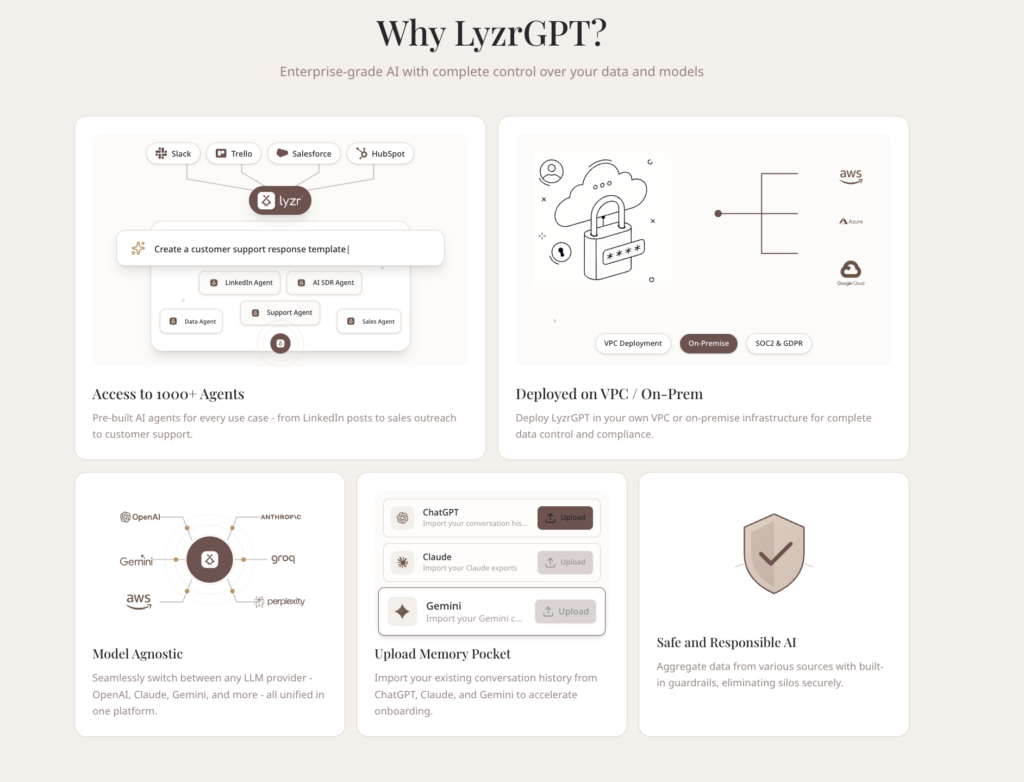
Instead of relying on vendor assurances, LyzrGPT changes where processing happens.
Key Features
- Runs inside your cloud or on-prem environment
- No external data transfer
- Built-in PII redaction before processing
- Immutable audit trails for every interaction
Impact
- Stronger compliance posture
- Clear auditability
- Reduced dependency on vendor trust
Model Flexibility as a Strategy
The AI model landscape is evolving quickly.
LyzrGPT enables:
- Access to OpenAI, Claude, Gemini, Llama, Groq, Bedrock
- Intelligent routing based on task and cost
- Local processing for sensitive workloads
Result
- No dependency on one vendor
- Ability to adapt instantly
- Better performance per use case
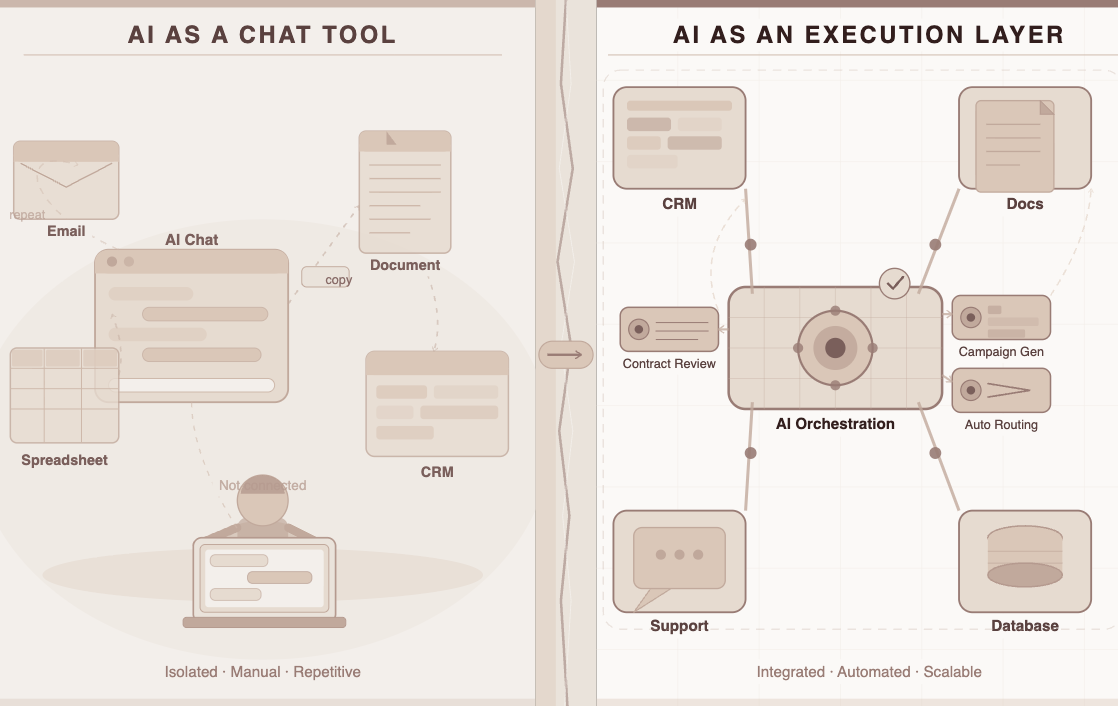
Moving Beyond Chat: The Role of Agents
Chat interfaces have limits.
AI agents extend value by handling workflows.
Example Use Cases
Legal and Compliance
- Contract analysis
- Clause extraction
- Risk flagging
Sales
- Pipeline monitoring
- Deal risk identification
Finance
- Document-based decision support
- Dispute handling
- Knowledge-based automation
- Escalation workflows
HR
- Resume screening
- Policy assistance
Key Difference
Agents operate within defined rules:
- Controlled data access
- Defined actions
- Auditability for every step
Rethinking Pricing
Traditional pricing creates inefficiencies.
Seat-Based Model Issues
- Same cost for all users
- High waste from unused seats
- Difficult ROI tracking
Consumption-Based Model
| Benefit | Impact |
| Pay for actual usage | Cost aligns with value |
| No cost for inactive users | Eliminates waste |
| Scalable usage | Supports high-value teams |
| Clear cost tracking | Improves financial visibility |
Switching Considerations
Switching concerns are usually about disruption.
Key Factors
- Existing workflows
- Knowledge continuity
- Deployment complexity
How LyzrGPT Addresses This
- Import past conversations
- Preserve context across platforms
- Fast deployment cycles
Typical Rollout Timeline
| Phase | Duration |
| Planning | Week 1–2 |
| Setup | Week 2–4 |
| Pilot | Week 4–6 |
| Full rollout | Week 6–10 |
Who Should Evaluate This
LyzrGPT is not necessary for every organization.
It becomes relevant when:
- Operating in regulated industries
- Facing resistance from legal or security teams
- Experiencing low seat utilization
- Requiring workflow automation beyond chat
- Needing multi-model flexibility
- Requiring audit trails and compliance readiness
- Avoiding vendor lock-in
The Bigger Question
The decision is not about replacing one tool with another.
It is about defining what success looks like.
Two Possible Outcomes
Basic Outcome
- AI used as a productivity assistant
- Limited to individual workflows
Advanced Outcome
- AI integrated into core workflows
- Governed and compliant
- Flexible across models
- Financially measurable
The second outcome requires a different kind of platform.
Quick Comparison
| Feature | ChatGPT Enterprise | LyzrGPT |
| Deployment | SaaS | VPC or on-prem |
| Data privacy | External | Internal |
| Models | OpenAI only | Multi-model |
| Pricing | Per seat | Consumption-based |
| Audit trails | Basic | Compliance-grade |
| PII protection | Application layer | Infrastructure level |
| Agents | Limited | Extensive library |
| Compliance | General | Industry-ready |
| Lock-in | High | Low |
| Time to value | Immediate | Structured rollout |
Final Thought
ChatGPT introduced enterprises to AI.
But enterprise-grade AI requires more than access to a model.
It requires:
- Control
- Flexibility
- Governance
- Alignment with real usage
Organizations that recognize this early are building systems that actually work.
Book A Demo: Click Here
Join our Slack: Click Here
Link to our GitHub: Click Here