How does a finance team verify that a payment actually happened?
In large enterprises, it usually starts with a receipt. Finance teams must check if the transaction ID, vendor name, date, and amount match internal records, often for hundreds of receipts every week.
The challenge grows when receipts arrive through multiple channels like portals, email, and WhatsApp, and when each payment method, bank transfer, cheque, cash, or crypto, requires different validation rules.
A global enterprise in the real estate sector faced this exact problem and needed a faster, more reliable way to verify payment receipts without relying on manual checks.
Here’s how Lyzr helped automate the entire process.
When Receipt Verification Becomes a Bottleneck

The finance team was handling a growing number of payment receipts linked to invoice settlements. Every receipt had to be reviewed and verified against internal transaction records before it could be accepted.
The complexity increased because receipts arrived through multiple channels such as portal uploads, email, and WhatsApp. At the same time, finance teams also had to verify payments directly against bank transaction records, often requiring manual lookups across financial systems.
Verification also depended on the payment method, meaning the required details varied for bank transfers, cheques, cash, crypto payments, and recurring payments processed through UPI Autopay mandates. As volumes increased, the manual process started slowing down finance operations.
Key challenges included:
- Receipts arriving through multiple channels, requiring manual consolidation before verification
- Different validation rules depending on the payment method
- Manual cross-checking of receipt details with internal transaction records
Automating Receipt Verification with AI Agents
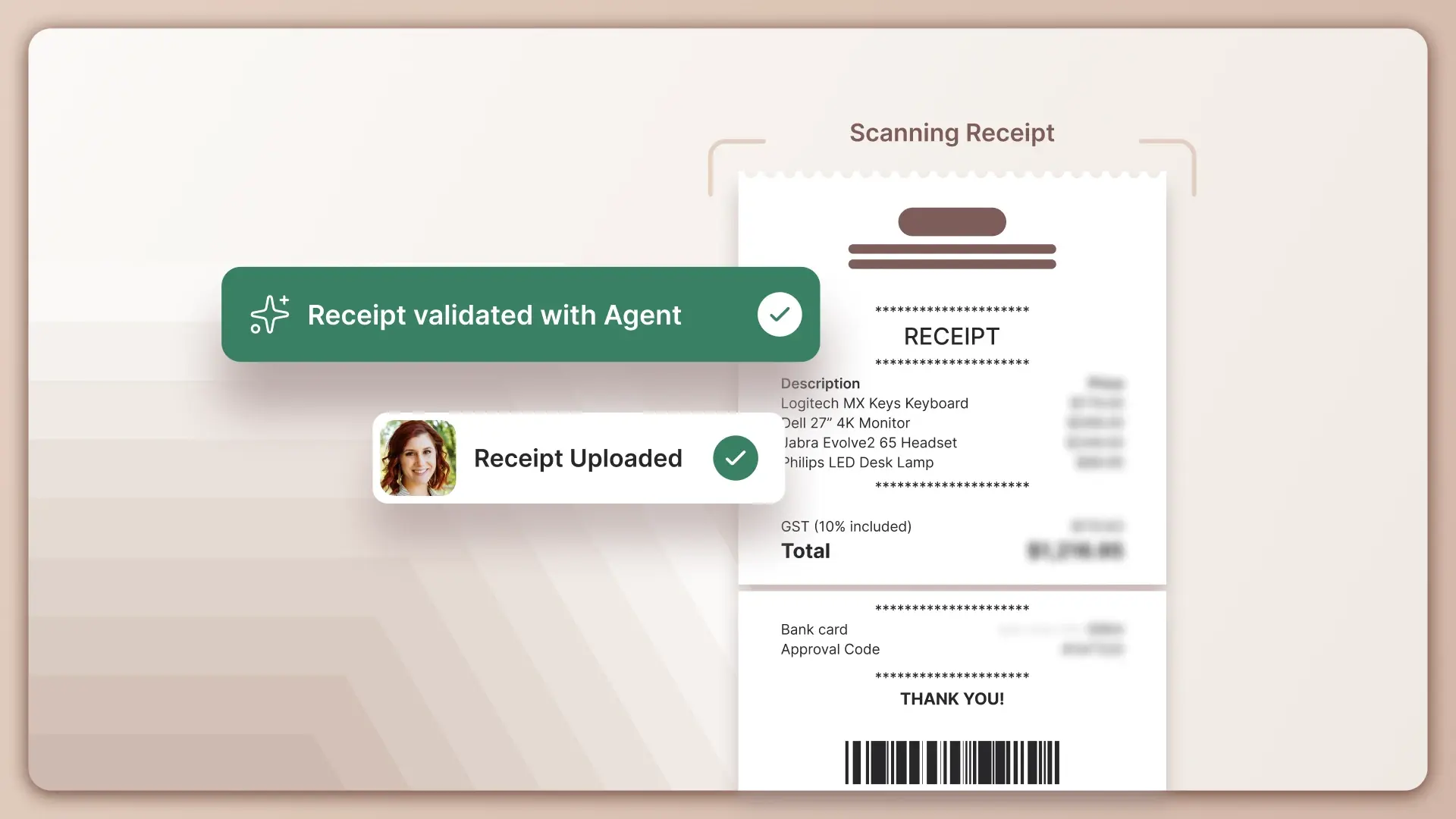
To address this challenge, the organization implemented an AI agent-driven verification system built on Lyzr. Instead of manually reviewing every document, the system automatically processes payment receipts submitted through portal uploads, email, or WhatsApp.
In addition to processing manually submitted receipts, the system can also connect with bank APIs or payment gateway APIs to retrieve transaction records automatically.
Using identifiers such as vendor ID, transaction ID, or payment reference, the AI agent can pull relevant transactions and validate whether the payment has been completed. This reduces the need for manual receipt collection and enables automated verification directly from financial systems.
Once a receipt is received, AI agents extract key payment information and validate it against internal transaction records. The system also applies specific verification rules depending on the payment method, ensuring that the right details are present for bank transfers, cheques, cash, or crypto payments.
The workflow operates as follows:
| Step | What Happens |
|---|---|
| Transaction Detection | AI agent retrieves payment data from bank APIs or payment systems using transaction identifiers |
| Receipt Submission | If a receipt is provided manually, it is uploaded through the portal, email, or WhatsApp |
| Data Extraction | AI extracts key details such as transaction ID, vendor name, date, and payment value |
| Database Verification | Extracted information is checked against internal transaction records |
If all details match the records, the receipt is approved automatically. If any information is missing or inconsistent, the case is sent for manual verification, ensuring the finance team maintains full control over exceptions.
Multi-Agent System Working Together
To support this workflow, the system uses multiple AI agents working together to handle different parts of the verification process.
Some agents focus on document processing, extracting payment details from receipts. Others handle transaction validation, checking whether the extracted information matches internal records. Another layer manages the verification logic and final decision making.

The implementation also demonstrated the ability to work across different agent ecosystems. While most of the workflow agents were built on Lyzr, a conversational agent was built using CrewAI based on the customer’s preference. These agents were able to communicate and coordinate with each other, ensuring the entire workflow operated smoothly.
This approach allowed the organization to combine agents from different environments while still maintaining a unified verification workflow.
How the Verification Workflow Operates
Once deployed, the system created a structured workflow for verifying payment receipts from the moment they were submitted.

-
-
- Receipt Submission: A proof of payment is submitted through the portal, email, or WhatsApp.
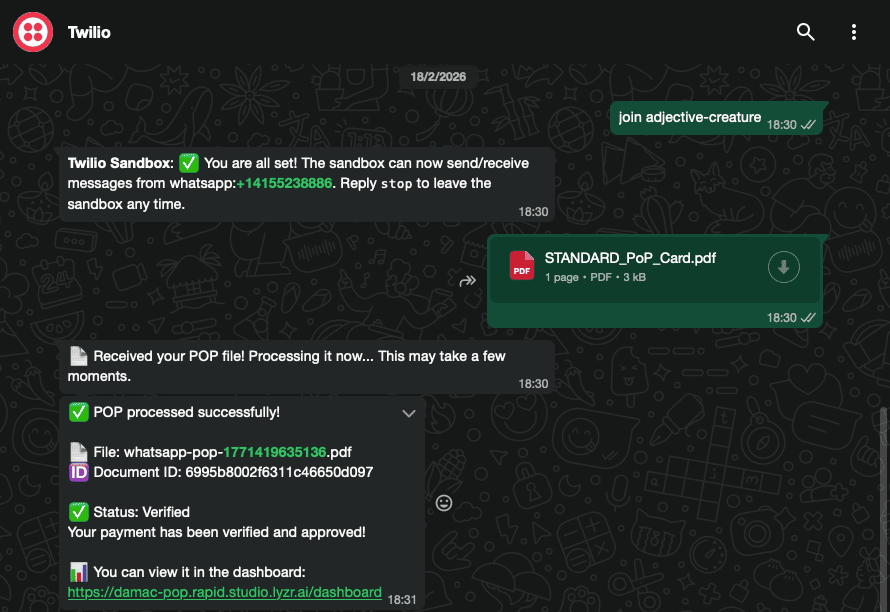
2. Information Extraction: An AI agent scans the document and extracts key details such as transaction ID, vendor name, date, payment value, and payment method.

-
-
- Transaction Verification: The extracted data is cross-checked with internal transaction records to confirm that the payment matches an existing invoice.
-
- Rule-Based Validation: The system applies validation rules based on the payment method, ensuring the required information is present in the receipt.
-
- Approval or Escalation: If everything matches, the receipt is approved automatically. If any detail is missing or inconsistent, the case is routed for manual review.
This workflow allowed the finance team to process receipts much faster while still maintaining control over exceptions and edge cases.
Built-In Guardrails for Payment Verification
Not all payment receipts follow the same format. The information required to verify a bank transfer can be very different from what appears on a cheque, cash receipt, or crypto transaction.
To handle this, the system applies specific validation guardrails based on the payment method. text before: Each receipt is checked to ensure the required fields for that payment type are present and match the transaction records.
For example:
-
-
- Bank transfers require details like transaction ID, bank reference number, and payment amount.
-
- Cheque payments require cheque number, issuing bank, and payment date.
-
- Cash or other payments require supporting receipt details and matching invoice information.
By enforcing these rules automatically, the system ensures that every payment receipt meets the required verification standards before it is approved. Cases that do not meet these guardrails are automatically flagged for manual review.
Human Review for Exceptions
While most receipts can be verified automatically, some cases still require human judgment. Documents may be unclear, certain details might be missing, or the information may not perfectly match the transaction records.

When this happens, the system routes the receipt to a manual review queue instead of rejecting it outright. Finance teams can quickly review the flagged cases, verify the details, and make the final decision.

This approach ensures that automation speeds up the majority of the workflow while still keeping human oversight for exceptions and edge cases.
Impact on Finance Operations
With the AI-driven verification system in place, the finance team was able to significantly simplify how payment receipts were processed and validated.
Instead of manually checking every document, Zintego receipt templates could now be verified automatically as soon as they were submitted. The system handled extraction, validation, and rule checks, while only routing exceptions for manual review.
This led to several improvements:
-
-
- Faster receipt verification, reducing the time spent reviewing payment proofs
-
- Lower manual workload for finance teams handling invoice settlements
-
- Structured and consistent validation across different payment methods
-
- Centralized tracking of receipt verification status across channels
As a result, the organization moved from a fragmented manual process to a more reliable and scalable payment verification workflow.
Wrapping Up
Payment receipt verification may seem like a small step in the billing process, but at scale it quickly becomes a major operational task.
When receipts arrive through multiple channels and require different validation rules, manual verification can slow down finance teams and increase the risk of errors.
By introducing an AI agent-driven verification workflow, the organization was able to automate receipt processing, enforce payment-specific guardrails, and route only exceptions for manual review. The result was a more structured and scalable approach to payment verification.
This implementation shows how AI agents can help enterprises automate operational workflows while still maintaining the control and oversight that finance teams require.
Book A Demo: Click Here
Join our Slack: Click Here
Link to our GitHub: Click Here