TL;DR
AI agent frameworks provide the infrastructure to build, deploy, and scale intelligent AI agents in weeks instead of months. This guide covers what frameworks are, how they work, real examples from companies like Under Armour and Accenture, and a step-by-step process to create your first agent.
Key takeaway: agent frameworks handle the complex infrastructure (security, integration, orchestration) so you can focus on solving business problems.
Sam Altman. Satya Nadella. Andrew Ng. Sundar Pichai.
When the loudest voices in tech are aligned on one thing, you pay attention.
Right now, that thing is AI agents.
And to build agents that actually work for your business, you need to start with the right foundation: ai agent frameworks.
Why? Because this is where software is headed. It’s what enterprises are investing in. And it’s how businesses are staying ahead.
AI agents aren’t a futuristic concept anymore. They’re already reshaping how companies work: automating decisions, handling tasks, and adapting in real time.
This article breaks it down for you.
What is an AI agent framework?
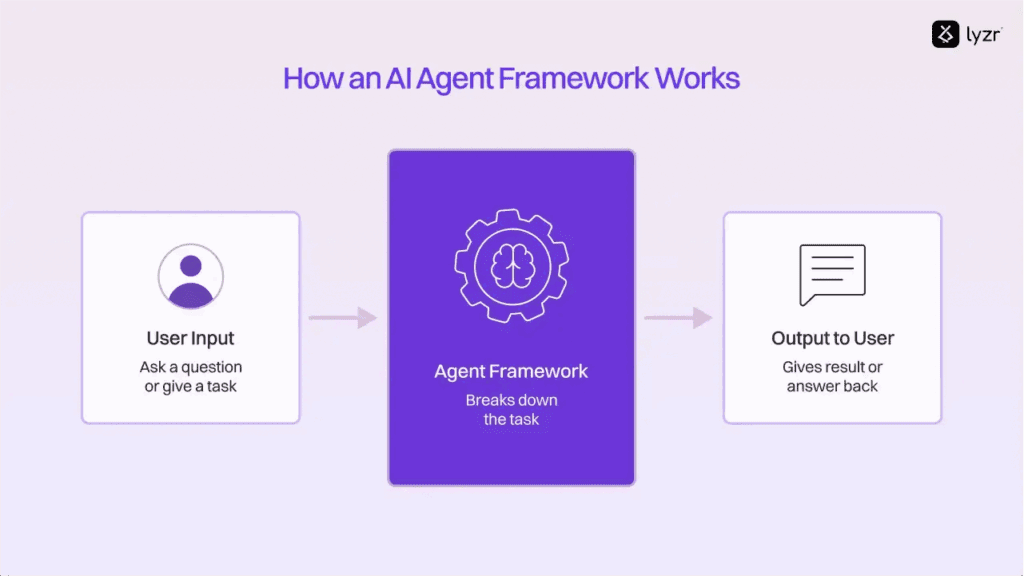
If you’re from a non-tech background, think of an agent framework as the brain behind an AI agent. You give it a task. It figures out what steps are needed, uses the right services or data, and completes it. You don’t need to know how it all works underneath. The framework takes care of the thinking and doing, so the agent can focus on results.
Now let’s get into the technical side of it.
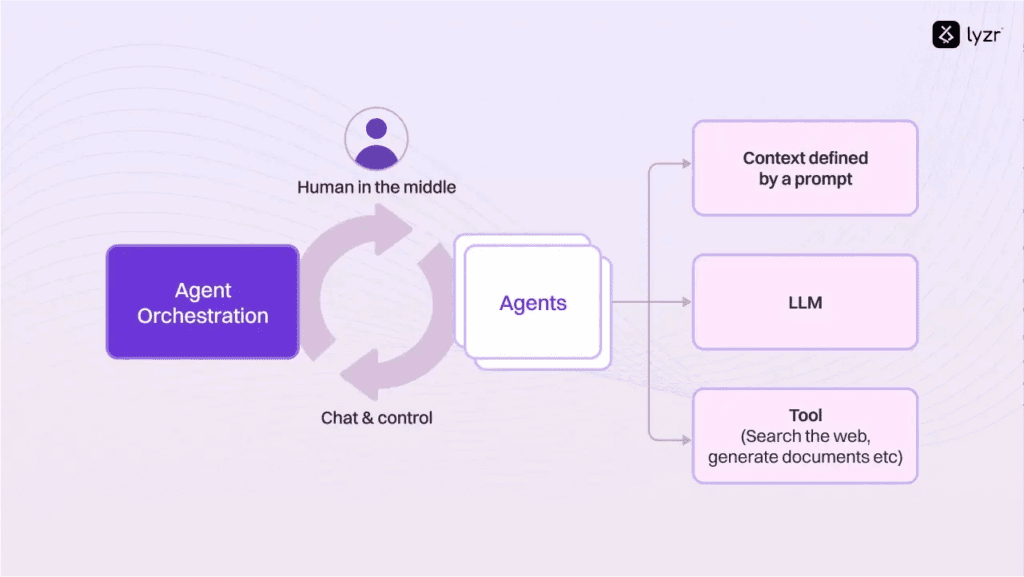
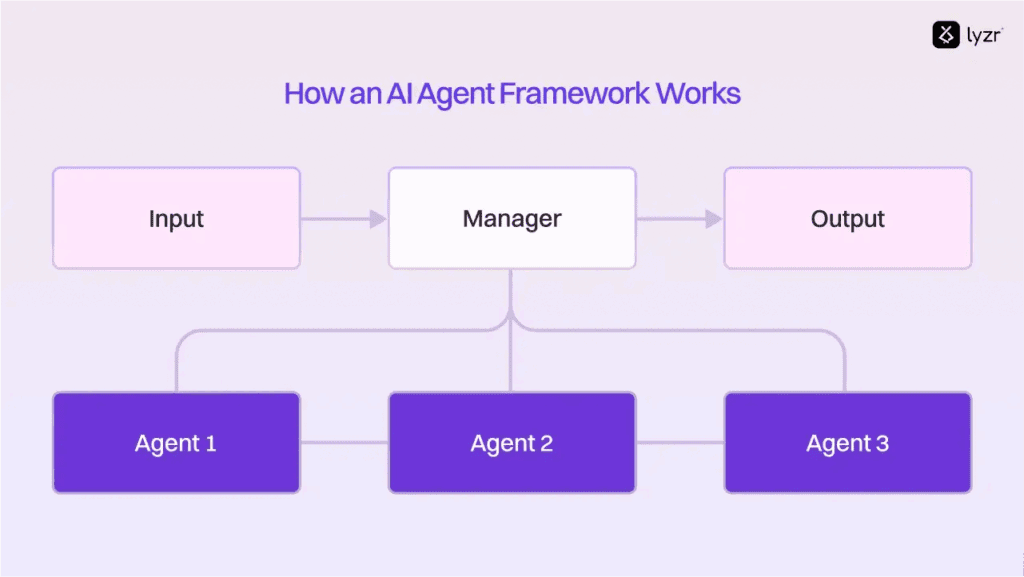
AI agent frameworks are platforms, libraries, or environments designed to build autonomous agents capable of perceiving input, processing it with algorithms or LLMs, and performing tasks like retrieving data, initiating workflows, or interacting with users.
These frameworks simplify agent workflows by providing modular components for essential functionalities, enabling developers to focus on customizations while ensuring transparency, reliability, and scalability.
AI agent frameworks come in all shapes and sizes. Some are built for conversations, like virtual assistants or chatbots, while others excel at handling workflow automation.
Some common capabilities you’ll find include:
- Event-based triggers and scheduled tasks
- Role-based access and permissions
- Integration with external databases and APIs
- Support for real-time feedback and agent tuning
- Built-in safety, throttling, and retry mechanisms
What are the different types of agent framework?
| Type of Agent Framework | What it Does | Best For | Example |
|---|---|---|---|
| Rule-based | Follows fixed rules or conditions to act | Simple tasks with clear logic | A chatbot that answers FAQs based on predefined rules |
| Reactive | Responds directly to inputs without memory or planning | Real-time decisions | An AI that auto-accepts calendar invites if there’s no conflict |
| Deliberative | Plans actions based on understanding the task and its goals | Tasks that need reasoning | A virtual agent that schedules meetings by checking calendars, preferences, and time zones |
| Hybrid | Combines reactive and deliberative behaviors | Tasks needing quick responses and planning | A customer service agent that answers instantly and escalates based on context |
| Learning-based | Improves over time using data and feedback | Adaptive tasks | An agent that gets better at writing reports based on feedback from past edits |
What to Look for in an AI Agent Framework
Understanding how to create an AI agent reveals what your framework must provide. Here are the essential capabilities that separate production-ready platforms from basic tools:
Agent orchestration and management
A good framework should let you create, train, and deploy agents without friction. It should support both technical and no-code workflows, so development and updates are easy to manage. Both developers and business users need the ability to build and iterate on agents, manage them individually, and coordinate multi-agent systems working together on complex workflows.
Look for:
- Visual agent builders for non-technical users
- Version control and rollback capabilities
- Multi-agent coordination
- Pre-built templates for common use cases
Conversation & context management
The ai agent framework should handle conversations intelligently, tracking context, managing history, and generating responses that make sense over time, not just in isolated messages. This is where
AG-UI (Agent-User Interaction Protocol) becomes critical, ensuring consistent, interpretable agent-to-user interactions across sessions and channels. Real-world interactions aren’t single exchanges, users ask follow-up questions, reference previous statements, and expect continuity across sessions.
Look for:
- Context retention across sessions and conversations
- Conversation history management
- Intent recognition across multiple turns
- Dialogue flow control
- Memory of conversation state and decisions
User management & personalization
The agent framework needs to remember who it’s talking to. Tracking preferences, past interactions, and behavior helps agents respond in more relevant, personalized ways. Personalized experiences drive better outcomes: agents should recognize returning users, remember their preferences, and adapt responses based on user history and behavior patterns.
Look for:
- User profile management and storage
- Preference tracking across sessions
- Interaction history and behavioral data
- Role-based access control (RBAC)
- Personalization engines that adapt responses
- Cross-channel user identity management
Enterprise integration
Connecting to APIs, databases, or other services should be straightforward. A strong framework makes sure agents can pull and push data across systems without complex setup. Your agents must access existing data and systems, custom integration for every connection wastes months of development time.
Look for:
- Pre-built connectors (Salesforce, SAP, ServiceNow, Slack, etc.)
- REST API, GraphQL, webhook support
- Database connectivity (SQL, NoSQL, vector databases)
- Secure credential management
- Standard protocols for easy custom integrations
Customization & extensibility
One size never fits all. The right framework gives you control to add your own features, fine-tune data, and shape how the agent responds to match your goals. Every business has unique needs, terminology, and workflows—a framework that can’t adapt forces compromises that limit effectiveness. Large enterprises frequently refine these specific requirements through generative AI consulting services to ensure their framework choice aligns with long-term digital transformation goals.
Look for:
- Custom tool/function creation
- Prompt template customization
- Plugin or extension architecture
- API access for programmatic control
- Fine-tuning options for domain-specific needs
- Custom data source integration
Journey management
Beyond single tasks, the framework should support full user journeys, tracking steps, decisions, and context over time to deliver smarter outcomes. Complex business processes span multiple interactions over days or weeks frameworks must maintain state across long-running workflows and orchestrate multi-step journeys.
Look for:
- Long-running workflow support
- State persistence across sessions
- Multi-step process orchestration
- Journey analytics and tracking
- Handoff management (agent-to-agent, agent-to-human)
- Resumable workflows after interruptions
Security & compliance
Enterprise-grade security controls, compliance certifications, and deployment options that keep data within your control are non-negotiable. Regulated industries require SOC2, HIPAA, GDPR compliance, and security breaches average $4.88 million in costs—trust is essential for enterprise AI.
Look for:
- Compliance certifications (SOC2, ISO 27001, HIPAA, GDPR)
- Encryption at rest and in transit
- Audit trails and comprehensive logging
- On-premise or private cloud deployment options
- Role-based access control (RBAC)
- Data residency controls
Observability & testing
Built-in tools for monitoring performance, analyzing conversations, collecting feedback, and testing agents before production are critical. You can’t improve what you don’t measure, and production issues discovered by users damage trust and reputation.
Look for:
- Real-time dashboards and analytics (often integrated with website monitoring tools).
- Agent simulation engines (Lyzr: 10,000+ scenarios)
- A/B testing capabilities
- Error logging and debugging tools
- User feedback collection
- Conversation analytics
Scalability & reliability
Infrastructure that handles growth from prototype to enterprise scale without re-architecting is essential. Successful agents need to scale from 10 users to 10,000 without rebuilding, and downtime damages user trust and business operations.
Look for:
- Proven performance at scale (100+ requests/second)
- Auto-scaling capabilities
- Multi-region deployment
- Load balancing and fault tolerance
- 99.99%+ uptime guarantees
- Disaster recovery capabilities
Multi-agent coordination
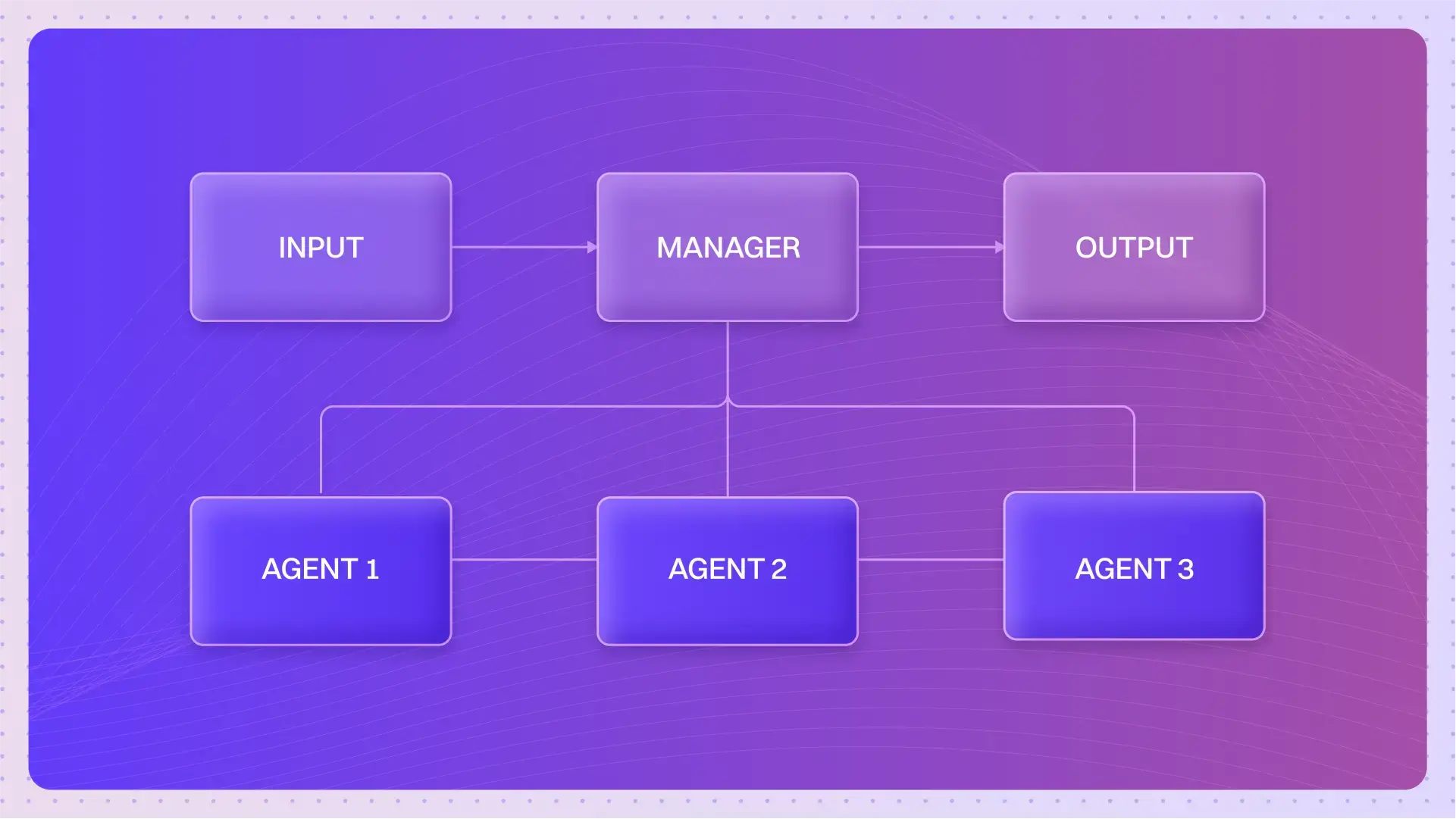
Sophisticated use cases require multiple specialized agents working together, passing context between agents, and managing complex workflows that require different expertise. Single agents can’t handle every aspect of complex workflows.
Look for:
- Agent-to-agent communication protocols
- Workflow orchestration engines
- Shared memory and context across agents
- Handoff management and routing
- Hierarchical agent structures (parent/child agents)
How AI agent frameworks make building agents easier?
The growing complexity of business operations requires intelligent solutions that can not only automate repetitive tasks but also make decisions autonomously. AI agent frameworks are critical for several reasons:
Easier to Build: Frameworks provide ready-made tools to simplify the creation of AI agents. Instead of spending 6-12 months building conversation management, tool integration, security infrastructure, and deployment pipelines from scratch, frameworks give you these capabilities out of the box.
Customizable: They let you easily adjust agents to fit specific needs. While frameworks provide standard capabilities, they allow customization of prompts, tools, workflows, and integrations to match your unique requirements.
Scalable: Frameworks help agents grow and adapt as your business needs change. They’re designed to handle increasing volumes and expand to new use cases without re-architecture. eMudra scaled from one website to three product sites.
The alternative? Building without a framework means months of infrastructure work, ongoing maintenance burden, security risks, and limited scalability. Companies using enterprise frameworks like Lyzr deploy production-ready agents in 2-8 weeks with built-in compliance (SOC2, HIPAA, GDPR) and proven scalability, while teams building from scratch spend most of their time on infrastructure instead of solving business problems.
How to create an AI agent: step-by-step guide
Building an AI agent might sound complex, but with the right agent framework, the process becomes systematic and achievable. Whether you’re a technical developer or a business leader exploring AI agents for the first time, understanding how to create an AI agent starts with these fundamental steps.
Step 1: Define your AI agent’s purpose
Before writing a single line of code, clarify exactly what problem your AI agent will solve. The more specific you are, the better your agent will perform.
Instead of vague goals like:
- “Help with customer service”
- “Automate our workflows”
Define specific, measurable objectives:
- “Resolve password reset requests within 2 minutes and escalate complex account issues to human agents”
- “Process incoming invoices, extract data, validate against purchase orders, and route for approval”
- “Monitor loan applications, verify KYC documentation, and flag compliance issues”
Key questions to answer:
- What specific task will this AI agent perform?
- What’s the current manual process it’s replacing?
- What does success look like? (response time, accuracy rate, volume handled)
- Where does human oversight need to remain?
Step 2: Choose the right AI agent framework
This is the most critical decision in how to create an AI agent. Your framework choice determines development speed, capabilities, scalability, and maintenance requirements.
Framework selection criteria:
For rapid deployment with minimal coding:
- Lyzr Agent Studio – Low-code platform with pre-built agents and enterprise security
- Dialogflow – Google’s platform for conversational agents
- Botpress – Open-source with visual workflow builder
For maximum technical customization:
- LangChain – Popular framework for building LLM-powered agents
- AutoGen – Microsoft’s framework for multi-agent conversations
- Rasa – Open-source for sophisticated NLP and dialogue management
For enterprise Microsoft ecosystems:
- Microsoft Bot Framework – Deep integration with Azure and Microsoft services
For multi-agent orchestration:
- CrewAI – Specialized in coordinating multiple AI agents
- Lyzr Agent Studio – Enterprise-grade multi-agent systems with governance
Evaluation factors:
- Does it support your tech stack and existing systems?
- What’s the learning curve for your team?
- Does it meet your security and compliance requirements?
- Can it scale to your projected volume?
- What’s the total cost of ownership (licensing, infrastructure, maintenance)?
Step 3: Configure your AI agent’s capabilities
Once you’ve selected your agent framework, configure what your AI agent can actually do. Think of this as equipping your agent with the tools and knowledge it needs.
Define Agent Tools & Integrations:
What systems, APIs, or services will your agent access?
- Databases: Customer records, product catalogs, transaction histories
- APIs: Payment processors, CRM systems, communication platforms
- Internal tools: Ticketing systems, knowledge bases, approval workflows
- External services: Weather APIs, shipping trackers, verification services
Example: A customer support AI agent might need:
- Access to your knowledge base (to answer FAQs)
- CRM integration (to pull customer history)
- Ticketing system API (to create or update support tickets)
- Email/SMS services (to send confirmations)
Provide Agent Knowledge:
What information does your agent need to make decisions?
- Product documentation and specifications
- Company policies and procedures
- Compliance requirements and regulations
- Historical data and examples
- Industry-specific terminology
Set Permissions & Constraints:
What can your AI agent do automatically vs. what requires approval?
- Automatic actions: Password resets, status updates, information retrieval
- Approval required: Refunds over $500, account closures, policy exceptions
- Prohibited actions: Anything violating compliance, security protocols
Define Safety Guardrails:
- Rate limits (max 100 API calls per minute)
- Budget constraints (max $50 per transaction)
- Escalation triggers (sentiment score below threshold → human takeover)
- Fallback behaviors (if confidence < 80%, ask for clarification)
Step 4: Train & test your AI agent
Modern AI agent frameworks using LLMs require a different approach to “training” than traditional machine learning. Instead of feeding thousands of labeled examples, you’re primarily doing prompt engineering and automation testing.
Testing Strategy:
Start with controlled testing before production:
- Unit testing: Test individual agent capabilities (Can it search the knowledge base? Can it create tickets?)
- Integration testing: Test the full workflow (Can it handle a complete customer interaction end-to-end?)
- Edge case testing: What happens with unclear requests, system errors, or conflicting information?
- Load testing: Can it handle expected volume? (100 concurrent users? 1000?)
- Security testing: Can users manipulate it to access unauthorized information?
Common test scenarios:
- Happy path: Everything works as expected
- Missing information: User doesn’t provide required details
- System errors: API is down or returns errors
- Ambiguous requests: User intent is unclear
- Adversarial inputs: User tries to “jailbreak” or manipulate the agent
Iterate based on results:
- Refine prompts when responses are unclear
- Add examples for common misunderstandings
- Adjust confidence thresholds for escalations
- Update knowledge base with missing information
Step 5: Deploy & monitor your AI agent
Deployment isn’t the finish line, it’s the beginning of continuous improvement.
Deployment Options:
Cloud-hosted (fastest to deploy):
- Framework provider’s cloud (Lyzr Cloud, Dialogflow on GCP)
- Public cloud (AWS, Azure, GCP)
- Pros: Quick setup, managed infrastructure, automatic scaling
- Cons: Ongoing costs, data leaves your network
On-premise (for regulated industries):
- Your own servers or private cloud
- Pros: Complete data control, meets strict compliance requirements
- Cons: You manage infrastructure, updates, security
Hybrid:
- Agent runs in cloud, but data stays on-premise
- Pros: Balance of convenience and data sovereignty
- Cons: More complex architecture
What are the top AI Agent frameworks?
- Lyzr: A low-code platform for building, customizing, and scaling AI agents quickly. It offers flexibility and ease of use, making it ideal for businesses at any stage.
- Rasa: An open-source framework that enables developers to create sophisticated AI-powered chatbots and assistants with a focus on natural language understanding.
- Dialogflow: Powered by Google, this framework simplifies the development of conversational agents using natural language processing to handle complex dialogues.
- Microsoft Bot Framework: A comprehensive framework for building AI chatbots, providing rich integration with Microsoft services and offering robust tools for handling conversations at scale.
- Botpress: An open-source platform that allows for flexible and customizable AI agent development with a focus on easy-to-manage workflows and extensibility.
A Quick Feature Comparison
| Feature | Lyzr Agent Studio | Rasa | Dialogflow | Microsoft Bot Framework | Botpress |
|---|---|---|---|---|---|
| No-code/Low-code Support | ✅ | ❌ | ✅ | ✅ | ✅ |
| Customizable for Complex Use Cases | ✅ | ✅ | ✅ | ✅ | ✅ |
| Native Voice Integration | ✅ | ❌ | ✅ | ✅ | ❌ |
| Enterprise Scalability | ✅ | ✅ | ✅ | ✅ | ✅ |
Want to know in detail? Check out here
And what can your business do with an ai agent framework?
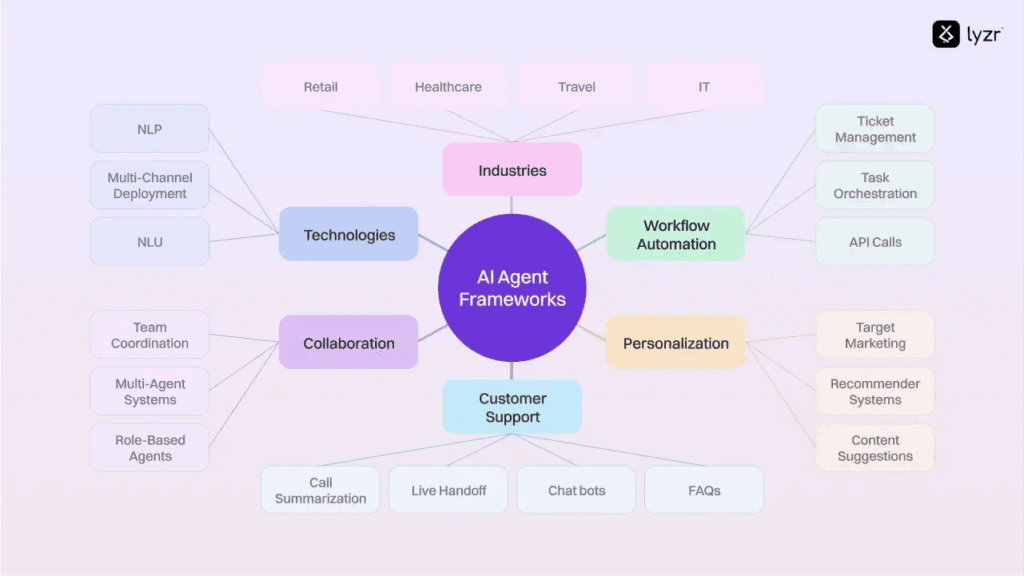
To demonstrate the impact of agent frameworks, consider these business-critical scenarios.
1. Handle 20,000+ Tickets a Month with Ease
Think scaling is just about adding more servers? Think again.
Handling thousands of simultaneous requests, like 100+ per second per instance, can quickly degrade performance without the right infrastructure.
Running hundreds of agents at once? Each one must maintain its context while sharing vital insights across your systems.
Then, there’s the massive data load: enterprises process terabytes daily, from 20,000+ IT support tickets each month to user data and system states. Without intelligent load balancing and resource allocation across regions, your operations are at risk.
That’s where an agent framework comes in. It provides the structure to handle high volumes, maintain context across multiple agents, and scale seamlessly. With built-in performance optimizations, your system can run at the scale needed to meet enterprise demands.

2. Prevent a $4.88 Million Security Breach with Robust Protection
Think a security breach won’t happen to you? The numbers beg to differ.
A breach can cost an enterprise $4.88 million on average (IBM, 2024).
That’s a serious price to pay, and enterprise security standards are non-negotiable. Does your current system support multiple authentication methods like SSO, MFA, or OAuth?
How about role-based access control (RBAC) with granular permissions? And what about data encryption and compliance with regulations like GDPR, CCPA, HIPAA? Without these in place, your business is exposed.
An agent framework ensures compliance and security at every level. With built-in support for multi-method authentication, encryption, and regulatory requirements, it safeguards your enterprise from the risks that could otherwise cripple it.
3. Efficiently Manage 231++ Apps Across Your Enterprise
Using 93 apps sounds chaotic? Try 231, that’s the average for large companies, with an 11% year-on-year increase (Okta).
Managing this complexity means handling legacy systems, multiple databases, and different protocols such as REST, SOAP, GraphQL, and that’s just the start.
Add workflows that span multi-step approvals, SLAs, exception handling, and escalations, and you have a real integration headache.
An agent framework simplifies this integration. It connects to various apps, supports multiple data formats and protocols, and integrates legacy systems with ease. With built-in auditing, documentation, and smooth workflow handling, it turns your tangled app ecosystem into a well-orchestrated machine.
Example of an AI agent framework: Lyzr + AWS
Lyzr Agent Studio integrates easily with AWS to create a powerful, scalable AI agent solution. Here’s how it works:
- AWS Infrastructure: Lyzr leverages AWS’s robust infrastructure, utilizing services like VPC (Virtual Private Cloud) to securely manage networks and resources across multiple Availability Zones (AZs). The architecture also incorporates public subnets for the efficient operation of core components like the Lyzr Agent API, Lyzr RAG (Resource Access Gateway), and Lyzr Orchestration, ensuring high availability and fault tolerance.
- Security and Access Management: With tools like WAF (Web Application Firewall), IAM (Identity Access Management), and Secret Manager, security is tightly managed. The infrastructure is designed to ensure secure API calls, manage user permissions, and store sensitive data safely.
- Data Storage and Database Integration: The system integrates AWS’s database solutions, including Document DB, PG Vector on RDS, and Elasticache Redis, for storing and querying large datasets that AI agents need to process. These databases are spread across multiple AZs to ensure reliability and fast access.
- Frontend and UI: The Studio Frontend enables users to interact with the platform for easy creation and management of agents. Lyzr Pages and Orchestration tools streamline user experience and workflow automation.
- Scalability and External Integrations: Using services like ECS (Elastic Container Service), ECR (Elastic Container Registry), and Route 53, Lyzr ensures that AI agents can scale to meet growing demands while maintaining optimal performance and uptime.
Lyzr’s AI agent framework industry use cases
Before diving into what is an AI agent framework and how to choose one, let’s look at real AI agents examples from enterprises using agent frameworks to solve business problems. These examples demonstrate what AI agents can accomplish when built on the right infrastructure:
Retail & e-commerce: Under Armour’s AI agent for product management
Under Armour’s merchandising team manually logged into their Trasix PLM system to update product data, a slow, error-prone process. They implemented an AI agent powered by Lyzr’s framework that lets employees simply say “Update shoe model UA-2023 to color Midnight Navy.” The agent executes instantly with secure, role-based access.
Impact: Eliminated manual navigation, enabled instant updates across thousands of SKUs, maintained compliance with authentication policies.
Banking: Japanese bank’s customer onboarding AI agents
A major Japanese bank faced manual transcription of handwritten applications, disconnected systems, and slow compliance checks. They deployed a multi-agent system that coordinates document processing, verification, and account creation while maintaining human oversight at critical approval stages.
Impact: Reduced onboarding from days to minutes, achieved full SOC2, ISO 27001, and HIPAA compliance, created scalable foundation for future automation.
Healthcare: Lion Medical AI’s diagnostic AI agents
Nearly 20% of diagnostic reports failed to save due to data errors, and the platform lacked HIPAA-grade security. Lion Medical AI re-architected using an agent framework supporting 16 specialized agents with validation, encrypted data management, and JWT authentication.
Impact: 100% report save success rate, instant feedback during analyses, complete HIPAA and GDPR compliance with end-to-end encryption.
Read the full case study on Lion Medical
Marketing: Accenture’s AI agents for content creation
Accenture faced slow, manual content creation requiring multiple team members. They implemented a multi-agent workflow where specialized agents handle brainstorming, post generation, compliance checking, image description, and DALL-E image production.
Impact: Content and visuals generated in under 2 minutes, automated compliance detection, scalable process supporting multiple campaigns simultaneously.
Read the full case study on Accenture
Sales automation: Novitium’s AI SDR agent
Novitium’s sales team spent 40+ hours weekly on repetitive outreach with <3% engagement. They deployed an AWS-powered AI agent with automated campaign management, DKIM handling, and built-in GDPR/CAN-SPAM compliance.
Impact: Campaign launch time reduced 85% (3 days to 4 hours), response rates tripled from 2.7% to 8.3%, 100% pre-checked compliance, 99.99% uptime.
Read the full case study
Financial services: AI Agents for Client Re-engagement
Altruis had 14,000+ dormant clients and slow manual insurance coverage validation. They deployed AI agents using natural voice technology for multi-channel outreach (calls, SMS, email) with automated CRM logging and calendar sync.
Impact: Re-engaged 14,000+ clients through personalized automation, eliminated hours of manual work, achieved 100% CRM compliance.
Software development: Saksoft’s code generation AI agents
Developers spent hours locating code across large repositories with irrelevant search results. Saksoft built AI agents that parse GitHub repositories, enable plain-English queries, and generate new code aligned with existing conventions.
Impact: Code retrieval reduced from hours to minutes, 50% boost in dev velocity, QA time cut from 8 weeks to 2.5 weeks, freed 5 HR FTEs.
Read the full case study
Enterprise operations: Accenture’s startup onboarding AI agents
The Challenge: Extended onboarding times due to manual due diligence and document verification, fragmented data across multiple systems, scalability limitations as startup volume grew.
The AI Agent Solution: Automated document processing agents analyzing contracts and compliance documents, data extraction and validation agents, end-to-end workflows for approvals, compliance checks, and partner integration.
Results: Onboarding reduced from weeks to days, significant cut in manual due diligence efforts, enabled higher volume onboarding without increasing overhead.
Read the full case study
Customer support: eMudra’s multi-product AI chatbot
eMudra struggled with manual support across multiple product websites and siloed information. They deployed a centralized AI agent with RAG architecture and specialized child agents for each product domain, integrated with HubSpot for lead capture.
Impact: Response rates tripled from 2.7% to 8.3%, users receive instant personalized responses, high-intent visitors captured automatically, weekly dashboards provide actionable analytics.
What these AI agents examples show
These AI agents examples demonstrate what’s possible when you build on an AI agent framework rather than starting from scratch:
- Multi-agent orchestration: Coordinate specialized AI agents working together toward complex goals
- System integration: Connect agents to existing platforms (PLM, CRM, core banking, GitHub, insurance portals)
- Enterprise security: Maintain compliance with SOC2, GDPR, ISO 27001, and HIPAA standards
- Scale and reliability: Handle enterprise volumes (14,000+ calls, 100+ requests/second, thousands of SKUs) with 99.99% uptime
- Human-in-the-loop: Enable oversight where needed while automating repetitive work
- Continuous improvement: Adapt and improve based on feedback and changing conditions
The Framework Advantage: Every single one of these AI agents was built on an agent framework. Without the right AI agent framework providing orchestration, tool integration, security controls, and deployment infrastructure, each would have required 6-12 months of custom development.
With frameworks like Lyzr, enterprises deploy production-ready AI agents in weeks. The framework handles the complexity of multi-agent coordination, security, compliance, and scale, so teams can focus on solving business problems rather than building infrastructure.
Lyzr: Your AI Agent Framework of Choice
As one of the top agent frameworks, Lyzr brings several advantages to the table
- Pre-built Agents: Lyzr offers a range of customizable agents for chat, search, data analysis, and more.
- Enterprise-Grade Security: Deploy Lyzr on your private cloud, ensuring full data control and compliance with regulations (Lyzr’s enterprise-grade security).
- Comprehensive Support: Lyzr offers 24/7 support with SLA guarantees, ensuring your agents run smoothly (support documentation).
- End-to-End Automation: From lead generation to workflow automation, Lyzr covers a wide range of use cases.
Explore more about Lyzr’s Agent Framework and how it can help your business.
Build and launch generative AI applications in minutes using Lyzr’s pre-built components.
Connect with our team at Lyzr today to discuss your AI development needs and unlock the potential of a future powered by intelligent agents.
FAQs
What is an AI agent framework?
An AI agent framework is a structured environment that provides tools, libraries, and guidelines to build, train, and deploy intelligent agents. It helps developers create agents that can reason, plan, and interact with other systems or agents effectively.
How does an AI agent framework work?
An AI agent framework works by providing pre-built components such as reasoning engines, memory modules, and communication layers. These allow agents to perform tasks autonomously, exchange information, and adapt to changing environments.
What are the best AI agent frameworks available in 2025?
Some widely used AI agent frameworks include Lyzr, LangChain, CrewAI, AutoGen, and LlamaIndex. Each framework offers different strengths, from orchestration and multi-agent collaboration to no-code agent building.
Can I build an AI agent without coding?
Yes, several AI agent frameworks offer no-code or low-code options. Lyzr Agent Studio provides a visual interface where you can configure agents, connect to your data sources, and deploy to production without writing code. You simply define what your agent should do, connect it to your systems (like Salesforce, Slack, or your knowledge base), set permissions, and deploy.
What is the difference between an agent framework and an AI framework?
An AI framework (like TensorFlow or PyTorch) focuses on building and training machine learning models. An agent framework, on the other hand, provides the structure for agents to reason, plan, and act, often using AI models as part of their decision-making.
Why use Lyzr as your AI agent framework?
Lyzr Agent Studio offers a low-code agent framework designed for enterprises. Unlike developer-heavy frameworks, Lyzr lets teams quickly build safe, compliant, and customizable AI agents that integrate directly with enterprise workflows.
How long does it take to build an AI agent?
With an AI agent framework, you can build and deploy a basic agent in 2-8 weeks. Without a framework, building from scratch typically takes 6-12 months because you need to build infrastructure for conversation management, tool integration, security, and deployment. For example, Under Armour deployed their PLM integration agent in weeks using Lyzr’s framework. Novitium went from concept to 14,000+ automated client interactions in a single quarter. The exact timeline depends on complexity: simple FAQ agents might take 1-2 weeks, while sophisticated multi-agent systems handling complex workflows might take 6-8 weeks.
What are AI agent frameworks used for in business?
AI agents are used across industries for tasks requiring reasoning and multi-step workflows: Banking (customer onboarding, KYC compliance, fraud detection, loan processing), Healthcare (diagnostic report processing, patient data management, appointment scheduling), Sales & Marketing (lead qualification, content generation, campaign automation, SDR tasks), Customer Support (ticket resolution, knowledge base search, multi-channel support), Software Development (code generation, repository search, code review), Finance (invoice processing, payment reconciliation, compliance monitoring), and HR (candidate screening, employee onboarding, policy compliance). Unlike simple automation, agents can handle exceptions, adapt to new situations, and coordinate across multiple systems.
Book A Demo: Click Here
Join our Slack: Click Here
Link to our GitHub: Click Here