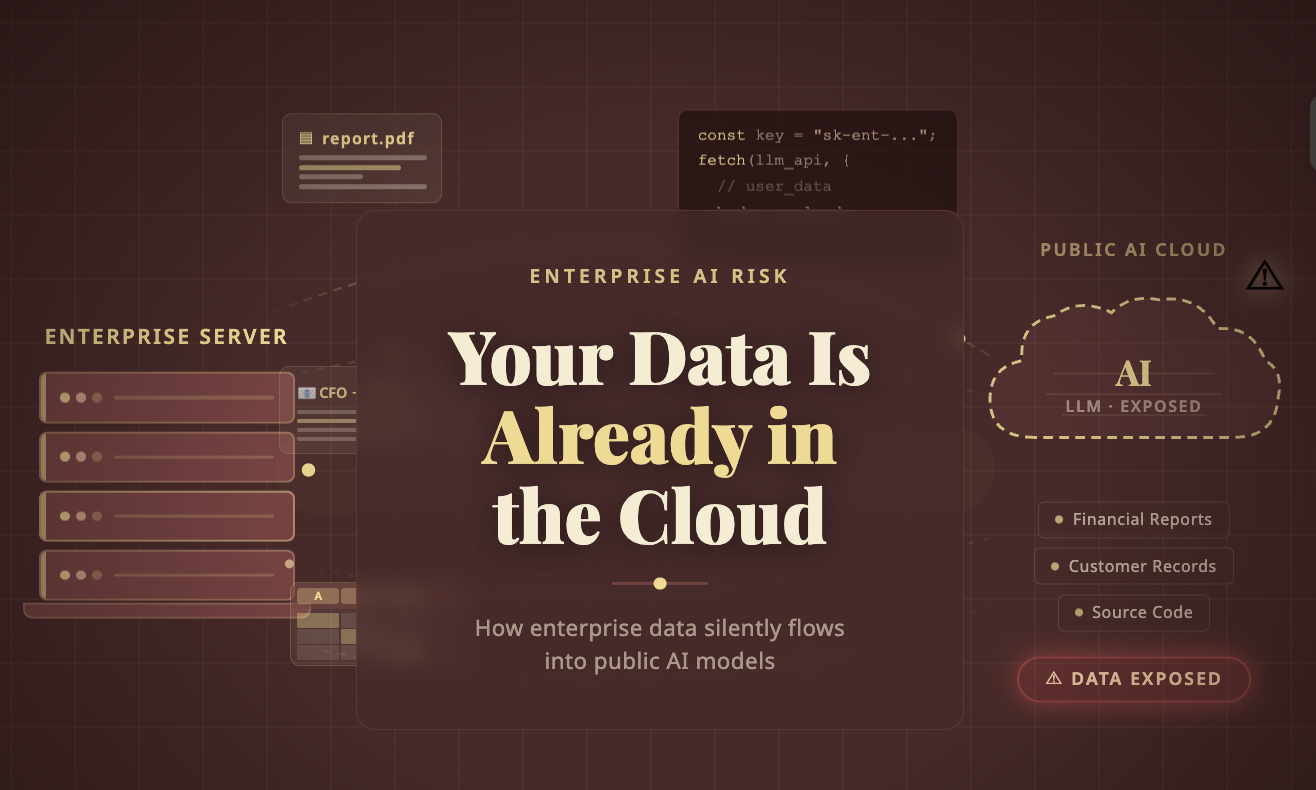
Modern AI is built on a foundation of immense computational power.
Cloud Computing in AI refers to the delivery of artificial intelligence services and computational resources over the internet, allowing AI models and agent systems to be trained, deployed, and scaled without the need for local hardware infrastructure. It transforms AI development from a capital-intensive investment to an on-demand utility.
Think of it like having access to a world-class kitchen you don’t own. Instead of buying expensive appliances and ingredients (like GPUs and servers) just to cook one meal (run your AI model), you rent exactly what you need, when you need it. Professional chefs (the cloud providers) maintain the kitchen and upgrade the equipment. You simply pay for your cooking time. This allows anyone, from home cooks to master chefs (startups to enterprises), to create sophisticated dishes (powerful AI applications) without a massive upfront investment.
Without this model, building powerful AI would be reserved for only the largest, wealthiest organizations. Understanding the cloud is understanding the engine of the modern AI revolution.
What is Cloud Computing in the context of AI?
It is the on-demand availability of computer system resources. Especially data storage and computing power. All without direct active management by the user.
For AI, this means you are not buying and racking servers in a data center. You aren’t managing cooling, power, or networking. Instead, you are accessing a virtually infinite pool of resources through an API or a web dashboard. This includes:
- Raw compute power (CPUs, GPUs, TPUs)
- Massive data storage
- High-speed networking
- Managed AI platforms and pre-built models
It’s about shifting the burden of building and maintaining infrastructure to specialized providers like AWS, Google Cloud, and Microsoft Azure. This allows AI teams to focus entirely on building models and solving problems, not on managing hardware.
How does Cloud Computing enable AI model development and deployment?
It streamlines the entire AI lifecycle.
Traditionally, building AI on-premises was slow and siloed. Teams would have fixed hardware capacity, leading to bottlenecks. If a data science team needed more GPUs for a big training run, they might have to wait weeks or months for new hardware to be procured and installed. This created “compute islands” where resources were limited and collaboration was difficult.
Cloud Computing flips this model entirely. It’s based on elasticity and a consumption-based pricing model.
- Development: A developer can spin up a fully configured environment with all the necessary frameworks (TensorFlow, PyTorch) and tools in minutes.
- Training: When it’s time to train a large model, they can scale up to a cluster of hundreds or even thousands of the latest GPUs. The job runs, and once it’s finished, the resources are released. You only pay for what you use.
- Deployment: Once a model is trained, deploying it as a scalable, secure API that can serve millions of users is a managed service, not a complex infrastructure project.
This agility is what allows companies to iterate and innovate at a pace that was previously impossible.
What are the key benefits of Cloud Computing for AI applications?
The advantages are transformative for building and scaling AI systems.
- Massive Scalability: Resources are elastic. You can scale from one GPU for prototyping to thousands for training a foundation model, then scale back down.
- Cost Efficiency: It eliminates the need for large upfront capital expenditures on hardware. The pay-as-you-go model converts a capital expense into an operational one.
- Access to Specialized Hardware: Cloud providers offer access to the latest, most powerful GPUs, TPUs, and other AI accelerators that would be prohibitively expensive for most companies to purchase and maintain themselves.
- Increased Speed & Agility: Teams can experiment and iterate much faster. New ideas can be tested in hours, not weeks.
- Managed AI Services: Providers offer a rich ecosystem of tools for data labeling, model building, MLOps, and deployment, which significantly reduces the development burden.
Take OpenAI. They couldn’t train models like GPT-4 without leveraging the massive cloud infrastructure of Microsoft Azure, distributing the workload across tens of thousands of specialized GPUs. Or Netflix, which uses AWS to constantly train and test new recommendation models on petabytes of user data, ensuring their personalization engine remains best-in-class.
What cloud service models are available for AI workloads?
AI workloads leverage three primary cloud service models.
Infrastructure as a Service (IaaS):
This is the most fundamental layer. You are renting the virtualized hardware. Think of it as leasing the raw kitchen appliances. For AI, this means getting access to virtual machines with specific configurations of CPUs, RAM, and, most importantly, specialized hardware like GPUs (NVIDIA A100s) and TPUs. You have full control over the operating system and software you install.
Platform as a Service (PaaS):
This layer adds abstraction. The provider manages the underlying infrastructure and offers a platform with pre-configured tools for a specific purpose. This is like using a fully managed meal-kit service’s kitchen, where the ingredients are prepped and the recipes (frameworks) are provided. Services like Google Cloud AI Platform or AWS SageMaker are PaaS offerings. They provide managed environments for training, deploying, and managing machine learning models without worrying about the underlying virtual machines.
Software as a Service (SaaS):
This is the highest level of abstraction. You consume a ready-to-use application or service via an API. This is equivalent to ordering food from a restaurant—similar to experiences built through food delivery app development, where you don’t see the kitchen; you just enjoy the finished dish. For AI, these are pre-trained models offered as simple API endpoints. Examples include Google’s Vision API for image recognition or Amazon’s Transcribe for speech-to-text. You just send your data and get the results back.
Quick Test: Match the Service to the Job
You’re a startup. You need to train a custom large language model from scratch, but then you want to add a simple image recognition feature to your app using a pre-built solution. Which service models would you use for each task?
Answer: You’d use IaaS to rent a large cluster of GPUs for the custom LLM training, giving you maximum control. For the image feature, you’d use a SaaS Vision API to get it running quickly and cost-effectively without building it yourself.
Questions That Move the Conversation
How does cloud computing handle the massive data requirements of AI training?
Cloud providers offer highly scalable and durable storage services (like Amazon S3 or Google Cloud Storage) that can store petabytes of data. This storage is tightly integrated with their compute services, allowing for high-throughput data pipelines that can feed massive GPU clusters during training without bottlenecks.
What security considerations exist for AI deployments in the cloud?
Security is a shared responsibility. Cloud providers secure the underlying infrastructure, while users are responsible for securing their data and applications. This involves using tools like Virtual Private Clouds (VPCs) to isolate networks, Identity and Access Management (IAM) to control permissions, and encrypting data both at rest and in transit.
How does cloud elasticity benefit AI experimentation and development?
Elasticity is a game-changer for experimentation. A researcher can test a hypothesis by quickly spinning up a powerful cluster for a few hours, running the experiment, and then shutting it all down. This makes it financially viable to explore many different model architectures and hyperparameters in parallel.
What is the role of containerization in cloud-based AI deployments?
Containers (like Docker) and orchestrators (like Kubernetes) are crucial. They package an AI model and all its dependencies into a single, portable unit. This ensures that a model works consistently across different environments (from a developer’s laptop to a production cloud server) and makes it easy to scale deployments horizontally.
How do cloud providers optimize infrastructure for AI workloads?
They go beyond just offering standard GPUs. They design custom AI accelerator chips (like Google TPUs and AWS Inferentia), build high-speed network fabrics to connect thousands of chips for distributed training, and offer optimized software libraries and drivers to maximize performance.
What are the cost considerations when running AI in the cloud vs. on-premises?
On-premises involves a massive upfront capital expense (CapEx) for hardware and ongoing operational expenses (OpEx) for power, cooling, and maintenance. The cloud shifts this almost entirely to OpEx with a pay-as-you-go model. While cloud can be cheaper for variable or experimental workloads, very large, stable workloads might eventually achieve a lower total cost of ownership on-premises, albeit with far less flexibility.
How do edge computing and cloud computing complement each other for AI applications?
They form a powerful hybrid model. The computationally intensive model training is done in the cloud, where resources are virtually limitless. The trained, optimized model is then deployed to edge devices (like smartphones or IoT sensors) for real-time inference, which reduces latency and saves bandwidth.
What are the latency considerations for real-time AI inference in the cloud?
For applications requiring instant responses (like real-time translation or fraud detection), latency is critical. Cloud providers address this by having data centers in multiple geographic regions, allowing models to be deployed closer to end-users to minimize network delay.
The future of developing and deploying powerful AI is inextricably linked to the cloud. It’s the utility that powers the entire ecosystem.