An AI agent without a proper evaluation is a liability waiting to happen.
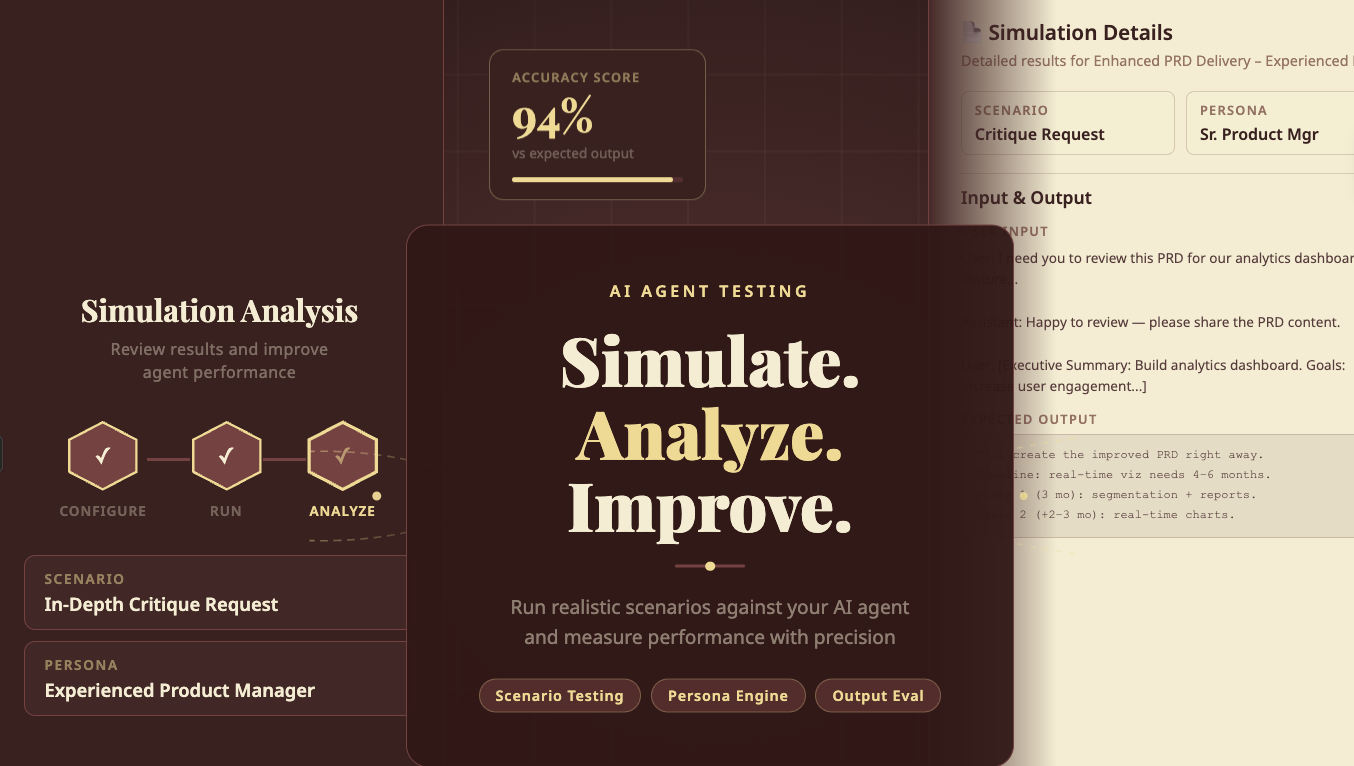
Agent Evals (Agent Evaluations) are structured tests and measurement frameworks used to assess how well an AI agent performs its tasks – checking not just whether it gave a correct answer, but whether it reasoned correctly, used the right tools, made safe decisions, and completed multi-step goals reliably.
It’s like a driving test for a new driver.
It’s not enough that the person knows traffic rules (knowledge). The examiner watches how they actually drive in real conditions. Do they check mirrors? Handle unexpected obstacles? Park correctly? Stay calm under pressure?
Agent Evals do the same for AI agents. They test real-world performance across a full journey, not just a single trivia question. Understanding this is crucial for anyone building, deploying, or trusting AI agents. It’s the line between a powerful tool and an unpredictable risk.
What are Agent Evals?
They are the performance review for an AI agent.
Instead of just checking a single answer for correctness, Agent Evals look at the entire process. Did the agent understand the multi-step instruction? Did it choose the right tool for the job (like a calculator or a web search)? Did it get stuck in a loop or hallucinate a step? Did it reach the final goal efficiently and safely?
It’s a shift from testing knowledge to testing competence.
Why are Agent Evals necessary for AI systems?
Because agents do things.
A traditional model might classify an image or translate a sentence. The stakes are usually low if it makes a small mistake.
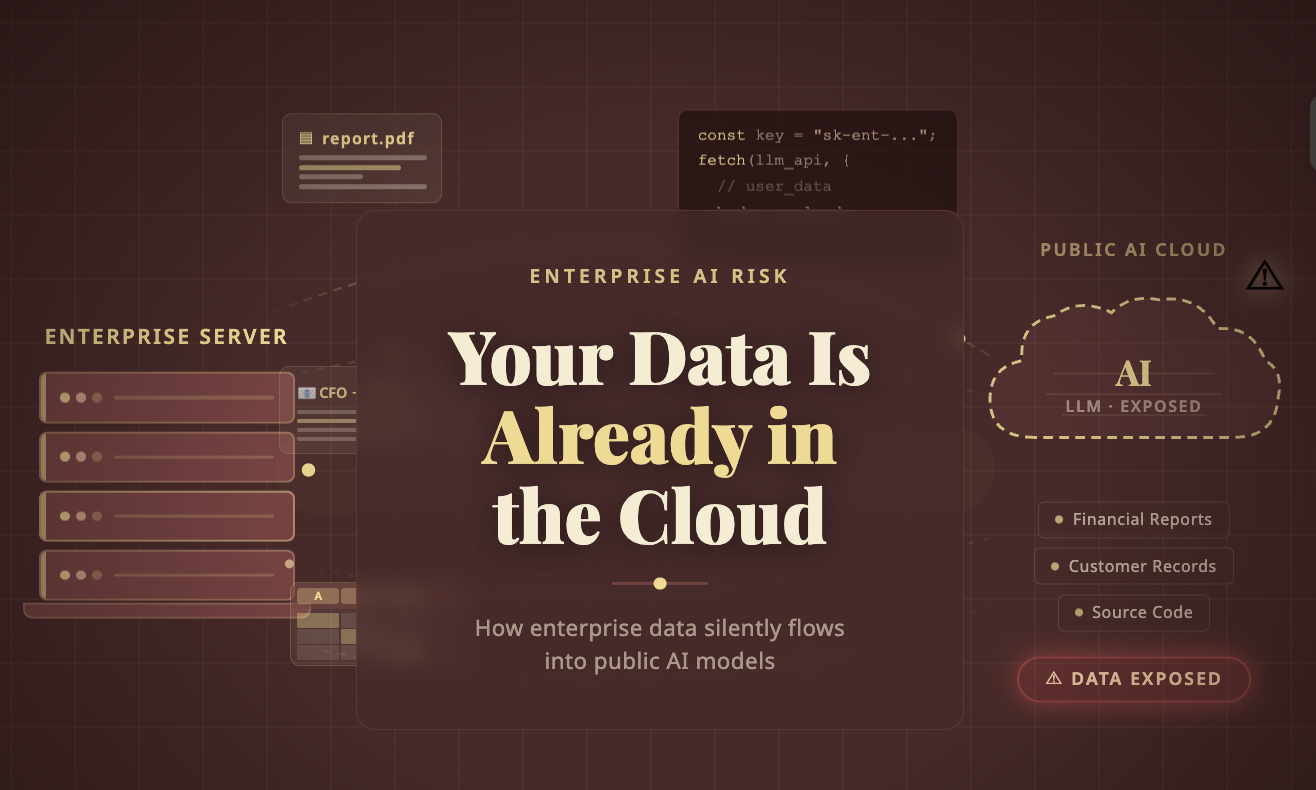
But an agent might book a flight, send an email, or modify a customer record in a CRM. Salesforce, for example, needs to know its Agentforce agents can handle customer service scenarios with perfect accuracy and compliance before they ever interact with a real customer.
An error isn’t just a wrong answer. It’s a real-world action with real-world consequences. Evals are the safety harness that lets us deploy these powerful tools with confidence.
How do Agent Evals differ from traditional ML benchmarks?
They operate in completely different dimensions.
Traditional ML Benchmarks vs. Agent Evals
A traditional benchmark tests a model on a fixed dataset with one correct answer. Like identifying spam in an email. It’s either spam or it isn’t. It’s static and measures knowledge.
Agent Evals test dynamic, multi-step task completion. An agent might need to plan, use several tools, and adapt to new information. There is rarely one “correct” path. The evaluation has to measure the quality of the process, not just the final output.
Human-Based Evals vs. Agent Evals
Humans are great for giving nuanced, qualitative feedback. But they are slow. Expensive. And inconsistent at scale.
Agent Evals use automated, reproducible scoring pipelines. They can run thousands of scenarios simultaneously. This allows for continuous testing as the agent evolves. Lyzr uses these automated pipelines to ensure its enterprise agents are reliable in complex business workflows, checking everything from API calls to context retention.
Traditional Software Testing vs. Agent Evals
A unit test in software checks if a function returns an expected, deterministic output. Input A always results in Output B.
AI agents are non-deterministic. The same input might lead to slightly different reasoning paths or outputs. So, Agent Evals must measure distributions of behavior, safety boundaries, and the logic of the reasoning chain, not just a single, exact output.
What metrics are used in Agent Evals?
We move beyond simple accuracy.
The key metrics focus on the agent’s journey and actions:
- Task Completion Rate (TCR): The most basic question. Did the agent successfully finish the assigned task? Yes or no.
- Tool Call Precision/Recall: Did the agent call the right tools? Did it call all the tools it needed?
- Step Efficiency: Did the agent take the most direct path, or did it take unnecessary, looping, or redundant steps?
- Hallucination Rate per Reasoning Hop: At each step of its plan, did the agent invent facts or misinterpret information from its tools?
These metrics help engineers at places like Google DeepMind diagnose why an agent failed, not just that it failed.
What components does an Agent Eval framework typically include?
A complete evaluation system has several core parts working together.
- The Task Suite: A collection of problems or scenarios for the agent to solve. These can range from simple instructions to complex, multi-day tasks.
- The Agent Runner: The environment that executes the agent’s code, giving it access to tools and the problem description.
- The Logger: This is critical. It records every thought, every action, every tool call, and every output the agent generates. This complete record is called the “trajectory.”
- The Scoring Pipeline: An automated system that analyzes the logged trajectory against the task’s success criteria and the specific metrics (like TCR or Step Efficiency).
These components are often bundled into what’s called an “Evaluation Harness.”
How do Agent Evals contribute to AI safety?
They are a primary defense against harmful agentic behavior.
Safety isn’t just about preventing catastrophic outcomes. It’s about reliability and alignment. Frameworks like the HHH (Helpful, Harmless, Honest) taxonomy are used to build evals that check alignment.
- Is the agent’s response helpful to the user’s intent?
- Is it harmless and free of bias or toxicity?
- Is it honest, and does it avoid deception?
Companies like Anthropic use Agent Evals for “red-teaming.” They specifically design tests to see if they can trick an agent into taking a dangerous or irreversible action, like sending an unauthorized email. The goal is to build agents that robustly refuse to cross these lines without explicit human confirmation.
What technical mechanisms are used for Agent Evals?
The core isn’t about general coding; it’s about robust evaluation harnesses.
Engineers use specialized tools to make these evaluations scalable and repeatable. Frameworks like LangChain Evals, RAGAS, OpenAI Evals, and AgentBench provide the structured environments needed to run agents through these complex task suites. They are designed to capture the detailed trajectory and automate the scoring of tool calls, step completion, and failure modes.
Beyond the frameworks, the methodology is key. This involves using alignment taxonomies, like the Helpful, Harmless, and Honest (HHH) model, to create criteria that go beyond simple correctness.
Finally, the analysis focuses on trajectory and tool-use metrics. ML engineers dissect the agent’s path to diagnose failure points. They look at metrics like Task Completion Rate (TCR), Tool Call Precision, and Step Efficiency to pinpoint exactly where the agent’s reasoning or tool use went wrong.
Quick Test: Can you spot the right tool for the job?
Imagine these three scenarios. Which one absolutely requires Agent Evals over a traditional benchmark?
- A model must identify whether a photo contains a cat or a dog.
- An AI assistant needs to find the cheapest flight from New York to London, book it using an API, and then add the details to a calendar.
- A language model is tested on its ability to answer 50 state capitals correctly.
(Answer: Scenario 2. It involves multiple steps, tool use (API calls), and a clear success/failure outcome that depends on the entire process, not just one answer.)
Questions That Move the Conversation
How do Agent Evals handle non-deterministic agent behavior?
They run the same test multiple times to measure the distribution of outcomes. Instead of a simple pass/fail, they might report that the agent succeeds 95% of the time and fails 5% of the time, then analyze the failure cases.
What is the difference between offline and online Agent Evals?
Offline evals run on a static, pre-recorded dataset of tasks. Online evals test the agent in a live environment, interacting with real-world, dynamic data and APIs, which is much harder but more realistic.
How are Agent Evals different from human-in-the-loop evaluation?
Human-in-the-loop (HITL) often involves a human actively guiding or correcting an agent during a task. Agent Evals typically measure the agent’s autonomous performance first, though human judgment is used later to score the results or create the test cases.
What is a ‘trajectory’ in the context of Agent Evals, and why does it matter?
A trajectory is the complete, step-by-step log of everything the agent did: its internal reasoning, the tools it called, the data it received, and the actions it took. It matters because it allows developers to debug why an agent failed, not just see that it did.
Can Agent Evals be fully automated?
Many parts can be, like checking if a file was created or an API returned the correct value. However, evaluating the quality of a final summary or the nuance of an agent’s reasoning often still requires human judgment to score.
What role do Agent Evals play in the CI/CD pipeline for AI agent development?
They act as the integration tests for AI. Every time a developer updates the agent’s model or logic, a suite of Agent Evals runs automatically to ensure the changes haven’t caused a regression in performance or safety.
How do Agent Evals measure reasoning quality, not just final output accuracy?
By analyzing the trajectory. Scorers can check if the agent’s “chain of thought” is logical, if it chose the right tool for the right reason, and if it correctly interpreted the information from that tool, even if it stumbled and got the wrong final answer.
The future of autonomous AI depends directly on the sophistication of our evaluation frameworks.
Did I miss a crucial point? Have a better analogy to make this stick? Let me know.