A Headless AI Agent is an autonomous artificial intelligence system that operates without a visual interface, focusing on performing specific tasks or services in the background through APIs or other programmatic means rather than direct user interaction.
Think of it like the engine of a car. You don’t directly interact with the engine. You can’t see its pistons firing or its gears turning while you drive. But it’s the core component that powers the entire vehicle. You give it instructions through the car’s controls – the gas pedal, the steering wheel. In the tech world, those controls are APIs. The agent does the heavy lifting in the background, delivering power and results without ever needing a screen.
This matters because it’s the key to true automation and integration. Headless agents are the building blocks that allow developers to embed intelligence into any application, website, or workflow, creating smarter, more interconnected systems without reinventing the wheel each time.
What is a Headless AI Agent?
It’s pure, unadulterated AI functionality. An agent with a “head” has a face – a graphical user interface (GUI), a chat window, or a voice you can talk to. A headless agent has no face.
It’s a specialized worker that lives on a server. It waits for a command. This command doesn’t come from a human clicking a button. It comes from another piece of software. An API call.
Once it receives the command, it performs its task.
- Analyze this text for sentiment.
- Extract the invoice number from this PDF.
- Generate a product description based on these keywords.
- Check this transaction for signs of fraud.
Then, it sends the result back. No clicks. No visuals. Just a silent, efficient exchange of data.
How does a Headless AI Agent differ from traditional AI applications?
The difference is focus. It’s a backend specialist versus a front-and-center performer.
A traditional AI application, like a chatbot on a website, is all about the user experience. Its design, its conversation flow, its look and feel are paramount.
A Headless AI Agent is the complete opposite.
- Invisible vs. Visual: It operates entirely in the background. You access it through code, not a screen. Think of the OpenAI API versus using the ChatGPT web interface. One is headless, the other is not.
- Functionality vs. Experience: Its sole purpose is to execute a task and deliver a result with maximum efficiency and accuracy. It doesn’t care about looking pretty or being friendly.
- Component vs. Standalone: Headless agents are designed to be plugged into other systems. They are puzzle pieces, not the whole puzzle. Amazon’s recommendation engine is a headless agent that plugs into their website, mobile app, and email marketing systems.
What are the main advantages of using Headless AI Agents?
Decoupling the AI’s “brain” from its “face” provides massive benefits.
- Ultimate Flexibility: You can build one powerful headless agent for, say, product recommendations, and then plug that same agent into your website, your mobile app, your in-store kiosks, and your internal sales tools. You have one brain serving many faces.
- Faster Development: Frontend and backend teams can work independently. The AI team can perfect the agent’s logic while the app team can build the user interface, only needing to agree on how the API works.
- Superior Scalability: It is far easier to scale a backend service than a full-stack application. As demand grows, you can pour more resources into the headless agent without touching the user-facing parts of your system.
- Focused Expertise: It allows developers to concentrate on what matters most: the quality of the AI’s logic and performance, without being distracted by UI/UX concerns.
How do Headless AI Agents integrate with existing systems?
They integrate through the universal language of modern software: APIs.
An API (Application Programming Interface) is a set of rules and protocols that allows different software applications to communicate with each other. For a headless agent, the API is its front door.
- A developer’s application sends a request to the agent’s API endpoint.
- This request contains the necessary data and instructions.
- The agent processes the request, performs its task, and sends a response back.
This is often part of a larger, event-driven architecture. For example, when a user uploads a document to a cloud storage service, this “event” can automatically trigger a webhook that calls a headless agent to read the document, extract key information, and update a database.
What types of problems are best solved using Headless AI Agents?
They excel at any task that can be automated and run in the background.
- Data Processing: Google Cloud’s Document AI processors are perfect examples. They can automatically pull data from millions of invoices or forms without a single human ever looking at a user interface.
- Personalization: Amazon’s recommendation engine is a classic. It works silently, analyzing browsing history and purchase data to power the “Customers who bought this also bought…” sections.
- Content Generation: Any application that needs to create text, from drafting emails to writing product descriptions, can call a headless generative AI agent via an API.
- Process Automation: Banks use headless agents to analyze financial transactions in real-time to detect potential fraud, flagging or blocking them programmatically.
What technical architecture powers a Headless AI Agent?
The core isn’t about general coding, it’s about building a robust, callable service.
The architecture is built on an API-first philosophy. This means the API isn’t an afterthought; it is the product. Key mechanisms include:
- API Endpoints: These are the specific URLs that other applications call to access the agent’s functions (e.g.,
/analyze-sentimentor/extract-data). - Event-Driven Processing: The agent is designed to be dormant until it’s triggered by an event – an API call, a new file in a folder, a new entry in a database.
- Webhooks: These are automated messages sent from apps when something happens. A headless agent can use webhooks to notify other systems once its task is complete, creating a chain of automated actions.
Quick Test: UI or Headless?
Your company needs to add AI-powered analysis to your internal workflow management system. The goal is to automatically scan all incoming client contracts, identify key dates, and add them to a shared calendar.
Would you recommend a UI-based solution or a Headless AI Agent approach?
The headless approach is the clear winner. There’s no need for a user interface. The process should be invisible and automatic. A headless agent can be triggered every time a new contract is uploaded, do its work, and call the calendar’s API to add the events without any human intervention.
Your Deeper Questions, Answered
What technical infrastructure is required to support Headless AI Agents?
Typically, they run on cloud infrastructure like AWS, Google Cloud, or Azure. Serverless platforms (like AWS Lambda or Google Cloud Functions) are extremely popular because you only pay for the compute time when the agent is actively working.
How do you monitor and maintain Headless AI Agents?
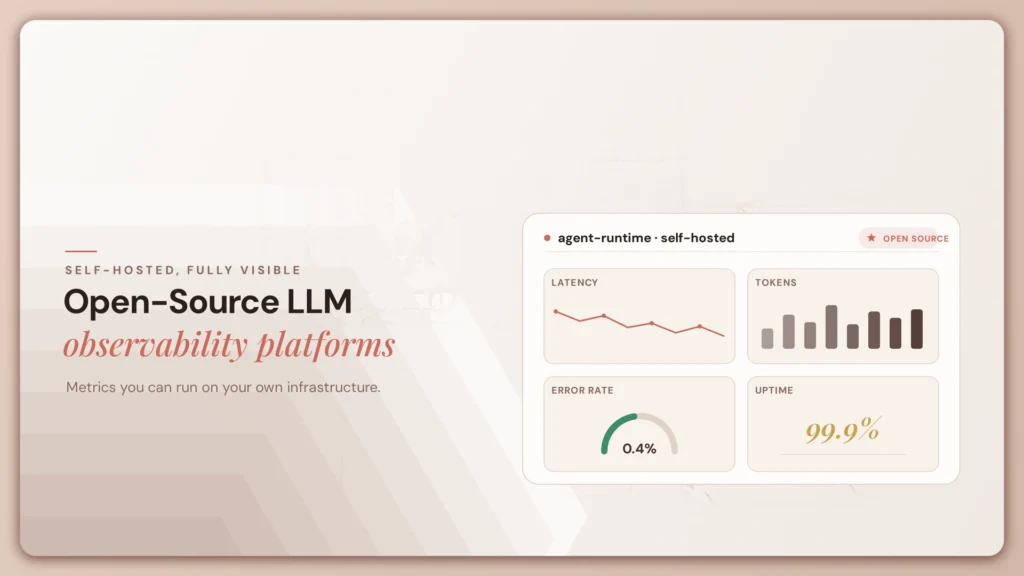
You monitor them like any other backend service. This involves logging all requests and responses, tracking key performance metrics (like latency and error rates) using monitoring tools, and setting up alerts for any unusual behavior.
What security considerations are important when implementing Headless AI Agents?
API security is critical. This means using API keys for authentication, implementing rate limiting to prevent abuse, validating all incoming data to prevent malicious inputs, and ensuring secure data transmission with encryption.
How do Headless AI Agents handle errors or unexpected situations?
A well-designed agent will use standard HTTP status codes to communicate success or failure. It should also have robust error handling and fallback logic. For example, if it can’t process a document, it might place it in a special queue for manual review.
Can Headless AI Agents work together in a multi-agent system?
Absolutely. They are perfectly suited for this. A headless agent can serve as a specialist in a larger agentic team, performing one specific task as part of a more complex workflow orchestrated by a manager agent.
What are the cost implications of implementing Headless AI Agents?
Costs are often based on usage (pay-per-call or pay-per-second of compute time), which can be very cost-effective. The main expenses are the cloud infrastructure costs and the development time to build and maintain the agent and its API.
How do you measure the performance and effectiveness of Headless AI Agents?
Performance is measured with technical metrics: API uptime, request latency, and error rate. Effectiveness is a business metric: How much time is it saving? How much revenue is it generating? What is the accuracy of its outputs?
What development skills are needed to work with Headless AI Agents?
Strong backend development skills are a must (e.g., Python, Node.js, Go). Expertise in API design (REST or GraphQL), cloud computing, and database management is also essential.
The future of applied AI is largely invisible. It’s a future powered by millions of these silent, specialized agents working tirelessly behind the screens.