The short answer
- Lyzr Opencontroller: best when many teams and agents share models and caching must sit behind identity, policy and budget checks in your own network.
- Bifrost: an open-source gateway whose defaults keep long conversations and tool calls out of the cache.
- LiteLLM: for teams already on its proxy that need per-user cache isolation.
- Kong AI Gateway: a plugin for teams whose APIs already run through Kong.
- Portkey (Prisma AIRS AI Gateway): a managed gateway with strict matching and few settings to tune.
- Redis (RedisVL and LangCache): building blocks for engineers writing their own cache logic.
Gartner expects inference costs per agentic workflow to grow more than fivefold through 2028, even as tokens get cheaper. A semantic cache looks like the obvious brake. Then LiteLLM’s documentation warns that consecutive turns of an agent conversation embed at roughly 0.99 similarity, so the cache can hand an agent the tool call it made one step earlier, and a higher threshold doesn’t reliably fix it.
The requests pushing costs up are the ones a semantic cache handles worst. So we judged each tool for semantic caching in LLM applications on how well it knows what to leave alone.
What is semantic caching in LLM applications?
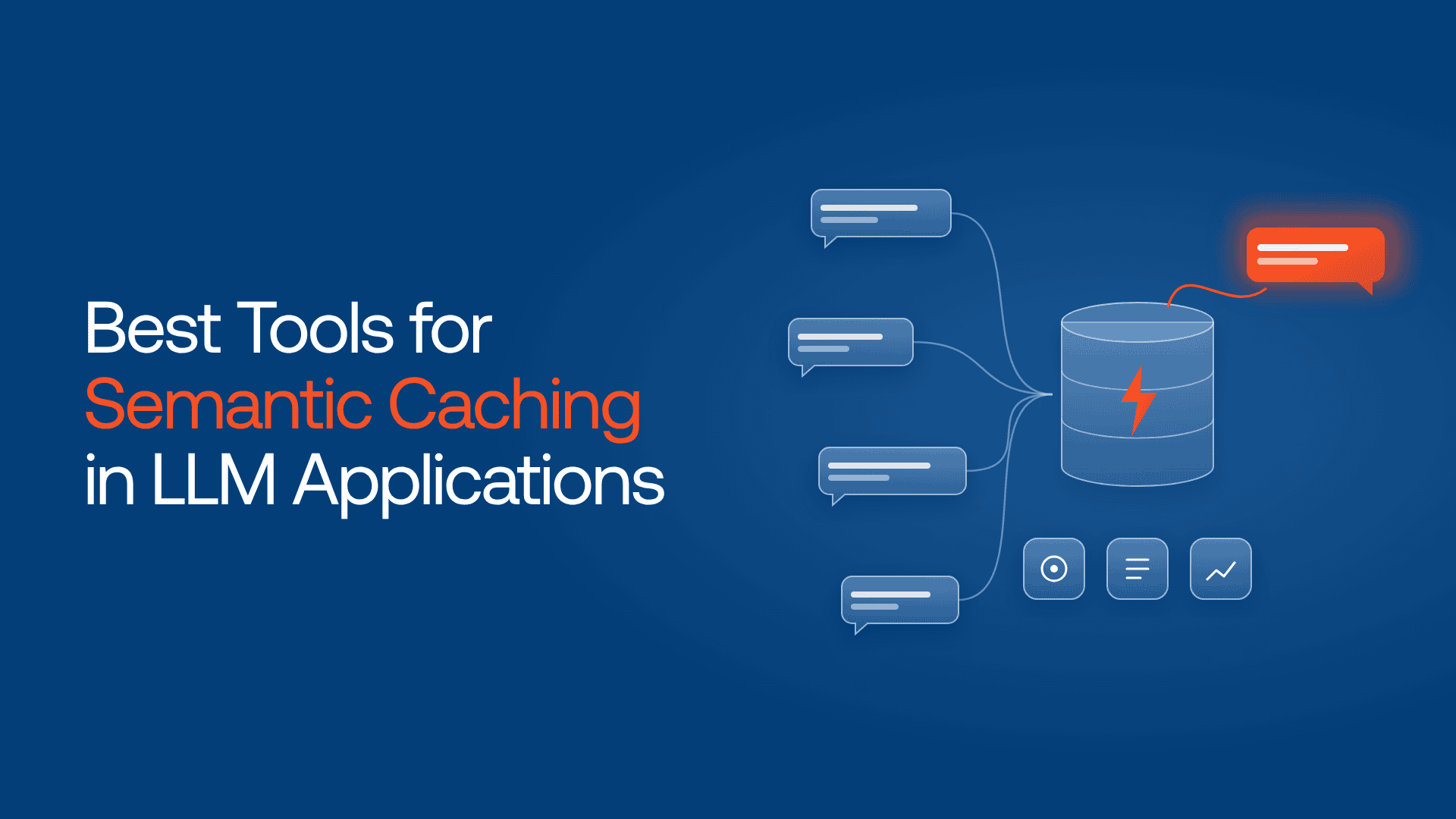
Semantic caching serves a stored model response when a new prompt means roughly the same thing, judged by embedding distance. A hit skips the model call entirely, unlike provider prompt caching, where the model still runs and only a repeated prefix is discounted.
Why agent traffic breaks the usual caching math
Gartner’s June 2026 cost-optimization report, as covered by THE Journal, puts inference at 70% or more of a model’s lifetime cost. Agents that reason, call tools and loop drive much of that, and their requests rarely repeat reusably.
Vendors know it. LiteLLM’s docs call semantic caching built for single-shot prompts; Bifrost skips caching past three messages; Portkey limits semantic lookups to four messages.
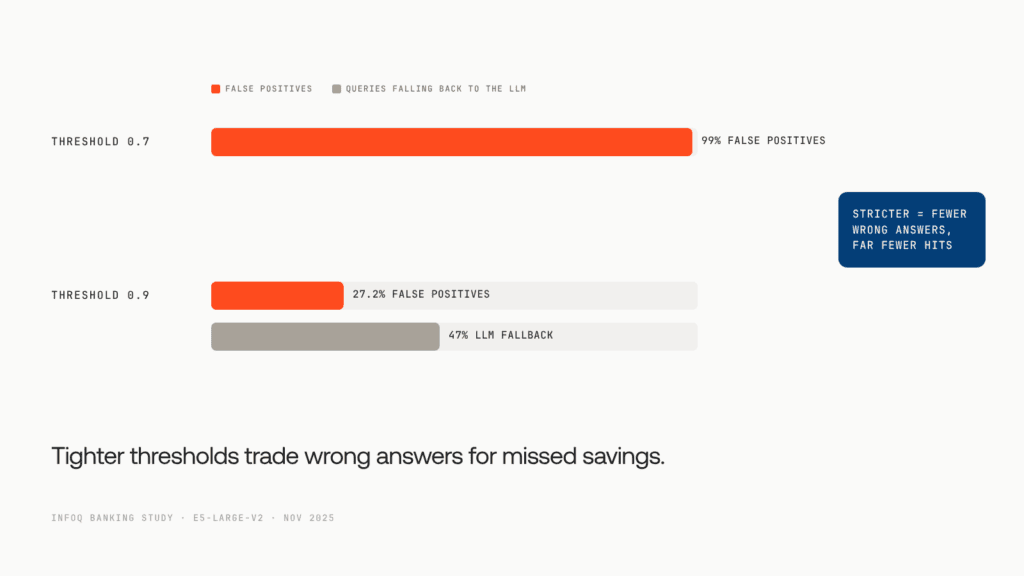
Tuning the threshold helps less than you’d hope. In a banking study published on InfoQ in November 2025, raising one embedding model’s threshold from 0.7 to 0.9 cut false positives from 99% to 27.2%, yet 47% of queries then fell through to the LLM. The vCache paper, presented at ICLR 2026, found the right threshold varies substantially from one cached entry to the next.
Our position: semantic matching belongs on the FAQ end of your traffic, and stateful requests should be excluded by default.
How we chose and scored the tools
We read each tool’s public documentation in November 2026 and asked:
- Layered lookup: does an exact match run first?
- Agent-aware defaults: are multi-turn and tool-calling requests safe out of the box?
- Scoping: can one user’s cached answer reach another?
- Order of operations: do identity, policy and budget checks precede the lookup?
- Where it runs: your network, or someone else’s?
The 6 best tools for semantic caching in LLM applications
1. Lyzr Opencontroller: a cache that obeys the rest of the request path
Opencontroller launched in September 2026 as a control plane for enterprise AI agents. Its LLM gateway handles virtual keys, team budgets, routing and fallback, and Lyzr’s published architecture places caching inside routing, after identity, authorization, budget and guardrail checks. A hit can’t slip past a check that has already run.
The platform also governs agents nobody routed through it, found by read-only scans across clouds, clusters and developer laptops, since an agent calling a model on its own key ignores every cache rule you wrote. It deploys in your VPC, on-prem or air-gapped, and credentials, telemetry and control-plane data never need to reach Lyzr.
Pick it if: many teams and agents share models and you want one caching policy inside your network.
Skip it for now if: you need only a cache library for one app. Public docs don’t yet describe thresholds, the vector store or tenant scoping for cache entries, so ask to see them in a pilot.
AI Agent Sprawl Audit Agents calling models on their own keys skip your cache policy. Count them before you write the first rule. Run the audit →
2. Bifrost: the most cautious defaults in open source

Maxim AI’s open-source Go gateway runs one caching plugin with two paths: a hashed exact-match lookup, then semantic search on a miss. Per Bifrost’s docs, caching skips conversations longer than three messages, tool-call responses aren’t stored, and the virtual key and user are folded into the cache key, so identities don’t share entries. Entries expire after five minutes, and Redis or Valkey, Weaviate, Qdrant and Pinecone work as vector stores.
Best for: self-hosting teams wanting agent-safe behavior without writing it.
Watch out for: the default similarity threshold is 0.8, looser than many teams would choose.
3. LiteLLM: per-user buckets on a proxy you may already run
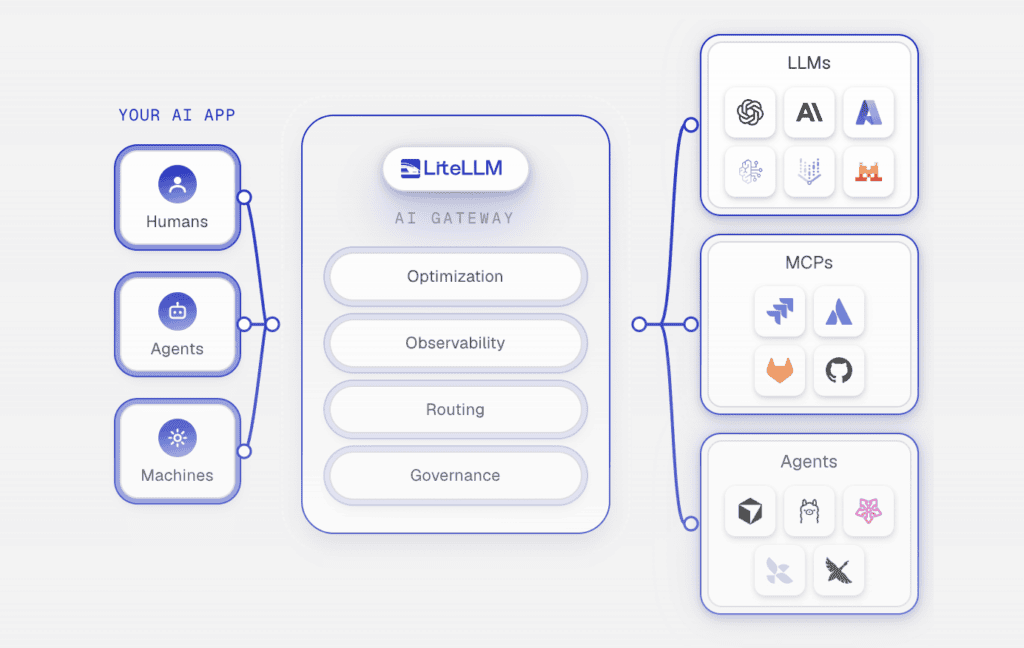
LiteLLM’s proxy supports Redis, Valkey and Qdrant as semantic backends. By default, per its docs, the semantic cache is shared across a virtual key, its team and its organization; semantic_cache_scope: end_user isolates entries per end user. Without it, one user’s response, tool calls included, can reach someone who asks something similar.
No vendor here is more candid about failure modes: mode: default_off makes caching opt-in, a no-cache flag on a virtual key keeps agent traffic out, and semantic hits carry an x-litellm-semantic-similarity header for auditing.
Best for: platform teams already on the LiteLLM proxy.
Watch out for: the docs describe one cache type per proxy config, so exact and semantic don’t stack as in Bifrost or Portkey. Provider passthrough routes skip the cache.
4. Kong AI Gateway: a plugin for the gateway you already trust

Kong’s AI Semantic Cache plugin, introduced in Gateway 3.8, stores vectors in Redis, Valkey or pgvector. Per Kong’s docs, an optional exact_caching setting adds an exact-query check before the semantic search, and message_countback sets how many messages get embedded. It can also be applied per consumer group.
Best for: organizations where Kong already fronts API traffic.
Watch out for: it’s part of Kong’s AI Gateway Enterprise offering, and consumer-group scoping is coarser than per-user isolation.
5. Portkey (Prisma AIRS AI Gateway): strict matching, few dials

Palo Alto Networks closed its Portkey acquisition on May 29, 2026, making it the gateway inside Prisma AIRS. Per Portkey’s docs, semantic mode checks for an exact match first and requires cosine similarity above 0.95, adjustable only on self-hosted gateways. Semantic lookups cover requests under 8,191 tokens with four or fewer messages, which keeps most agent loops out by design.
Best for: teams wanting a managed gateway with conservative matching.
Watch out for: semantic caching is limited to select Enterprise plans, and matching ignores the system prompt, so apps with different instructions can share answers unless partitioned.
6. Redis (RedisVL and LangCache): the build-it-yourself route
Bifrost, LiteLLM and Kong can all store vectors in Redis or Valkey. Per Redis’s docs, RedisVL, its open-source Python library, provides a SemanticCache with distance thresholds and per-user filters on a Redis you control. LangCache is the managed version, with attributes for scoping and deletion, still in preview under the Redis Iris context engine.
Best for: engineering teams who want the cache inside their own code path.
Watch out for: identity, scoping, cacheable flows and invalidation are yours to build. RedisVL thresholds are distances, so lower means stricter.
How the 6 semantic caching tools compare
| Tool | Policy checks before lookup | Spend limits on the same hop | Agent-aware defaults | Per-user scoping | Runs in your network | Governs agents outside the gateway |
|---|---|---|---|---|---|---|
| Lyzr Opencontroller | ✓ | ✓ | ◐ | ◐ | ✓ | ✓ |
| Bifrost | ◐ | ✓ | ✓ | ✓ | ✓ | ✗ |
| LiteLLM | ◐ | ✓ | ◐ | ✓ | ✓ | ✗ |
| Kong AI Gateway | ◐ | ◐ | ◐ | ◐ | ✓ | ✗ |
| Portkey | ◐ | ◐ | ◐ | ◐ | ◐ | ✗ |
| Redis | ✗ | ✗ | ✗ | ◐ | ✓ | ✗ |
✓ built in · ◐ partial, opt-in, paid tier or not publicly documented · ✗ not offered or left to your code. Exact-match-first lookups are covered in each tool’s write-up. Editorial assessment from public docs, November 2026.
Which tool fits your traffic?
Be it for FAQs or support bots, any of the six works. Begin at 0.95 cosine similarity and loosen only while someone grades the hits.
RAG over changing documents. Purge by attribute or namespace, and tie expiry to document updates, not a fixed clock.
Agents and long chats. Keep semantic matching off; use exact-match caching.
Multi-tenant SaaS. Isolation before hit rate: LiteLLM’s end-user scope or Bifrost’s identity scoping.
Dozens of agents across teams. A control plane earns its place, because the worst caching mistakes hide in traffic nobody routed through a gateway.
Cache less, but cache on purpose
The six agree more than their marketing suggests: exact match first, short conversations, strict thresholds. They differ on who decides. In a library, an engineer, per request. In a gateway, a config file, per route. In a control plane, a policy, per application and team, even for agents that skipped the gateway.
Running more than a handful of agents? Book a demo, and we’ll measure hit rate and false hits on a slice of your traffic through Opencontroller.
FAQs
Lyzr OpenController, Bifrost, LiteLLM, Kong AI Gateway, Portkey (Prisma AIRS AI Gateway) and Redis with RedisVL or LangCache.
Mostly no. Consecutive agent turns look nearly identical to an embedding model, so the cache can replay stale tool calls. Use exact-match caching instead.
Around 0.95 cosine similarity, loosened only while measuring wrong answers on your own traffic.
Scope entries by user or tenant, and run the lookup after authentication.
Book A Demo: Click Here
Join our Slack: Click Here
Link to our GitHub: Click Here
Got a use case in mind?
8 weeks from use case to agents running in production.
Platform, people and FDEs, all in. Bring your environment. We'll co-build and stay until it's live.
Talk to UsFree resource
101 AI Agents Use Cases
100+ production-ready AI agent use cases across Marketing, Sales, HR, Banking, Insurance, Operations and a lot more
Download now