TL;DR
- Fairness measurement: Fairlearn and IBM AI Fairness 360 assess and mitigate bias in data and models.
- Model debugging and explainability: Microsoft’s Responsible AI Toolbox combines error analysis, fairness assessment and interpretability in one dashboard.
- Cloud-native assessment: Amazon SageMaker, Google’s responsible AI resources and Microsoft’s Purview and Foundry suit teams already on those clouds.
- Enterprise governance platforms: IBM watsonx.governance tracks risk, documentation and monitoring across models.
- AI agent governance: OpenController is a control plane for agent identity, policy, runtime visibility and lifecycle. It complements, and doesn’t replace, fairness and interpretability libraries.
- No tool guarantees responsible AI. Metrics are evidence for a decision, not a verdict.
A model passes every accuracy test, then produces different outcomes for different user groups, makes decisions nobody can explain and ships without a written record of its limits. Responsible AI can’t be reduced to a principles document or a final compliance review. Teams need ways to measure model behaviour, assess risk, document decisions and keep oversight as systems change.
The tools in this guide cover different parts of that job: fairness measurement, explainability, evaluation, documentation and governance. The right choice depends on your stage of the AI lifecycle and the risks you need to manage. This guide compares the best tools for responsible AI development and shows where Opencontroller fits for teams running AI agents.
What is responsible AI development?
Responsible AI development is designing, building, testing, deploying and maintaining AI systems so they address foreseeable risks and support fairness, reliability, safety, privacy, transparency, inclusiveness and accountability. In practice that means assessing harms and intended use, testing performance across groups, understanding model behaviour, protecting data, documenting decisions with owners, and monitoring after deployment. Microsoft’s six published principles are one useful reference. They aren’t a universal legal standard.
The five capability layers
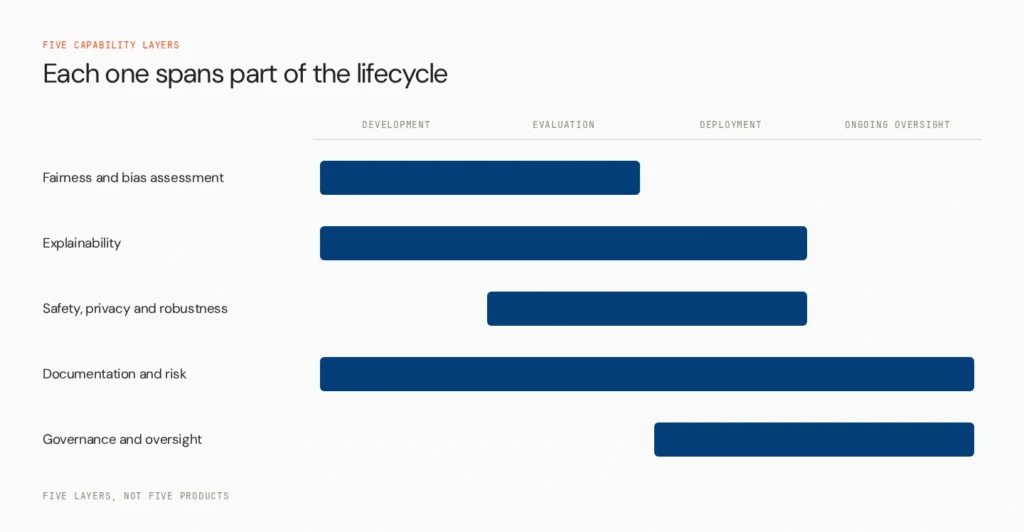
- Fairness and bias assessment: shows how outcomes and performance differ across groups.
- Explainability: helps developers investigate why a prediction was made.
- Safety, privacy and robustness testing: probes harmful outputs, privacy risks and failures under stress.
- Documentation and risk assessment: records intended use, limits, evaluation results and risk decisions.
- Governance and oversight: applies policy, monitoring, auditability and lifecycle management.
These layers don’t map to five products, and one completed assessment doesn’t guarantee compliance. Responsible AI is iterative, so models need reassessment when data, use case or behaviour changes.
How we compared them
We assessed fairness, interpretability, safety and privacy support, risk documentation, governance and lifecycle coverage, workflow integration and deployment options, using official documentation and project repositories. We kept scope honest: a library isn’t a governance platform, and a governance platform doesn’t replace specialist statistical evaluation.
The tools
1. Opencontroller by Lyzr

Opencontroller is Lyzr’s AI agent control plane. It isn’t a fairness library, an interpretability toolkit or a compliance certification. It covers the part of responsible AI that starts after model assessment: governing the agents that actually run in your business.
Fairlearn can tell you a model performs unevenly across groups. The Responsible AI Toolbox can show you where it fails. Neither tells you which agents are live today, who owns them, what systems they can reach, which policy applies or whether an assessment was ever tied to the version in production. An agent that reads customer records and takes actions adds a second set of questions. Accountability needs an owner, a version and an audit trail, not only a good evaluation score.
Lyzr positions Opencontroller around that gap, with a registry and identity for every agent, evaluation gates before promotion, runtime policy and observability across the agent lifecycle. See AI agent governance and the AI control plane overview.
Key features
- Agent registry and identity: every agent is discovered, owned and traceable, so an assessment or incident maps to a specific agent and version.
- Evaluation gates and staged promotion: a version moves toward production only when required checks pass, including results from fairness, safety and quality tools you already use.
- Runtime policy and access control: rules about what each agent may access and do, applied consistently across teams and frameworks.
- Observability and audit: live activity connected to agent identity, version and policy, so teams can investigate what happened.
- Versioning and rollback: immutable versions let a team return to a known-good release when something goes wrong.
How it works alongside the other tools
A responsible AI workflow produces evidence: a fairness report, an error analysis, a safety evaluation, an impact assessment. OpenController gives that evidence an operational home. A fairness result can become a condition for promotion, the approver and the decision can be recorded, and production behaviour can be checked against the version that was assessed. The assessment tools stay in place. OpenController governs what the organisation does with their output.
Strengths
- Connects assessment evidence to promotion, ownership and audit decisions
- Gives one view of agents, identities and policies across frameworks and environments
- Supports lifecycle control, including rollback, as the agent estate grows
Limits
- It doesn’t measure fairness, explain model decisions or certify compliance, so you still need specialist assessment tools
- Its value grows with the number of agents, so a single-agent team may not need it yet
- It governs agents and doesn’t replace impact assessments or the human judgment they involve
Best for: enterprises deploying agents across frameworks and environments that need operational governance alongside model-level assessment. Skip it for now if you run one model and only need fairness testing. For a staged rollout path, see the Agents to Production playbook.
2. IBM AI Fairness 360

An open-source toolkit for detecting and mitigating bias in datasets and models. Metrics must fit the application and affected groups, and they reveal potential disparities without deciding whether a system is acceptable or lawful.
- Strengths: many metrics and mitigation algorithms, open source
- Limits: needs statistical judgement, no governance workflow
Best for: data scientists doing fairness assessment and mitigation.
3. Fairlearn

An open-source library for assessing model fairness across groups and exploring trade-offs between fairness and performance, with supported mitigation methods.
- Strengths: fits ML workflows, clear group comparisons
- Limits: focuses on fairness, not explainability or documentation
Best for: ML engineers building fairness checks into development.
4. Microsoft Responsible AI Toolbox

An open-source (MIT) suite whose Responsible AI dashboard brings together error analysis, a fairness assessment powered by Fairlearn, interpretability, counterfactuals and causal analysis. It supports models on tabular data, text and images. Use it for model debugging, not as Microsoft’s governance offering or its Responsible AI Standard.
- Strengths: single interface, finds cohorts where a model underperforms
- Limits: a development-time tool, limited generative AI coverage
Best for: practitioners diagnosing where and why models fail.
5. TensorFlow responsible AI tools
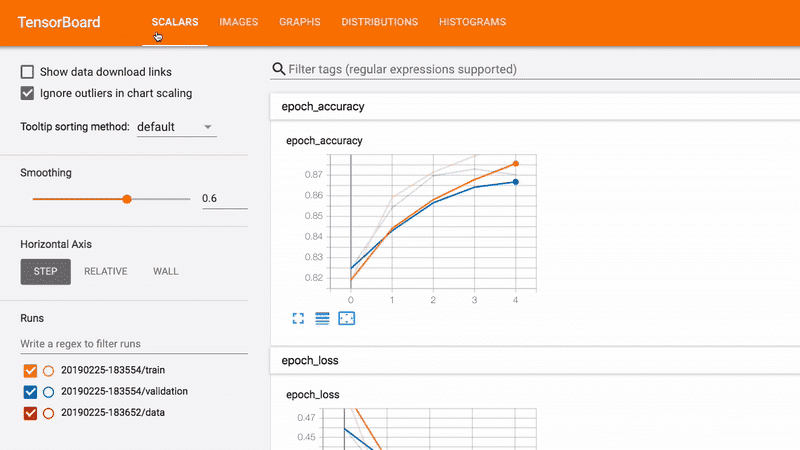
A collection of TensorFlow-ecosystem resources for understanding models, privacy and documentation, including tools such as the What-If Tool, LIT, TensorFlow Privacy and Model Cards. They aren’t one unified product, and maintenance varies by component.
- Strengths: deep TensorFlow integration, privacy techniques
- Limits: uneven maintenance, framework-specific
Best for: TensorFlow teams wanting explainability and privacy resources.
6. Google Responsible Generative AI Toolkit

Google’s resources for generative AI design, safety alignment, evaluation and safeguards, helping teams assess safety and investigate model behaviour.
- Strengths: generative AI focus, practical guidance
- Limits: not enterprise-wide governance
Best for: teams building with generative models, especially Gemma or Gemini.
7. Amazon SageMaker
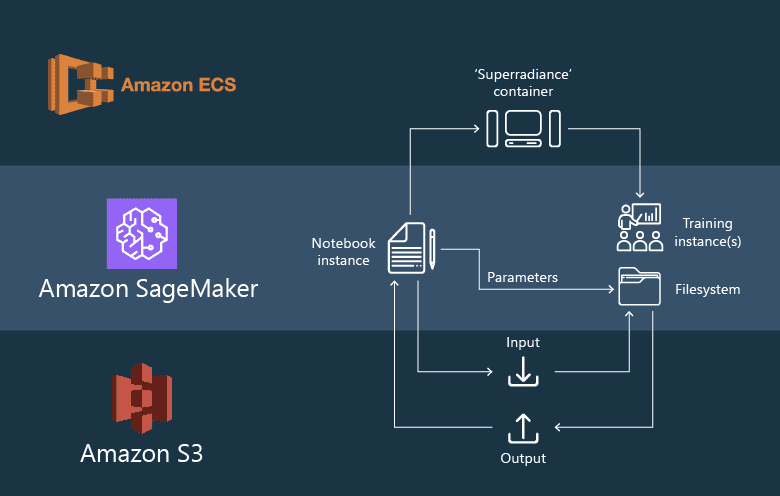
SageMaker offers bias detection, explainability, lineage, monitoring and documentation features inside ML workflows, and separate AWS offerings handle governance.
- Strengths: integrated with AWS pipelines
- Limits: strongest inside AWS, service boundaries vary
Best for: AWS teams embedding assessment in ML workflows.
8. Microsoft Purview and Foundry

Microsoft’s enterprise services cover data governance, AI risk visibility, policy and monitoring. They differ from the Responsible AI Toolbox and the Standard.
- Strengths: fit with Microsoft environments
- Limits: value depends on your Microsoft estate, and licensing varies
Best for: organisations governing AI inside Microsoft tooling.
9. IBM watsonx.governance

An enterprise governance platform for managing AI risk, monitoring assets and supporting documentation and explainability across the lifecycle. It differs from a library that calculates fairness metrics.
- Strengths: lifecycle governance, documentation
- Limits: heavier adoption, check supported model types and integrations
Best for: regulated enterprises needing organisation-wide AI governance.
Side-by-side comparison
| Tool | Primary focus | Main capability | Approach | Best for |
|---|---|---|---|---|
| OpenController | Agent governance | Identity, policy, lifecycle | Enterprise control plane | Governing agents across environments |
| IBM AI Fairness 360 | Bias detection and mitigation | Fairness | Open-source toolkit | Data scientists |
| Fairlearn | Fairness assessment | Fairness and trade-offs | Open-source library | ML engineers |
| Microsoft Responsible AI Toolbox | Model debugging | Errors, fairness, interpretability | Open-source dashboards | Model assessment |
| TensorFlow responsible AI tools | Model understanding, privacy | Explainability, documentation | Open-source resources | TensorFlow teams |
| Google Responsible GenAI Toolkit | Generative AI safety | Safety, evaluation | Resources and tools | GenAI teams |
| Amazon SageMaker | ML governance features | Bias, explainability, monitoring | Managed cloud | AWS teams |
| Microsoft Purview and Foundry | Enterprise AI governance | Risk, policy, monitoring | Managed cloud | Microsoft estates |
| IBM watsonx.governance | AI governance platform | Risk, documentation, lifecycle | Enterprise platform | Regulated enterprises |
How to evaluate responsible AI in practice
Take an AI system that prioritises customer cases. Define the intended use, affected people and potential harms. Assess data quality, representativeness and privacy. Measure performance and fairness across groups with Fairlearn or AI Fairness 360. Investigate errors with the Responsible AI Toolbox. Document limits, results, mitigations and owners. Then set monitoring and reassessment rules after deployment. A fairness metric or explanation is evidence for a decision, not an automatic verdict.
Tools vs governance platforms
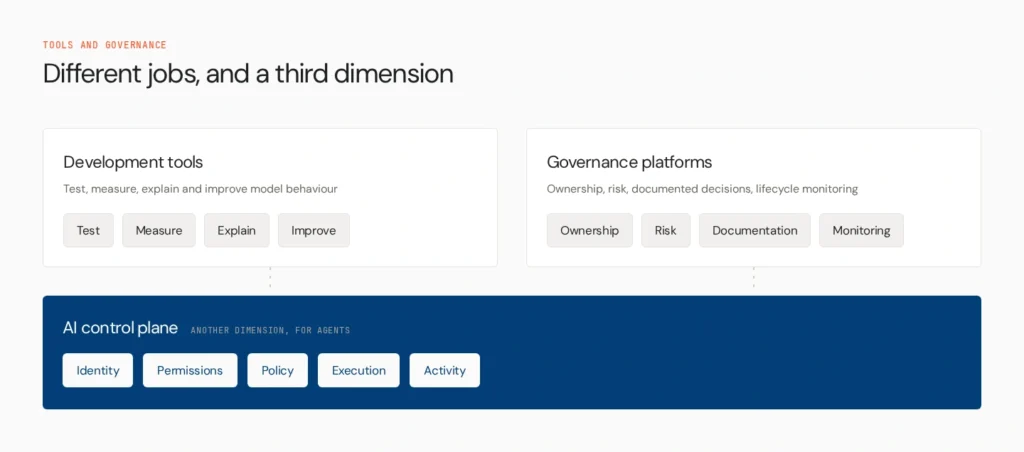
Development tools test, measure, explain and improve model behaviour. Governance platforms establish ownership, track risk, document decisions and monitor systems across their lifecycle. Fairlearn can assess fairness, while a governance platform tracks the risk, owner and mitigation decision. An AI control plane adds another dimension for agents: identity, permissions, policy, execution and activity across environments. See taking agents to production.
Microsoft responsible AI resources
These Microsoft terms refer to different things:
- Responsible AI Standard: Microsoft’s internal standard. Its 2026 transparency report describes a reworked standard that separates requirements for models, platform services and applications. I couldn’t confirm a public “v3” PDF, so link to Microsoft’s principles and approach and its transparency report instead.
- Responsible AI Toolbox: the technical assessment tools above.
- Impact assessment template: Microsoft released its Responsible AI Impact Assessment Template externally in June 2022 as a PDF.
- AI governance tools: Purview and Foundry, depending on your environment.
How to choose
Match the tool to your need: fairness, explainability, safety testing, privacy, documentation or governance. Consider your system type (traditional ML, generative AI or agents), your stage, whether you want open source, managed services or enterprise visibility, and the evidence and accountability your use case requires. A data science team might start with Fairlearn. A generative AI team needs safety evaluation. An enterprise running agents across environments may add a control plane. No single platform is best for every requirement.
Where Opencontroller fits
Fairness tools measure disparities. Interpretability tools investigate behaviour. Safety evaluation tools test for harm. Governance platforms manage risk and accountability. Opencontroller governs agent identity, permissions, policy, runtime activity and lifecycle. Technical assessments provide evidence, and operational controls help organisations manage how deployed agents act. It doesn’t remove model bias or certify compliance.
Build a repeatable process
Responsible AI needs a repeatable process: measure behaviour, document risk, assign accountability and keep oversight after deployment. Responsible AI requires both evidence about how systems behave and controls over how they operate. Explore how Opencontroller helps enterprises govern AI agents across environments, or book a demo to see how the control plane fits your AI architecture.
FAQs
It depends on the need. Fairlearn and AI Fairness 360 for fairness, the Responsible AI Toolbox for debugging, cloud governance services for managed oversight, and OpenController for agent governance.
Responsible AI is the practice of building and operating AI to address risks. Governance is the policies, ownership, approvals and monitoring that enforce it.
Assessing and debugging models through error analysis, fairness assessment and interpretability dashboards.
Microsoft published its Impact Assessment Template as a PDF in June 2022. Check Microsoft’s responsible AI pages for the current version.
They compare outcomes and performance across groups using metrics, then flag disparities. The metric choice needs context.
Interpretability components in the Responsible AI Toolbox, plus libraries such as InterpretML and LIT.
Define intended use and harms, test performance and fairness, document limits and mitigations, and set monitoring rules.
It governs agent identity, permissions, policy, runtime activity and lifecycle, giving model-level assessments an operational home.
Book A Demo: Click Here
Join our Slack: Click Here
Link to our GitHub: Click Here