Building an AI agent always starts the same way.
You pick a few tools to get going: something to run the agent’s reasoning, something to run its code, something to remember the conversation. You pick whatever is fastest to set up, because right now, all you want is a working demo.
And it works. The agent answers questions, books things, does the task. Everyone’s happy.
Then, a few weeks later, things change:
- The agent now needs to run code you don’t fully trust — so “just run it locally” is no longer safe.
- The agent needs to work across multiple servers — so memory that only lives on one machine breaks everything.
- Someone from your security team asks, “Can you show me exactly what this agent did last week?”, and you realize you never built a way to track that.
Suddenly, the fastest way forward feels like starting over. Not because the agent itself was wrong, but because all its pieces were glued together in a way that only worked for the first version of the problem.
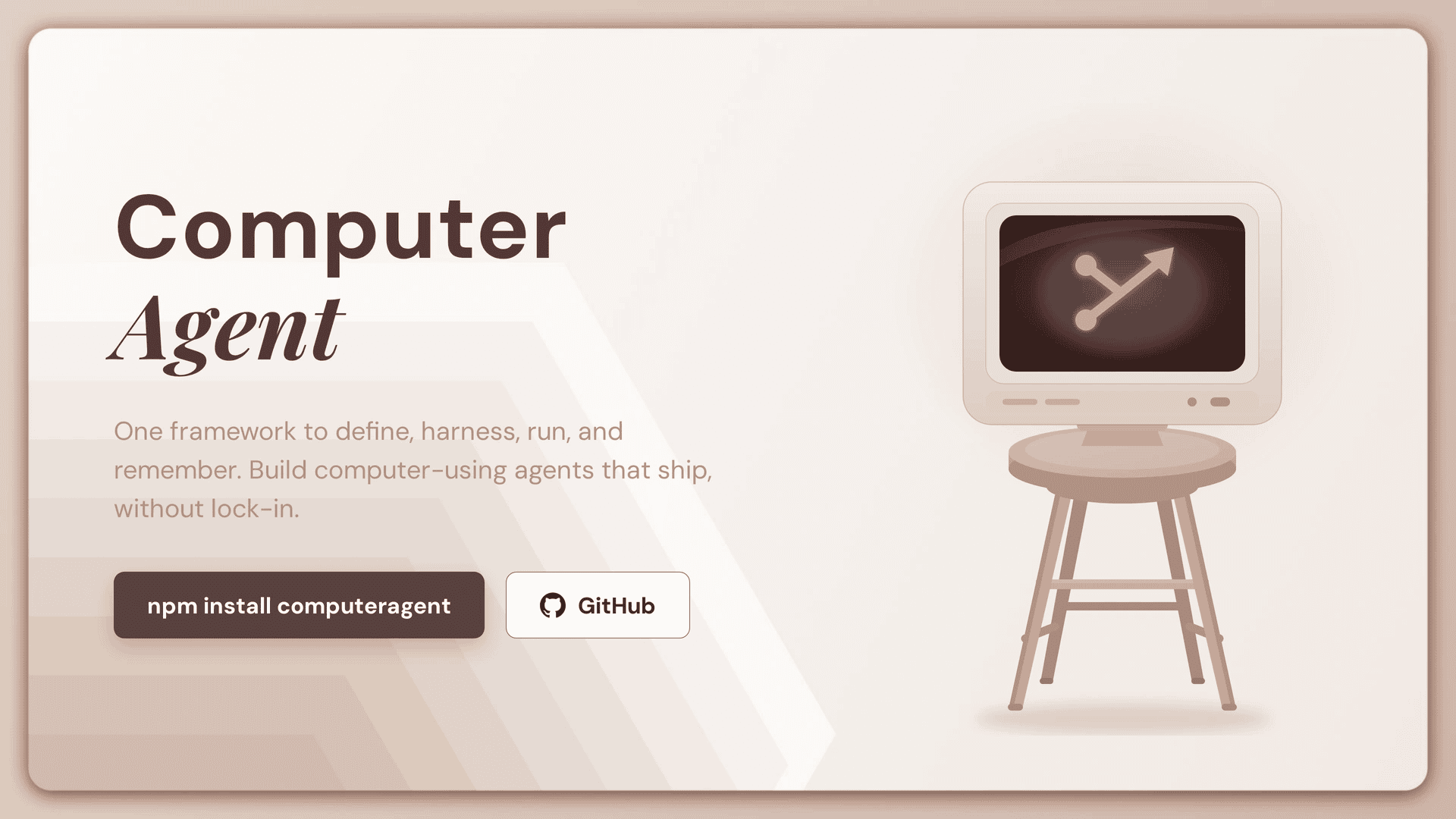
This is exactly the gap that ComputerAgent, an open-source framework from Lyzr Research Labs, is built to close.
Four pieces. Swap any one, anytime.
ComputerAgent is built on one simple belief:
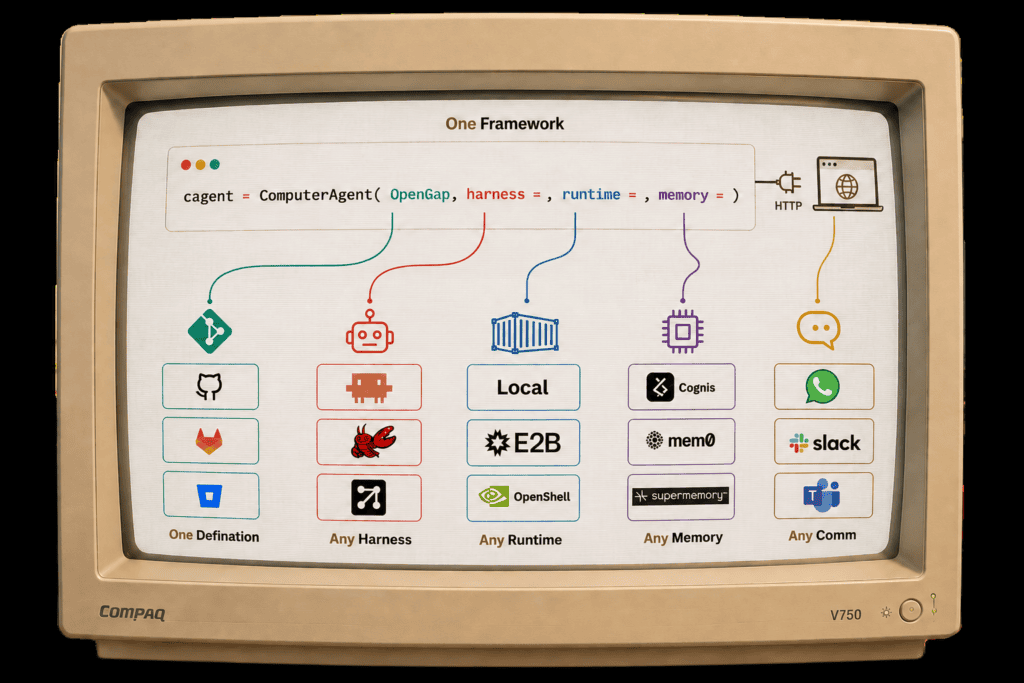
An agent is made of a few independent parts — and none of them should be locked to each other.
Specifically, it breaks an agent down into four swappable pieces:
1. Where the agent comes from A GitHub repo, a local folder, or code written directly in your app. This becomes the agent’s identity — the same agent can run on ten different machines and still be recognized as one agent.
2. What powers its thinking This is the “engine” — Claude’s Agent SDK by default, but it can be swapped for other model providers or your own custom engine.
3. Where it actually runs Locally on your laptop for quick testing. In a lightweight sandbox for extra safety. In a fully isolated virtual machine when you’re running code you don’t trust at all.
4. Where it remembers past conversations Simple in-memory storage while testing, or a real database once the agent needs to keep working across multiple servers.
The whole point: you can change any one of these without touching the other three.
Need stronger security? Swap the runtime. Nothing else in your code changes. Need the agent to scale across servers? Swap the memory storage. The agent’s behavior stays exactly the same.
What it looks like in code
Here’s roughly what setting one up looks like:

Nothing here is permanent. Want a lighter-weight sandbox instead of a full virtual machine? Change one line. Want to store conversations in a local file instead of a database? Change one line. The agent’s actual instructions never have to be touched.
That’s really the whole idea in practice, change the infrastructure without rewriting the agent.
Permissions, guardrails, and logs-built in
The parts of ComputerAgent that matter most aren’t about making an agent smarter, they’re about making it safe to actually put in front of real users. This is usually the part every team ends up building badly, from scratch, under time pressure.
Permission control Before the agent runs anything risky, like a command that deletes files — you can step in and say “no, block that.” You get to decide, case by case, what the agent is and isn’t allowed to do.
Policy rules For teams that need something more formal than manual checks, ComputerAgent supports rule-based guardrails. And importantly, if the rule-checking system itself ever fails or times out, the agent defaults to blocking the action — not allowing it. Safe by default.
Full visibility into every action Every step the agent takes — every decision, every tool it used — gets logged in a standard format that plugs directly into common monitoring dashboards (Grafana, Datadog, and similar tools). So when someone asks “what did the agent actually do?”, there’s a real answer instead of a guess.
Why infra shouldn’t force a rewrite
It’s tempting to read this as “just another agent toolkit.” On the surface, sure — you import it, point it at some code, and call .chat().
But the real idea underneath is simpler and more useful than that:
The parts of an agent worth keeping — its identity, its safety rules, its activity logs — shouldn’t have to be rebuilt every time your infrastructure needs change.
Agent projects rarely stay still. The setup you trust today (a quick local test) usually isn’t the setup you’ll need in six months (a locked-down, monitored, production environment).
ComputerAgent is built around that reality from the start — so teams don’t have to choose between shipping fast now and rebuilding everything later.
Explore here
Book A Demo: Click Here
Join our Slack: Click Here
Link to our GitHub: Click Here