Controlling AI agents becomes a security blind spot when they live inside different cloud ecosystems.
Yes, this is exactly how Lyzr's control plane works. It governs agents by using the native integrations and access controls of platforms like Microsoft's AI Foundry or AWS's Agent Core.
This is a core design principle of OpenController by Lyzr, the control plane for enterprise AI agents.
OpenController is Lyzr's answer to the control plane problem in enterprise AI: it acts as the governance layer that respects and works with your existing cloud infrastructure, not against it.
Governance Through Integration, Not Replacement
OpenController doesn't replace your existing cloud tools or security models.
It connects to them.
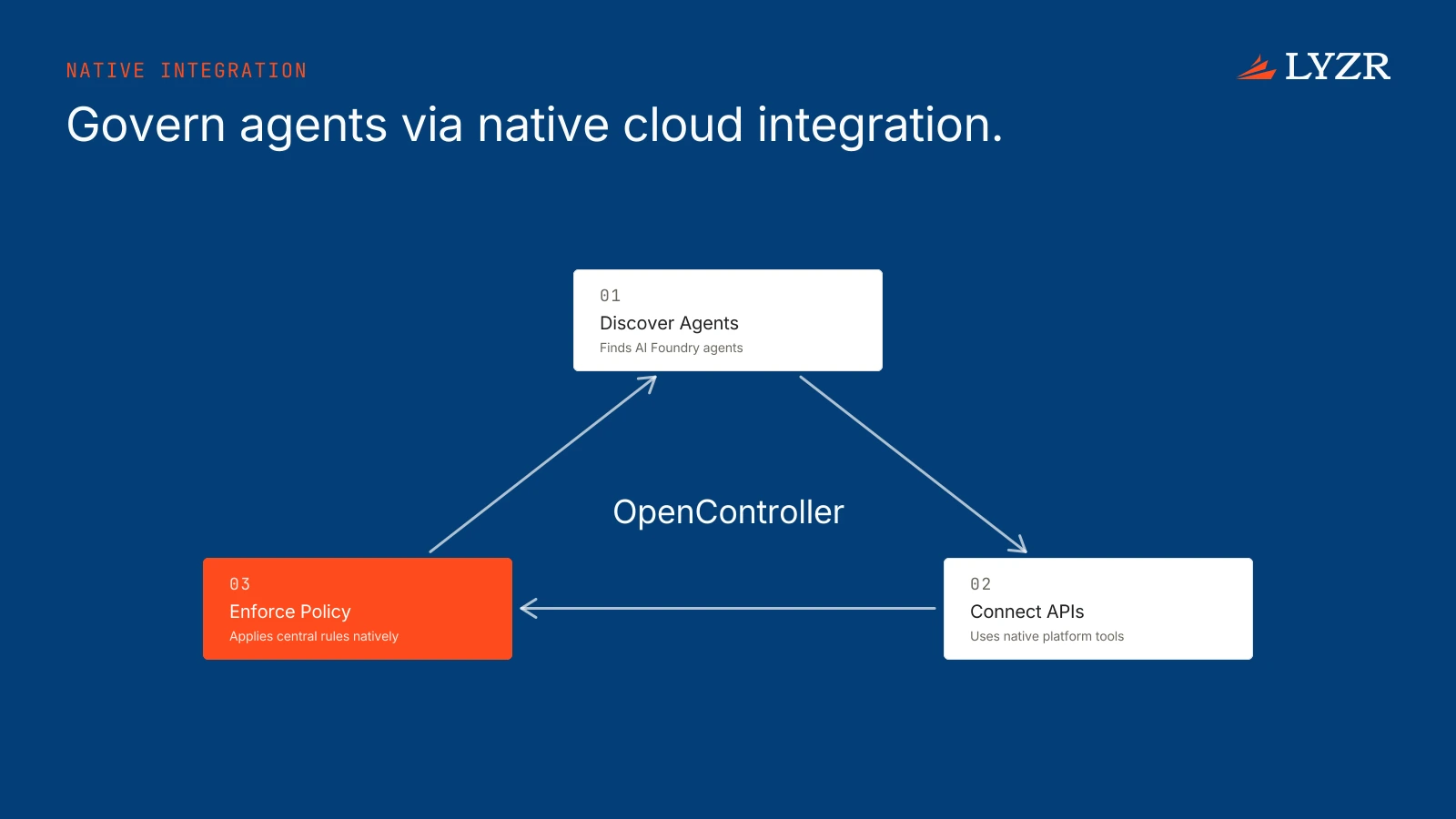
The control plane discovers agents registered in services like AI Foundry, AWS Bedrock AgentCore, or a central Agent Registry.
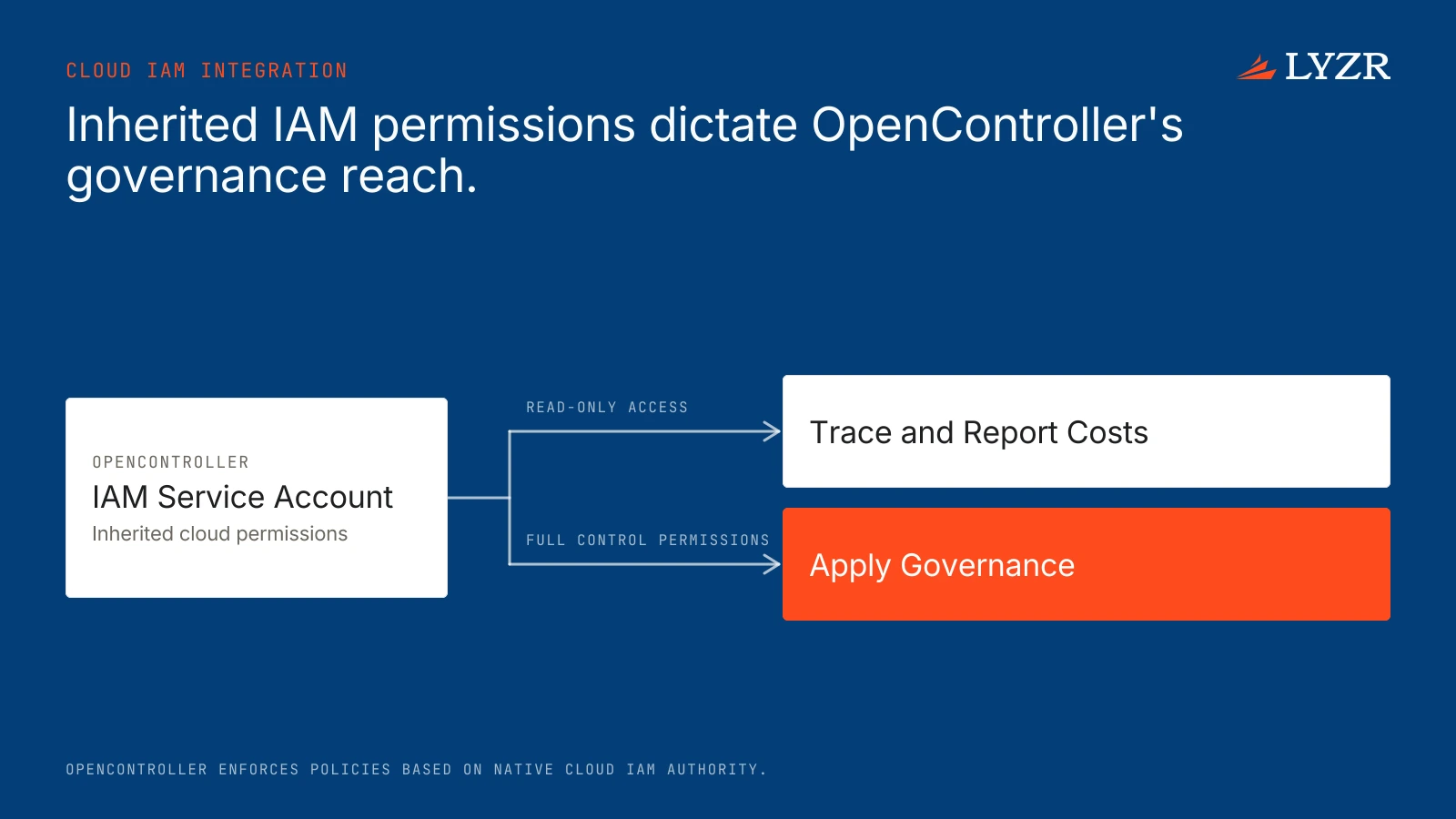
It then uses the platform's own APIs to interact with those agents, inheriting the access levels you have already configured in your cloud's IAM.
For example, if the service account Lyzr uses has read-only access in AI Foundry, OpenController can only observe those agents. It can trace their activity and report on costs, but it cannot intervene.
If that same service account has full control permissions, OpenController can apply its complete suite of governance policies. This includes enforcing budget limits, requiring human-in-the-loop approvals, or routing traffic.
This means you continue to manage permissions in one place: your native cloud IAM.
OpenController simply enforces policies based on the authority you've already granted.
Central Policy, Native Enforcement
You define your governance rules once, centrally, within OpenController.
These policies apply universally to all connected agents, no matter where they were built or are currently hosted.
But the enforcement itself happens through the native connection to the underlying platform.
This architecture avoids creating a second, conflicting security model for your AI agents. It makes adoption faster because you aren't forced to rebuild your entire identity and access management strategy just for AI.
You can adopt components modularly and bring a unified control plane to the tools you already have.
Your Cloud, Your Control
The key takeaway is that OpenController extends your existing cloud security fabric to cover your AI agents. It provides central governance without forcing you to abandon your platform-native tools and permissions.
See how Lyzr brings cohesive governance to your multi-cloud agent strategy. Let's connect.
Related questions
Want to see how it fits your stack? Talk to us about OpenController by Lyzr.
Got a use case in mind?
8 weeks from use case to agents running in production.
Platform, people and FDEs, all in. Bring your environment. We'll co-build and stay until it's live.
Talk to UsFree resource
101 AI Agents Use Cases
100+ production-ready AI agent use cases across Marketing, Sales, HR, Banking, Insurance, Operations and a lot more
Download now