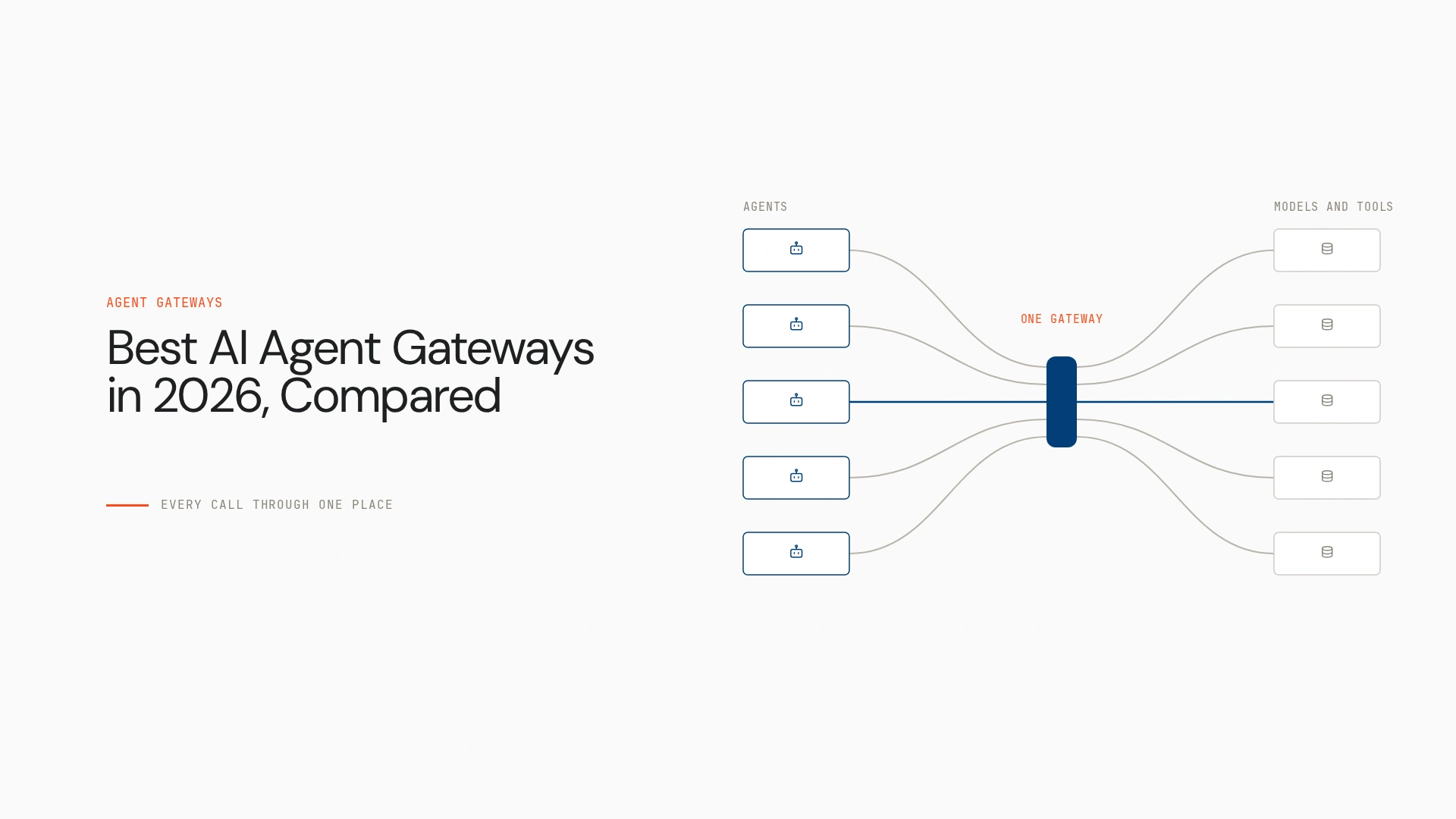
An enterprise standardises model access through a gateway. Then its agents start calling external tools, querying internal systems and talking to MCP servers. A gateway that handles model requests well doesn’t automatically control every tool invocation or agent workflow.
That changes the buying decision. Teams now weigh provider coverage and routing alongside tool access, authentication, deployment options, observability and the limits of what the gateway enforces. This guide compares the best AI agent gateways in 2026. The short version: the best gateway depends on which traffic it manages, how it enforces policy and where it fits in your infrastructure.
Which gateway fits which use case?
- Unified LLM and MCP traffic, self-hosted: Bifrost.
- Provider-agnostic routing you run yourself: LiteLLM.
- Enterprise traffic governance and guardrails: Portkey.
- Teams already on Kong: Kong AI Gateway.
- Azure-centred infrastructure: Azure API Management’s AI gateway.
- Envoy and Kubernetes platforms: Envoy AI Gateway.
- An AI platform with a built-in gateway: TrueFoundry.
- Governance across agents on any of the above: Opencontroller, a complementary control plane and not a gateway.
What does an AI agent gateway do?
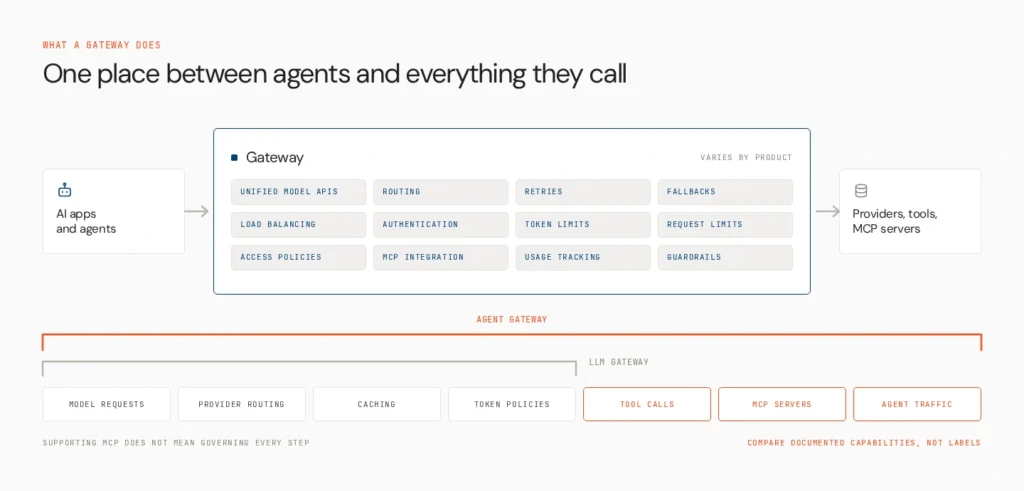
An AI agent gateway sits between AI applications or agents and model providers, tools or other endpoints. Depending on the product, it can offer unified model APIs and routing, retries, fallbacks and load balancing, authentication for supported traffic, token and request limits, model and tool access policies, MCP server integration, usage tracking and guardrails.
These features vary a great deal. The terms “AI gateway” and “AI agent gateway” aren’t standardised, so compare documented capabilities and ignore the label.
An LLM gateway focuses on model requests, provider routing, caching and token policies. An agent gateway extends that to supported tool calls, MCP servers and agent traffic, including tool authentication and access restrictions. Supporting MCP traffic doesn’t mean governing every step of an autonomous agent’s workflow. For model-routing detail, see Lyzr’s LLM gateway comparison.
How we compared them
We assessed model coverage, agent and tool traffic (MCP, tool access), security, reliability, observability, guardrails, deployment and extensibility, using official documentation. We didn’t run benchmarks, so any performance figure is vendor-reported. We separated generally available features from previews and paid tiers, and an open GitHub repository doesn’t make a product fully open source.
The gateways
1. Bifrost by Maxim AI
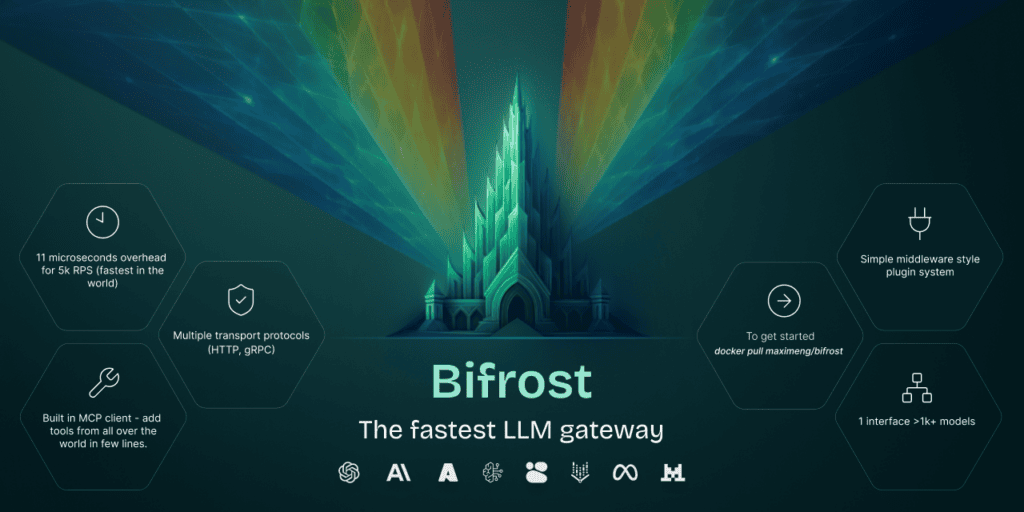
Bifrost is an open-source gateway (maximhq/bifrost) that unifies 15+ providers behind one OpenAI-compatible API and supports MCP for external tool calling. It runs as a self-hosted HTTP gateway with a built-in web interface, and Maxim reports microsecond-level overhead in its own benchmarks, though the repository’s figures vary between versions.
- Strengths: one gateway for model and supported tool traffic, easy self-hosting
- Limits: benchmark claims are vendor-reported, and you operate and secure it
Best for: teams wanting a self-hosted gateway covering models and MCP tools.
2. LiteLLM
LiteLLM’s open-source proxy provides a unified API across providers with routing, fallbacks, budgets and key management, and its MCP gateway can manage tool access by key, team or organisation.
- Strengths: provider breadth, budgets, deployment control
- Limits: you run, patch and secure it, and tool permissions aren’t full workflow governance
Best for: teams wanting self-hosted, provider-agnostic routing.
3. Portkey
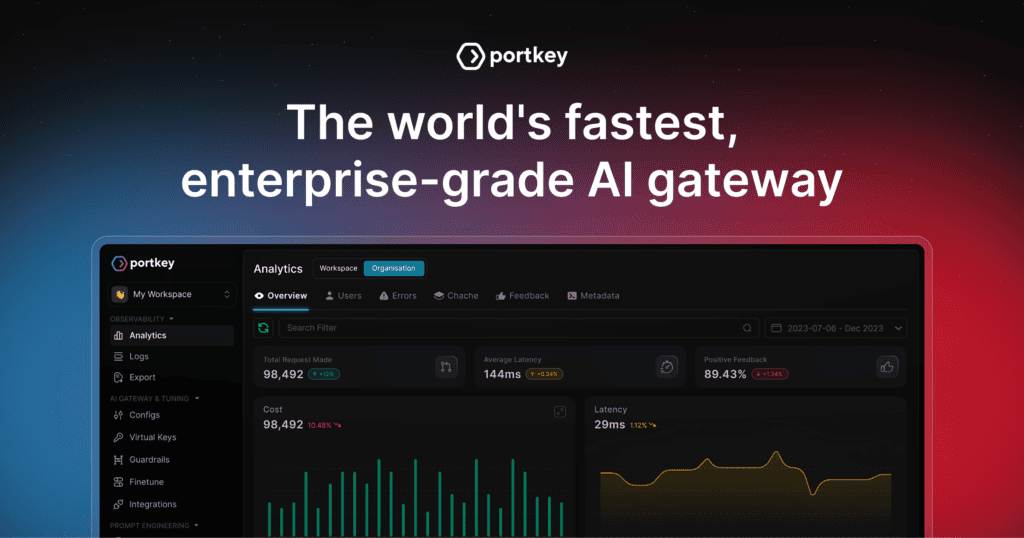
Portkey offers an AI Gateway and an MCP Gateway covering unified model access, routing, guardrails, authentication, tool access control and observability, in managed and enterprise deployments.
- Strengths: governance features and guardrails in one product
- Limits: capability depends on tier and deployment mode, so confirm what your plan includes
Best for: enterprises centralising AI traffic governance.
4. Kong AI Gateway

Kong adds AI model policies and MCP support to its API gateway, including authentication, rate limiting and exposing existing APIs as MCP tools.
- Strengths: familiar API management controls applied to AI traffic
- Limits: model policies and API-level MCP policies differ, and version or licensing constraints can apply
Best for: organisations already running Kong.
5. Azure API Management AI gateway
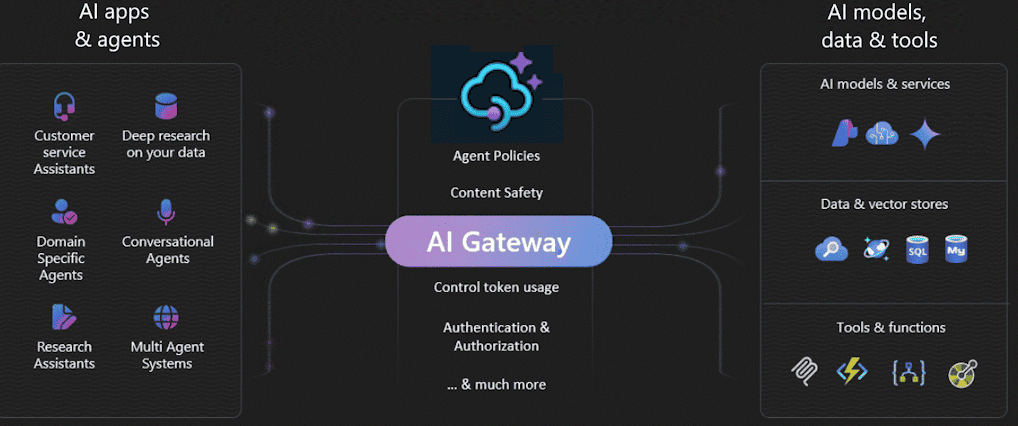
Microsoft says the AI gateway extends API Management and isn’t a separate offering. It adds token limits, semantic caching, OAuth through the credential manager, remote MCP servers and A2A agent APIs, and exposing REST APIs as MCP servers. Capabilities vary by tier. A dedicated AI Gateway tier entered public preview on July 27, 2026, separate from generally available capabilities.
- Strengths: native Azure identity, networking and Foundry integration
- Limits: tier-dependent features, and a preview tier
Best for: Microsoft-centred AI infrastructure.
6. Envoy AI Gateway
Envoy AI Gateway is an open-source project that brings AI traffic management to Envoy-based and Kubernetes infrastructure, with provider routing, resilience and observability. Confirm its current MCP and agent capabilities, since Envoy features don’t all carry into the project.
- Strengths: configurable infrastructure that fits Envoy and Kubernetes stacks
- Limits: you assemble and operate more of the surrounding stack
Best for: platform teams already invested in Envoy.
7. TrueFoundry AI Gateway

TrueFoundry’s gateway handles model access, routing, access control and usage tracking inside its broader AI platform.
- Strengths: one platform for deployment and gateway
- Limits: some features may need the wider platform, and MCP depth needs confirming
Best for: AI platform teams centralising model access.
Side-by-side comparison
| Gateway | Deployment | MCP and tool support | Access controls | Open source | Best for |
| Bifrost | Self-hosted, private | Yes | Keys, SSO | Yes (repo) | Unified LLM and MCP |
| LiteLLM | Self-hosted | MCP gateway | Key, team, org | Yes (core) | Provider-agnostic routing |
| Portkey | Managed, self-hosted | MCP gateway | Auth, tool access | Partial | Traffic governance |
| Kong AI Gateway | Self-managed, cloud | MCP support | API policies | Partial | Kong estates |
| Azure APIM AI gateway | Azure | MCP servers, A2A | OAuth, policies | No | Azure stacks |
| Envoy AI Gateway | Kubernetes | MCP support | Envoy policies | Yes | Envoy platforms |
| TrueFoundry | Managed, self-hosted | MCP gateway | Platform RBAC | Partial | AI platform teams |
Where Opencontroller fits
A gateway controls supported requests between applications, models and tools. An AI control plane provides context for discovering, governing and monitoring agents across their lifecycle and environments. An agent may make many model requests and tool calls in one task. The gateway can apply controls to traffic passing through it, while a control plane can govern the agent that generates that traffic.
Opencontroller is Lyzr’s AI agent control plane. It is positioned it around agent discovery, pre-production evaluation and governance, runtime visibility and policy enforcement. It sits alongside your gateway and doesn’t replace model routing or gateway authentication. It isn’t one of the seven gateways above.
Is a gateway enough for agent governance?
A gateway can enforce request-level controls on the traffic it sees. It may not know an agent’s identity, deployment history, version, evaluation status or activity across systems. An evaluation system checks whether an agent meets criteria, observability helps investigate behaviour, and a control plane adds discovery, governance and operational control. These categories overlap, so the right design depends on the products you choose and where their controls operate. See AI agent governance.
How to choose
- Many model providers behind one API: prioritise coverage, format compatibility, routing and fallbacks.
- Agents calling MCP tools: verify MCP support, authentication, tool-level permissions and call visibility.
- Full deployment control: weigh self-hosting against the burden of operating it.
- An existing API gateway: check whether its AI features cover your traffic and policies.
- A cloud-specific stack: compare native identity, networking and lock-in.
- Agents across environments: assess whether you need a separate control plane.
Separate traffic control from agent governance
Choosing how AI traffic moves through your infrastructure and choosing how agents are governed across environments are two decisions. See how Opencontroller provides central agent discovery, governance and runtime visibility alongside your gateway, read the Agents to Production playbook, or book a demo to see how it fits your architecture.
FAQs
There’s no universal winner. It depends on model coverage, MCP and tool support, deployment preference, security needs and existing infrastructure.
Bifrost, LiteLLM and Portkey provide unified access and routing across providers. Check which fits your deployment model.
Several can, but capabilities differ. Verify authentication, authorisation, tool filtering, credential handling and observability.
Bifrost, LiteLLM’s core and Envoy AI Gateway are open source. Confirm licensing, since enterprise features and managed services may sit outside the open core.
Book A Demo: Click Here
Join our Slack: Click Here
Link to our GitHub: Click Here