Deciding where your agent development stops and where governance begins is a critical architecture choice.
Lyzr is not a development platform.
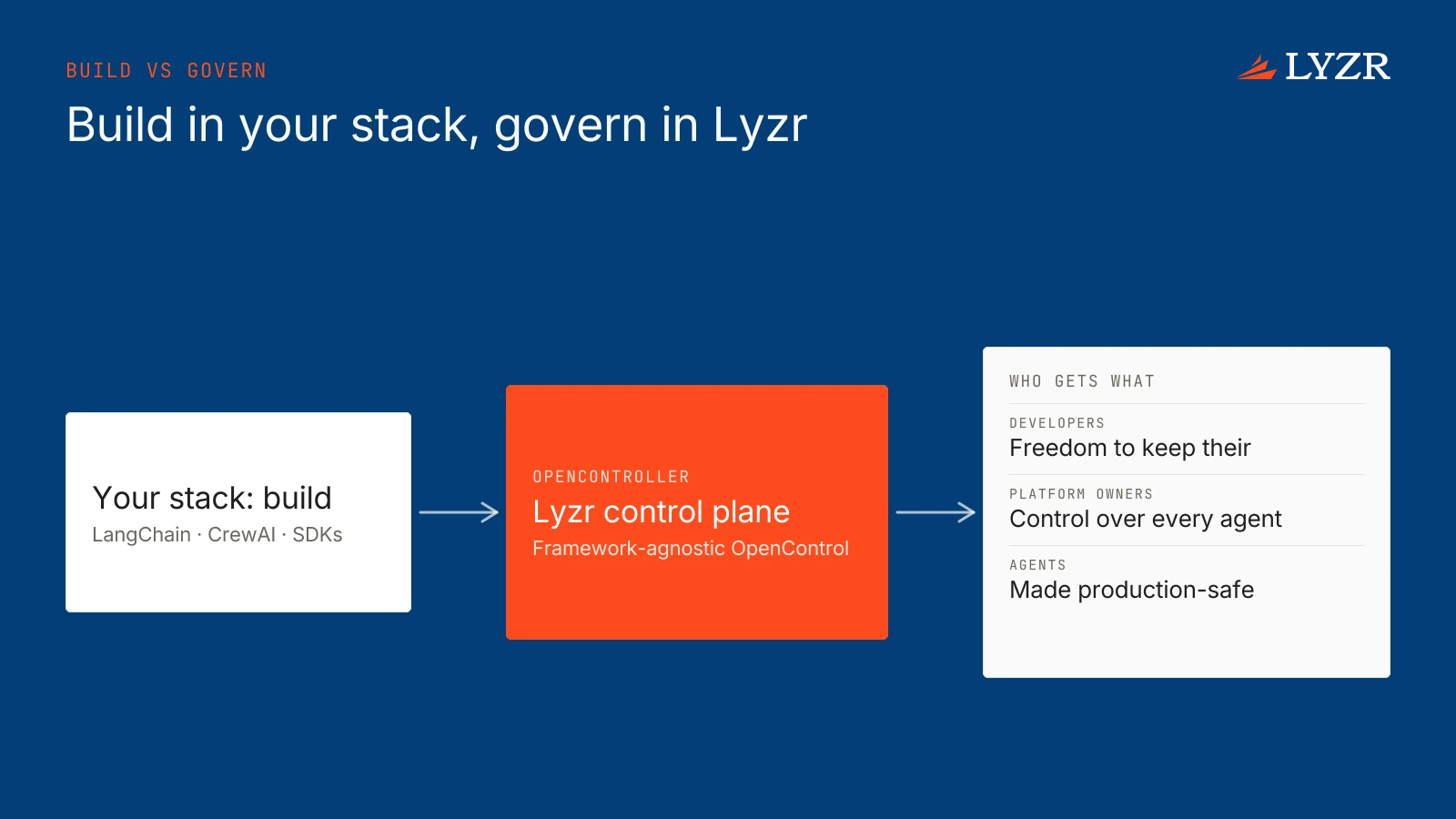
You build agents in your own stack, using your preferred frameworks. You govern them with Lyzr.
This is the core design of OpenController by Lyzr, the governance layer for production AI agents.
A control plane is the neutral layer that manages the systems beneath it.
For AI agents, OpenController provides that essential control, separating the "what" from the "how."
Where the Work Happens: Build vs. Govern
Your team’s work is split between two distinct, complementary domains.

Building the agent happens in your environment.
Governing the agent happens in Lyzr.
This separation is intentional. It gives your developers freedom and your platform owners control.
| Your Stack (Build) | Lyzr's Control Plane (Govern) |
|---|---|
| Define agent logic with LangChain, CrewAI, or SDKs | Observe all agent traces, tool calls, and LLM I/O |
| Develop and connect custom tools | Enforce security policies and access controls |
| Choose and fine-tune models | Set budgets and rate limits |
| Run agents on your own infrastructure | Generate compliance-ready audit trails |
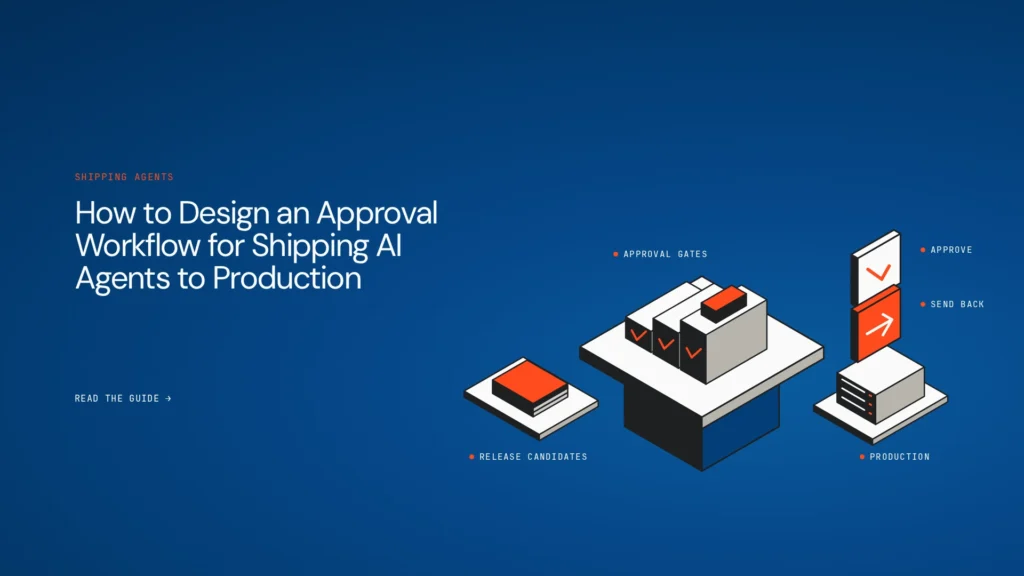
| Iterate on agent capabilities | Implement human-in-the-loop approval gates |
The left column is where you create value.
The right column is where you protect it. OpenController's observability layer gives you an end-to-end trace, even when agents call other agents as tools.
Why This Separation Is the Point
This decoupled architecture isn't an accident. It's the only way to manage a diverse fleet of agents at enterprise scale.
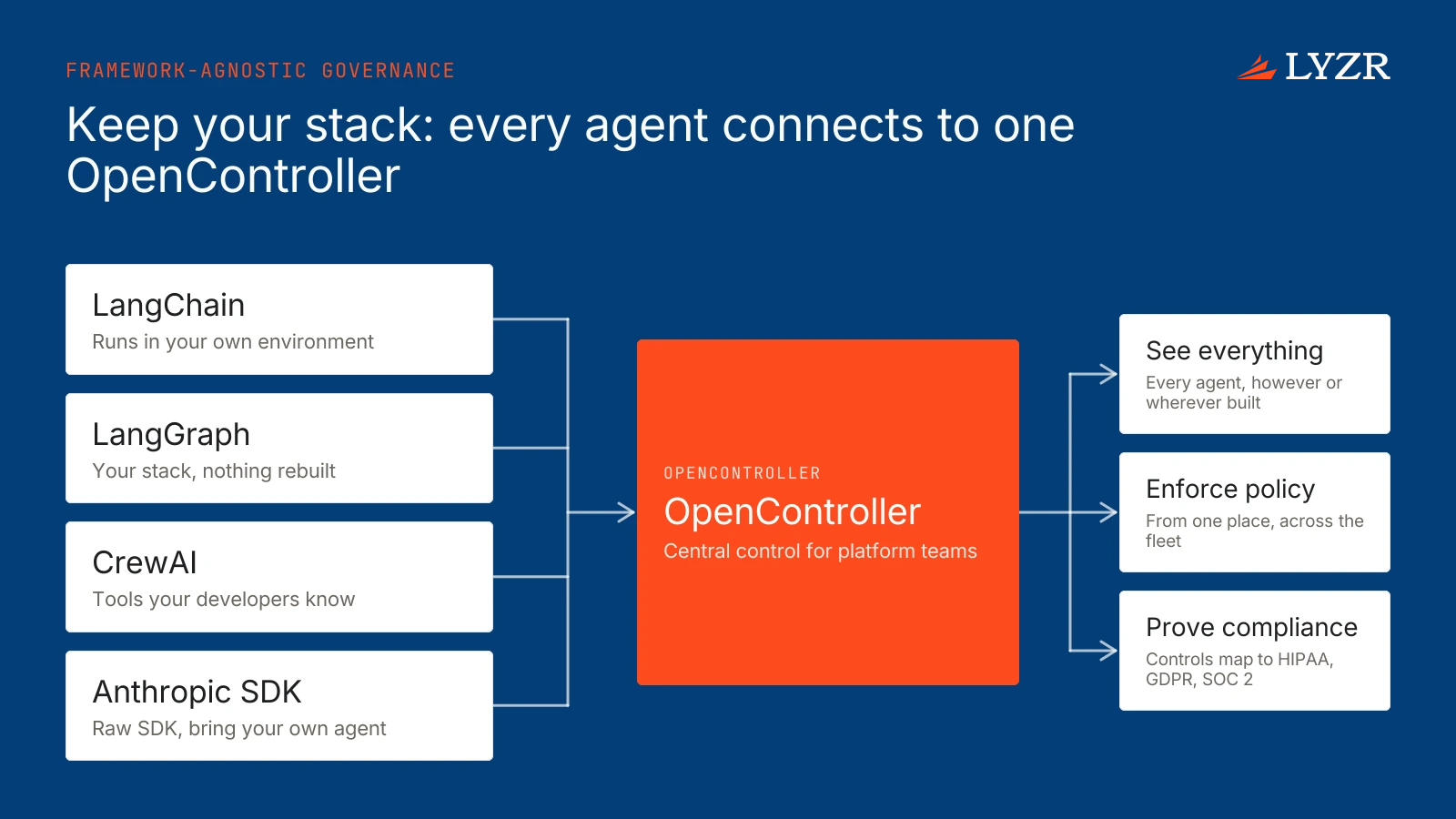
It means you keep your stack.
Use LangChain, LangGraph, CrewAI, or a raw SDK from Anthropic or OpenAI. OpenController is framework-agnostic.
Your developers keep the tools they know.
You don't need to rebuild or migrate anything.
You bring your own agents, running in your own environment. Lyzr provides governance without forcing a runtime migration.
Platform teams get central control.
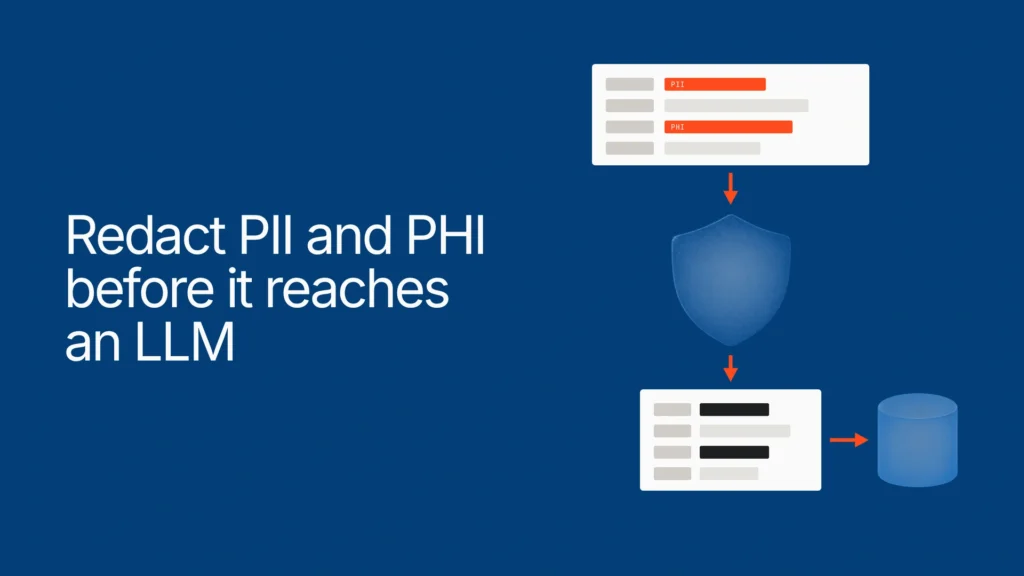
From one place, you can see everything, enforce policy, and prove compliance across every agent, no matter how or where it was built. This is how you confidently handle sensitive data like PII and PHI, with controls that map directly to HIPAA, GDPR, and SOC 2 requirements.
Conclusion: Your Stack, Our Guardrails
OpenController is not where the work of building an agent happens. It’s where the work of making an agent production-safe happens.
It is the control plane for the agents you already have.
See how it works with your agents.
Want to see how it fits your stack? Talk to us about OpenController by Lyzr.
Got a use case in mind?
8 weeks from use case to agents running in production.
Platform, people and FDEs, all in. Bring your environment. We'll co-build and stay until it's live.
Talk to UsFree resource
101 AI Agents Use Cases
100+ production-ready AI agent use cases across Marketing, Sales, HR, Banking, Insurance, Operations and a lot more
Download now