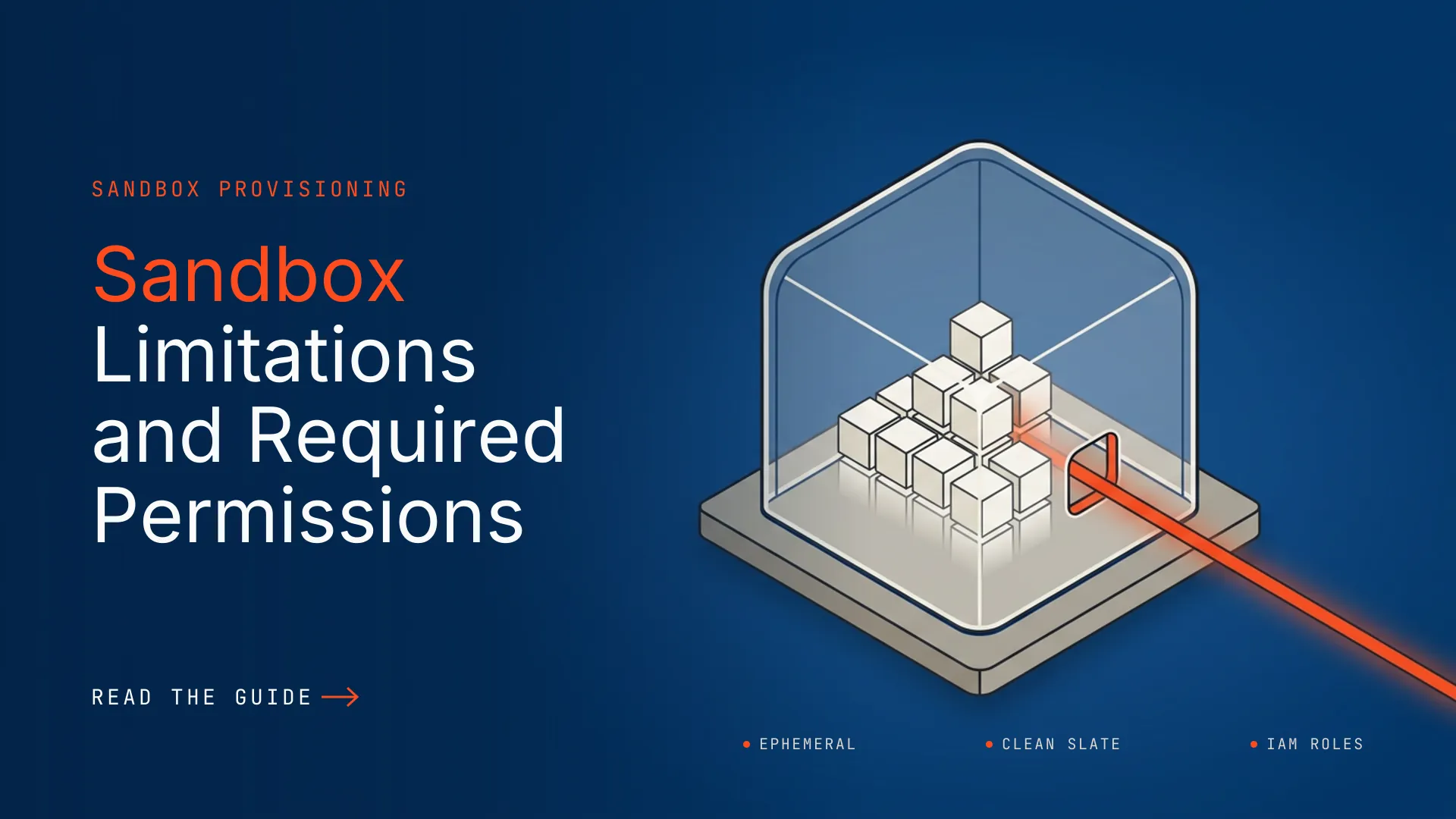
An OpenController sandbox environment is ephemeral by design.
Its state, including all configurations and agent data, is not persisted and will be lost on restart.
This is a deliberate trade-off for rapid, isolated testing. For provisioning, you need permissions to create and manage resources within a dedicated resource group or project in your cloud environment.
This sandbox lets you test the full governance capabilities of OpenController by Lyzr, the control plane for enterprise AI agents, without impacting production systems.
A control plane is the neutral layer that governs everything beneath it. For AI agents, OpenController is that layer.
What "Ephemeral" Means for Your Evaluation
The primary limitation of the sandbox is its non-persistent storage.
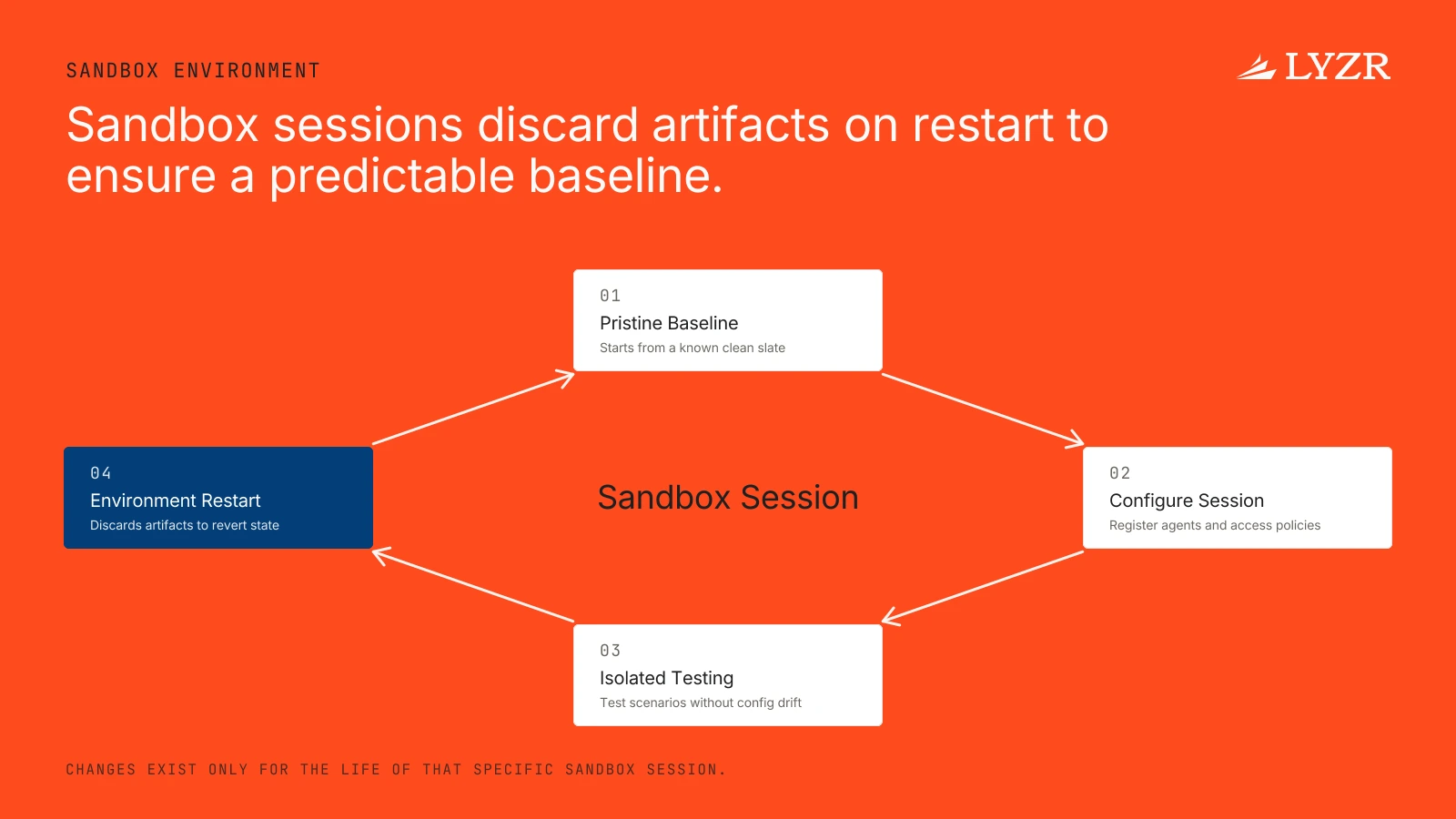
Think of it as a clean slate, every time.
Any changes you make, registering agents, defining access policies, creating tool connections, exist only for the life of that specific sandbox session.
If the environment restarts for any reason, it reverts to its original, pristine state.
This is not a bug. It is a core feature of a true sandbox.
It ensures every test starts from a known, predictable baseline, free from the artifacts and configuration drift of previous experiments. You can test a specific scenario, tear it down, and be confident your next test is completely isolated.
Required Permissions for Provisioning
Provisioning an OpenController sandbox does not require broad organizational permissions.
The principle is least privilege.
We provide Terraform or CloudFormation templates that define the exact infrastructure needed. The permissions required are scoped to what those templates need to execute successfully within a designated, isolated part of your cloud account.
Typically, this includes the ability to:
- Create and manage container instances or virtual machines.
- Configure networking rules like VPCs, subnets, and security groups.
- Create and assign tightly-scoped IAM roles or service principals for the sandbox components.
You are providing permissions for Lyzr to stand up a self-contained environment, not to access your existing infrastructure.
Moving from Sandbox to a Persistent Environment
The sandbox is for learning, experimentation, and validating core functionality.
It is not intended for building a proof-of-concept that needs to survive for days or weeks.
When you are ready to move to a POC or a shared development environment, you deploy a persistent instance of OpenController. This version connects to a managed database to store all configurations, policies, registered agents, and audit logs.
This persistent state is what allows you to build continuously and integrate with your existing workflows. It's the environment where you would connect to your identity provider, set up durable policies, and begin managing the lifecycle of agents as they move from development to production.
This is also the stage where you would integrate OpenController into your CI/CD pipelines for deploying agents across environments.
Conclusion
The OpenController sandbox is a fast, safe, and isolated evaluation tool, with the key trade-off being its ephemeral nature.
It’s built for speed, not for state.
When you're ready to build something that lasts, a persistent deployment is the next step. Talk to our team to see how it works.
Want to see how it fits your stack? Talk to us about OpenController by Lyzr.
Got a use case in mind?
8 weeks from use case to agents running in production.
Platform, people and FDEs, all in. Bring your environment. We'll co-build and stay until it's live.
Talk to UsFree resource
101 AI Agents Use Cases
100+ production-ready AI agent use cases across Marketing, Sales, HR, Banking, Insurance, Operations and a lot more
Download now