The short answer
- Cross-environment agent control: Opencontroller, a control plane around agents, not a compliance suite.
- Regulated, enterprise-wide governance: IBM watsonx.governance.
- ServiceNow-centred operations: ServiceNow AI Control Tower.
- Policy-led risk programmes: Credo AI.
- Privacy-led governance: OneTrust AI Governance.
- Governed lifecycle workflows: ModelOp.
- Risk testing and agent governance: Holistic AI.
An enterprise agent passes its tests, gets approved and goes live. Weeks later it makes a tool call it shouldn’t, reaches a resource outside its remit, or keeps running after a configuration change nobody reviewed. The risk register said the agent was approved. Nothing stopped it from acting.
Approval and control are different jobs. Some platforms specialise in policy documentation and compliance evidence, while others focus on release workflows, agent security or runtime enforcement. This guide compares the best platforms for AI agent rollout governance by one question: which ones help you control when an agent is ready to launch, what it may do afterwards and what happens when it breaks policy.
What is AI agent rollout governance?
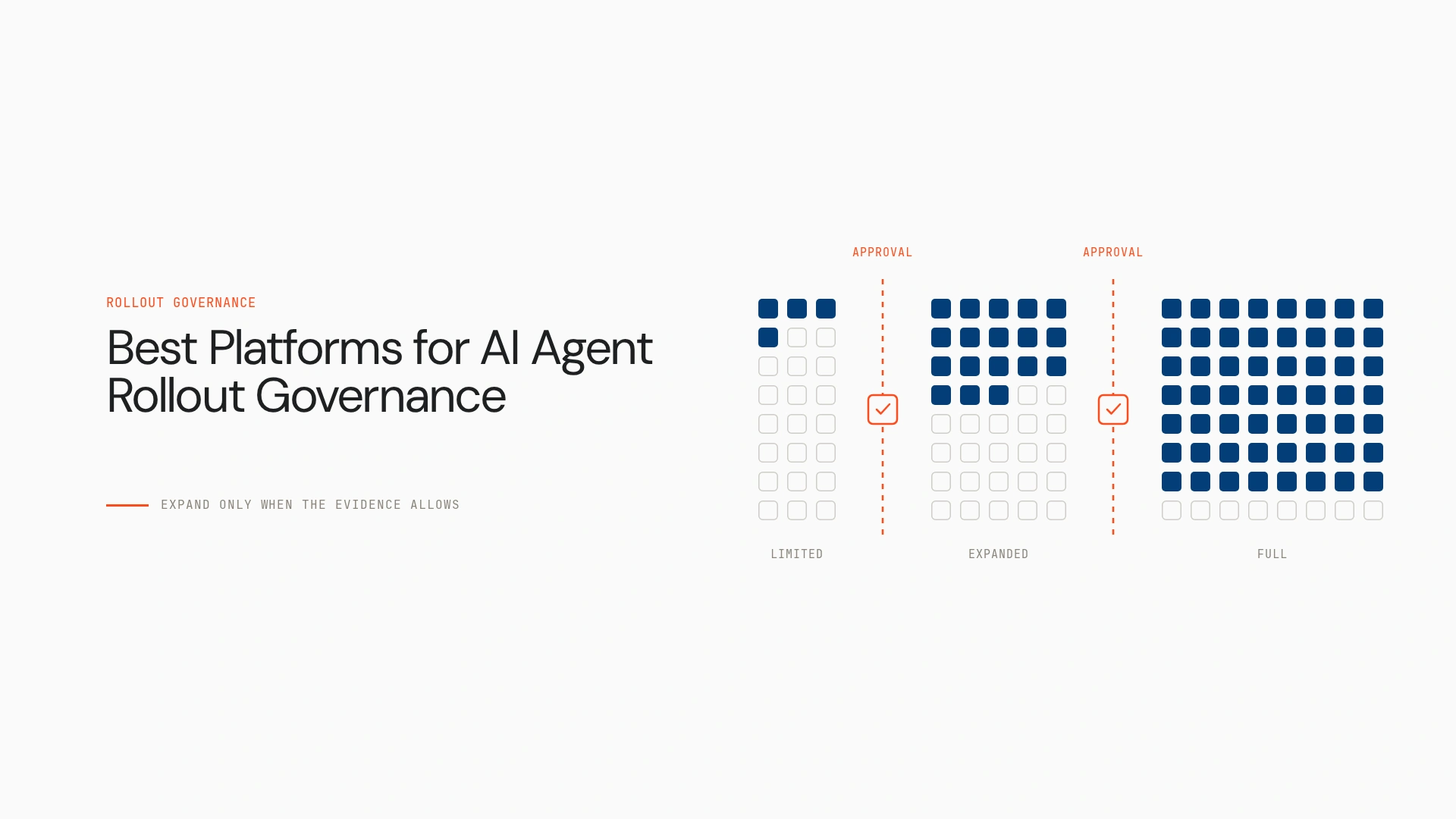
AI agent rollout governance is the processes and technical controls used to assess, approve, release, monitor and manage agents as they move into production and operate there. It overlaps with neighbours but isn’t the same thing. AI governance platforms manage inventories, policies, risk assessments and compliance evidence. Evaluation platforms test quality and safety. Orchestration platforms run agents. Runtime security tools detect or intervene in risky behaviour. An AI control plane connects discovery, governance, policy and operational visibility across an agent estate.
Five layers frame the comparison:
- Discovery and identity: which agents, versions and owners exist, including unmanaged ones.
- Evaluation and approval: release criteria, tests and recorded sign-off.
- Staged promotion: controlled movement between environments, with version tracking.
- Runtime enforcement: whether a prohibited action is blocked before it runs or only alerted afterwards.
- Monitoring, audit and response: tracing, records, and the ability to restrict, stop or roll back.
A product covering only some layers isn’t automatically weak. It may fit your actual requirement.
How we compared the platforms
We used public product documentation, announcements and analyst research, and labels reflect documented functionality, not hands-on testing. Criteria were discovery and identity, release gates, promotion and approvals, runtime enforcement, permissions, audit, cross-environment support, compliance workflows and deployment options. We separated generally available features from previews and add-ons.
The platforms
1. Lyzr Opencontroller
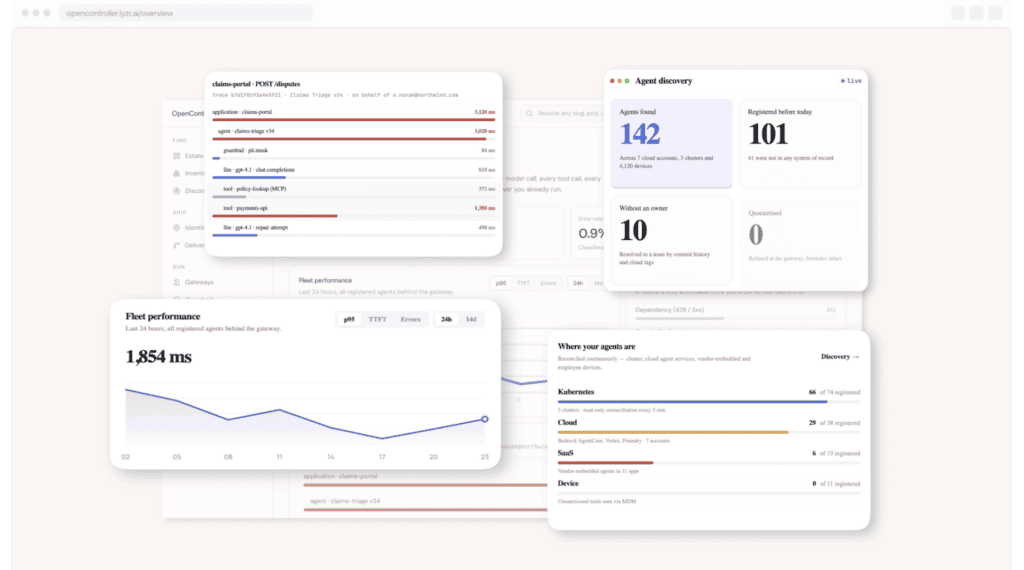
Opencontroller is Lyzr’s AI agent control plane. Lyzr positions it around discovering agents, models, tools and workflows, evaluating and governing agents before production, and monitoring agents, applications, APIs and infrastructure at runtime. The difference it targets is between recording that an agent was approved and controlling what it does once it runs. It aims to link agent identity, policy, release state and runtime activity across clouds, frameworks and runtimes.
- Strengths: a single control layer across existing agents, with governance from pre-production to runtime
- Limits: not a substitute for a regulatory compliance suite, and it adds most value across many agents
Best for: enterprises that need a common control layer across agents in different environments. See AI agent governance and the Agents to Production playbook.
2. IBM watsonx.governance
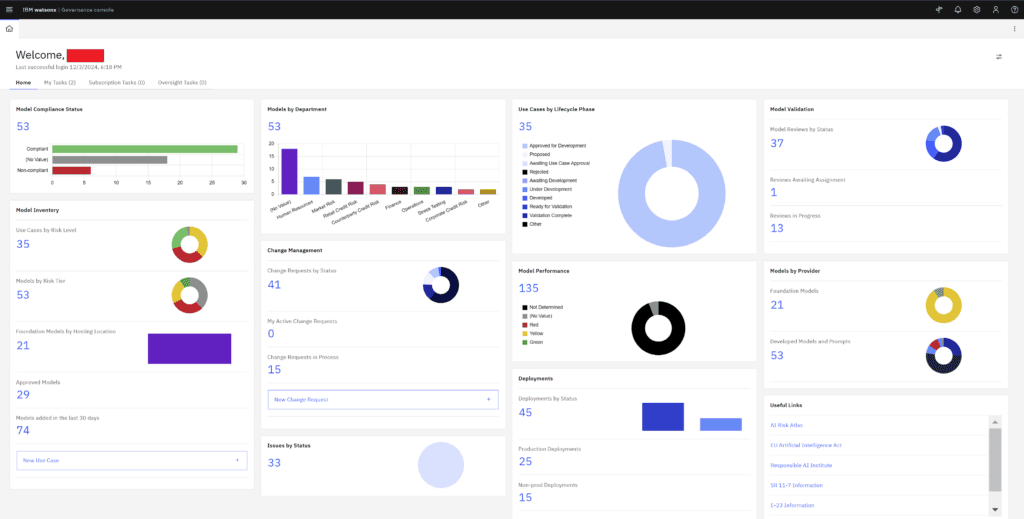
IBM’s platform covers AI lifecycle governance, risk management, monitoring and regulatory workflows, and Gartner placed IBM in the Leaders quadrant of its first AI governance Magic Quadrant.
- Strengths: breadth for regulated enterprises, strong evidence and workflow
- Limits: check which agent-specific runtime and release controls your configuration includes
Best for: regulated organisations building enterprise-wide governance.
3. ServiceNow AI Control Tower
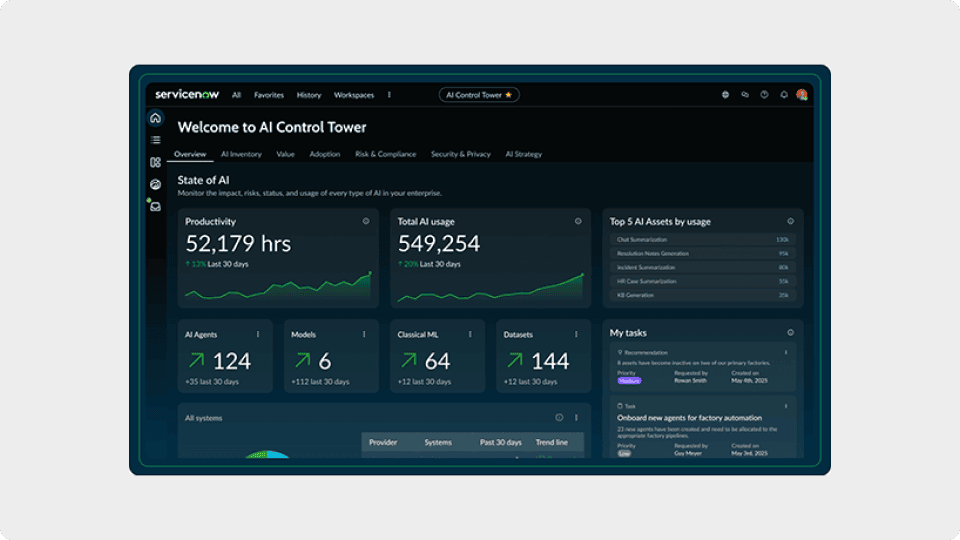
ServiceNow offers AI inventory, governance workflows, approvals and oversight tied to its IT and enterprise operations platform, and Gartner also placed it among the Leaders.
- Strengths: fits ServiceNow operating models and existing workflows
- Limits: agent observability and runtime intervention features need checking for current availability
Best for: ServiceNow-centred enterprises. Engineering teams may want controls closer to agent execution.
4. Credo AI
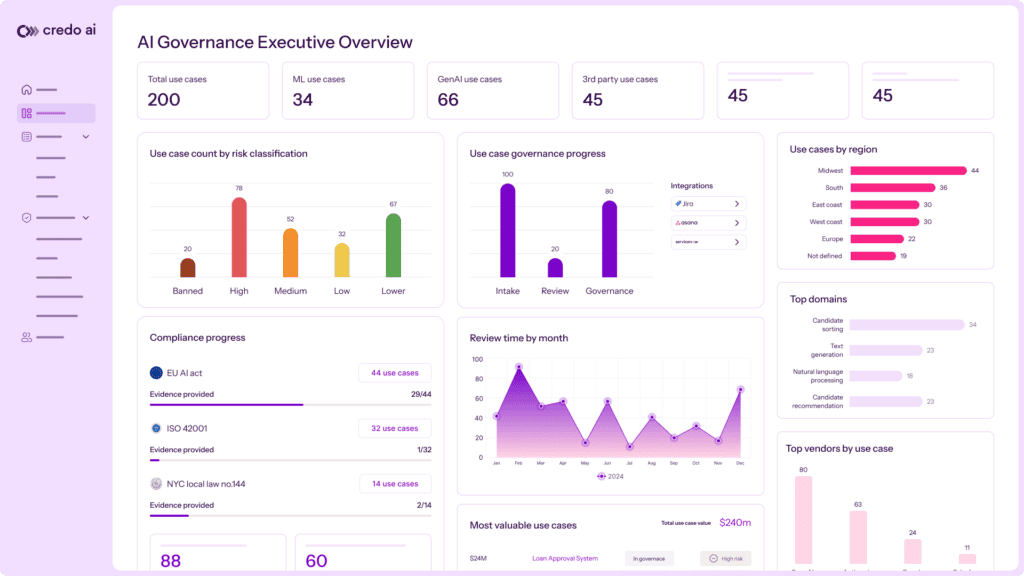
Credo AI focuses on policy management, risk assessments, governance workflows and compliance evidence.
- Strengths: policy-led governance, strong evidence trails
- Limits: defining a policy differs from enforcing it on a live agent action
Best for: policy-led AI risk and compliance teams.
5. OneTrust AI Governance

OneTrust brings AI inventory, risk classification, approvals and monitoring into its privacy and third-party risk programmes.
- Strengths: clear ownership and accountability, ties to privacy workflows
- Limits: separate direct rollout controls from governance and compliance workflows
Best for: privacy-led governance programmes.
6. ModelOp
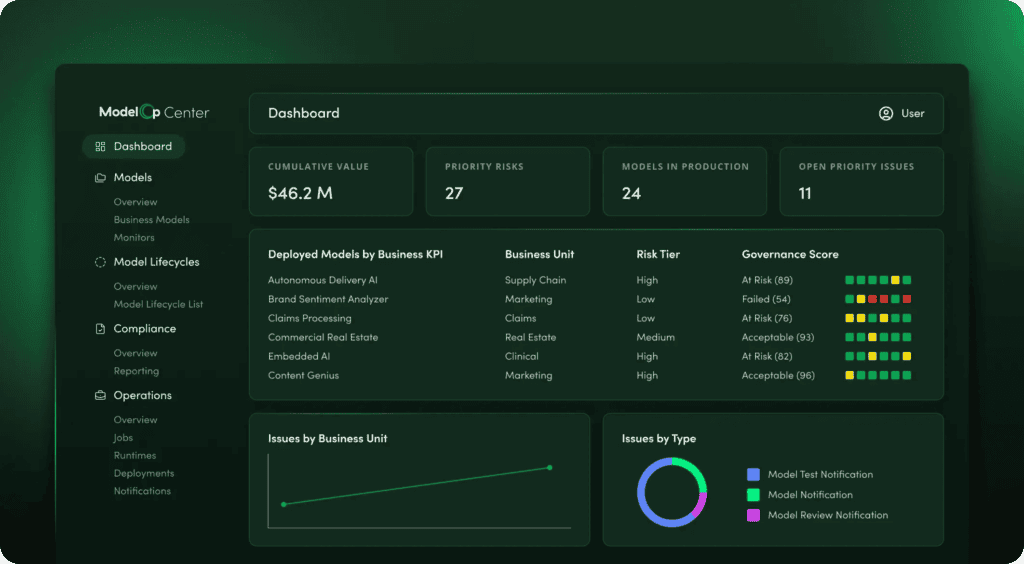
ModelOp covers AI lifecycle management and governed delivery workflows, with approvals and evidence as systems move to production.
- Strengths: governed release processes
- Limits: confirm which functions are built for autonomous agents versus models and applications
Best for: teams wanting a governed delivery pipeline for AI.
7. Holistic AI

Holistic AI combines risk assessment, testing and red teaming with governance, and has extended into agents.
- Strengths: testing and risk evidence feeding release readiness
- Limits: evaluation isn’t release orchestration or runtime enforcement, and agent features need checking
Best for: teams that want risk testing alongside governance.
Side-by-side comparison
| Platform | Primary focus | Discovery and identity | Evaluation and gates | Approvals and promotion | Runtime enforcement | Audit |
| Opencontroller | Agent control plane | Strong | Strong | Partial | Partial | Strong |
| IBM watsonx.governance | Enterprise governance | Strong | Partial | Strong | Strong | Strong |
| ServiceNow AI Control Tower | Workflow governance | Strong | Partial | Strong | Strong | Strong |
| Credo AI | Policy and risk | Partial | Partial | Partial | Not primary | Strong |
| OneTrust | Privacy-led governance | Strong | Partial | Strong | Strong | Strong |
| ModelOp | Lifecycle workflows | Partial | Partial | Strong | Strong | Strong |
| Holistic AI | Risk testing | Partial | Strong | Partial | Strong | Partial |
These are editorial assessments from public documentation, not Gartner ratings.
What Gartner’s AI governance research does and doesn’t tell you
Gartner published its first Magic Quadrant for AI Governance Platforms in 2026, evaluating 13 vendors. IBM, ServiceNow and Truyo sit among the Leaders, Holistic AI is the sole Challenger, and Airia, Credo AI, ModelOp, Monitaur and OneTrust are Visionaries. Opencontroller isn’t among the vendors evaluated.
Analyst positioning helps build a shortlist, but it covers the broader governance category. It isn’t a ranking of rollout-specific controls, and absence from a report doesn’t mean a platform is unsuitable. A Market Guide from a prior year isn’t a Magic Quadrant, so don’t conflate them.
Where an AI control plane fits
The progression runs from discovery to evaluation and approval, controlled promotion, runtime enforcement and monitoring. An enterprise governance suite may manage inventory, policy documents, risk assessments and audit evidence. A registry says which agents exist. An evaluation system judges whether one meets criteria. A release workflow controls how approved versions move forward. Runtime enforcement applies policy when an agent acts. A control plane can connect visibility, governance and enforcement across the estate, depending on documented capabilities.
Opencontroller is for teams that need a common layer across existing agents without rebuilding on one framework. That doesn’t mean competitors lack runtime enforcement. Check each vendor’s current documentation first.
How to choose
- Regulatory workflows and audit evidence: favour platforms with strong risk assessments, policy management and compliance mapping.
- Approval and promotion before production: check release gates, version tracking and separation of duties.
- Preventing unsafe actions at runtime: require enforcement that blocks before execution, not alerts alone.
- Agents across clouds and frameworks: test cross-environment discovery and central policy.
- A vendor ecosystem already in place: weigh integration with existing IT, security and risk workflows.
- Both governance and runtime control: decide whether one platform covers both or you need a suite plus a control plane.
A platform can be strong on compliance and still need another layer to govern agent actions.
Questions to ask in a demo
- Show how an agent is evaluated and approved before production.
- Can you prevent an unapproved version from being promoted?
- When an agent attempts a prohibited tool call, does the platform block it or only alert?
- Can you trace an action to a specific agent, version, identity, policy and owner?
- Can you govern agents on different frameworks without rebuilding them?
Test these with a representative agent and a realistic violation.
Govern the rollout, not just the approval
Agent rollout governance needs more than a checklist. Enterprises need a repeatable way to evaluate agents before launch, control how they’re promoted and govern behaviour after deployment. See how Opencontroller gives centralised visibility and control across your agent estate, or book a demo to test it against your rollout process.
FAQs
It depends on whether you need compliance workflows, release approvals or runtime enforcement. Match platform strengths to those jobs.
No. The 13 evaluated vendors don’t include it. Gartner’s research covers the broader category.
AI governance covers policy, risk and compliance across AI. Rollout governance covers approval, promotion, runtime control and rollback for agents.
In Gartner’s first Magic Quadrant for AI Governance Platforms, IBM, ServiceNow and Truyo are placed as Leaders. Holistic AI is the Challenger, and Airia, Credo AI, ModelOp, Monitaur and OneTrust are Visionaries. The report covers the broader governance category, so it isn’t a ranking of rollout-specific controls.
Often yes, because they do different jobs. A governance platform manages policy, risk assessments and compliance evidence. A control plane such as OpenController governs agent identity, release state and runtime behaviour. Some teams need only one, depending on their rollout and enforcement requirements.
Book A Demo: Click Here
Join our Slack: Click Here
Link to our GitHub: Click Here