You’re not here for a definition.
You already know what an agent deployment platform is, and you already know you need one.
The question you’re actually trying to answer is narrower and harder: which one won’t fall apart once you’re past the demo?
Every vendor’s pitch looks the same at this stage.
The differences show up six weeks later — when three teams have shipped agents on three different frameworks, nobody can say who owns what, and compliance wants an answer by Friday.
Only about 2% of enterprises have agents running at real scale. And the reason usually isn’t model quality — it’s that the average enterprise agent estate already spans four or more frameworks, while most platforms were only ever built to govern one of them.
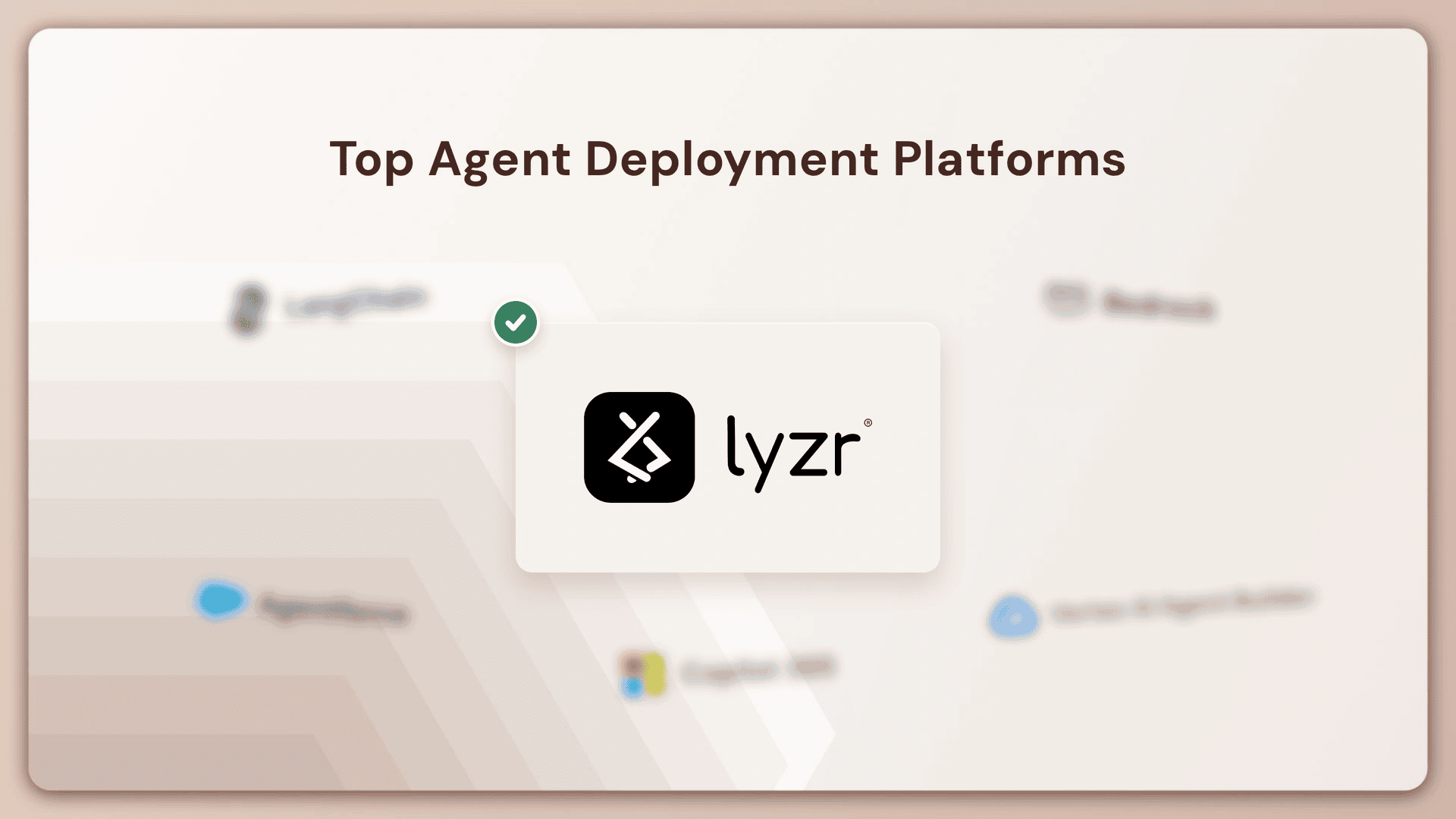
That’s the actual decision in front of you. Below is a working comparison of the platforms enterprises are choosing between in 2026, where each one genuinely fits, and where it quietly runs out of road.
Quick Overview: Six Platforms Compared
Everyone claims “enterprise-ready.” This is where the claims stop matching the architecture.
| Lyzr Control Plane | Salesforce Agentforce | Microsoft Copilot Studio + Agent 365 | Google Vertex AI Agent Builder | AWS Bedrock AgentCore | LangChain / LangGraph | |
| Governance model | Unified: registry, identity, eval & audit across every agent you own | Strongest inside Salesforce’s own data model | Governance and authoring are separate products, not one plane | Strong within GCP; governance stops at the GCP boundary | Guardrails apply to Bedrock-built agents, not your whole estate | Powerful framework; governance is on you to build |
| No vendor lock-in | ✅ | ❌ | ❌ | ❌ | ❌ | ⚠️ |
| VPC / on-prem ready | ✅ | ❌ | ❌ | ❌ | ❌ | ✅ |
| Per-agent identity | ✅ | ⚠️ | ⚠️ | ⚠️ | ⚠️ | ❌ |
| Evaluation gate before prod | ✅ | ⚠️ | ⚠️ | ✅ | ⚠️ | ⚠️ |
| Pricing | Scoped via architecture review; 48h to first governed deployment | Flex Credits; mid-market often $180K–$360K/yr | ~$30/user/mo + separate Agent 365 licensing | GCP consumption-based | AWS consumption-based | Free framework; paid LangSmith/Cloud tiers |
The Pattern in the Table
Agentforce, Copilot Studio, Vertex AI, and Bedrock are excellent at governing agents built inside their own ecosystem. None of them were built to govern the other three. And almost no enterprise runs on just one.
What this costs you:
- A LangChain agent your CRM platform can’t see, evaluate, or audit
- Three teams building the same agent because no shared registry exists
- Shared service credentials with no way to attribute who did what
- A compliance review that starts from “we’re not fully sure how many agents we have”
What a control plane fixes:
- One registry, regardless of which team or framework built the agent
- One evaluation gate every agent clears before a user sees it
- One identity and audit trail, attributable to a specific agent
- One place to answer “how many agents do we run, and who owns them”
Inside the Lyzr Control Plane: Five Control Points
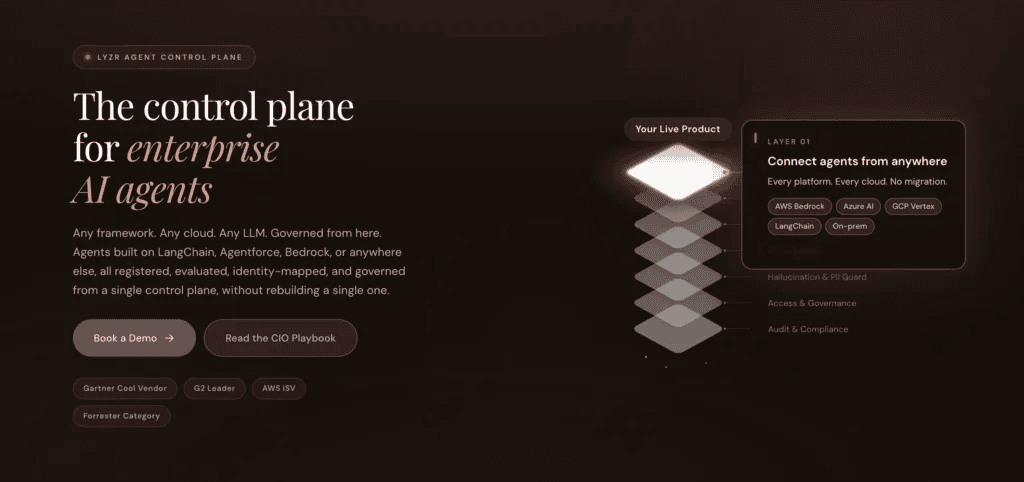
Every agent passes through all five — this is the actual mechanism, not a marketing summary.
01. Registry: a live source of truth for every agent you own No agent ships without appearing in it: owner, version, framework, and access scope, searchable by team or use case, so three teams stop building the same agent by accident.
02. Identity: every agent gets its own name, not a shared key A dedicated, scoped Okta identity per agent. Least-privilege by default, automatically revoked the moment an agent is retired or fails evaluation.
03. Evaluation: nothing reaches a user unevaluated Responsible-AI compliance, hallucination scoring, and correctness checks run automatically before any output ships. A failed check means automatic rollback, not a half-deployed agent quietly running in your cloud.
04. Staged promotion: no agent skips the line Non-prod → evaluation gate → named human approval → production. Every deployment is version-tagged, so rollback is one command instead of a fire drill.
05. Observability: every decision is reconstructable End-to-end traces on every run — reasoning, tools called, data touched — tied back to the registry and the identity that produced it. “The AI did it” stops being an answer anyone has to give.
Platform by Platform: Where Each One Genuinely Fits
No platform here is bad. Most are just scoped to a single ecosystem.
Lyzr Control Plane
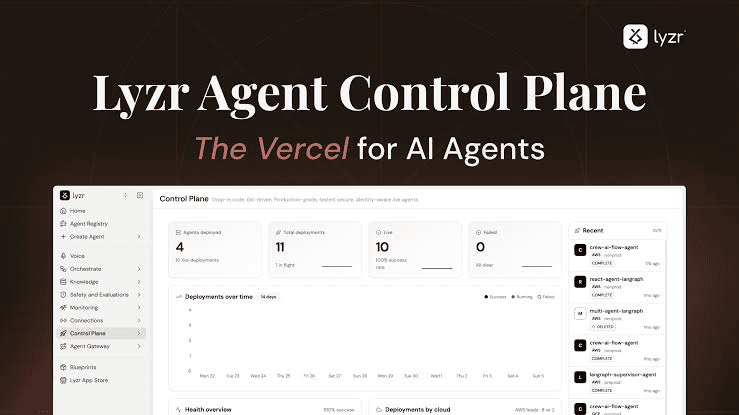
Best for: governed, multi-framework estates
Strong fit when:
- Agents already exist across LangChain, CrewAI, Agentforce, Bedrock, or custom code
- Security or compliance needs to sign off before anything reaches production
- Data residency rules mean nothing can leave your VPC
- You need one audit trail, not five, for the EU AI Act or SOC 2 review
Worth knowing:
- Enterprise-scoped: pricing is set through an architecture review, not a self-serve checkout
- Biggest value shows up once you have more than one framework or team shipping agents
Reference deployment in your environment within 4 weeks; first agent through the full governed pipeline in 48 hours.
Salesforce Agentforce
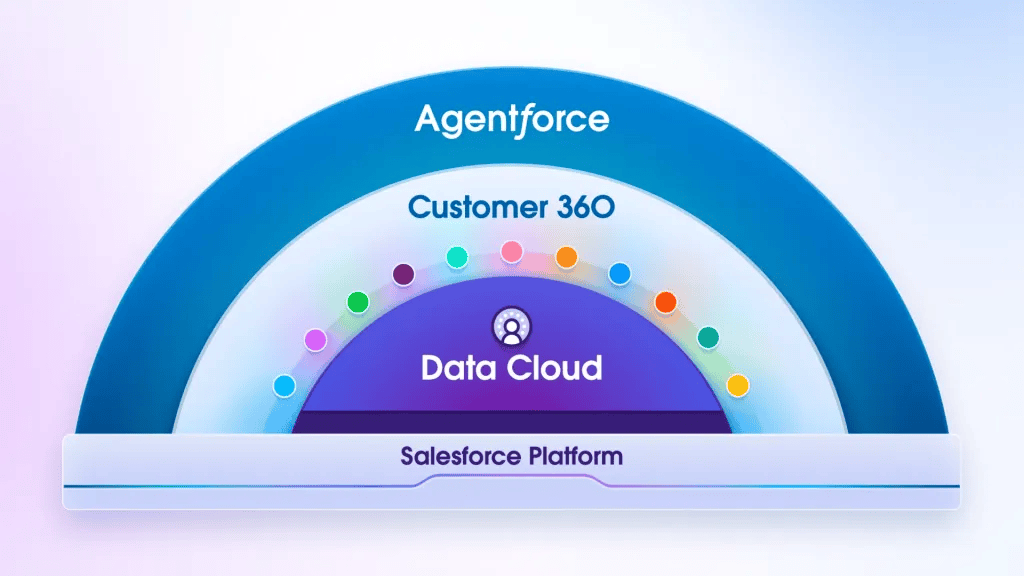
Best for: CRM-native teams
Strong fit when:
- Salesforce is already your system of record for customer data
- Use cases are sales, service, or marketing workflows inside the CRM
- Team wants agent building and CRM data in one workspace
Worth knowing:
- Governance and identity are strongest inside Salesforce — agents built elsewhere aren’t covered. For Enterprise Salesforce implementations that span multiple agent frameworks, this becomes the core trade-off.
- Costs scale with Flex Credit consumption; mid-market deployments commonly land $180K–$360K/year
If Salesforce is your only agent surface today, Agentforce is a reasonable default. If a second framework shows up next quarter, it won’t govern that one.
Microsoft Copilot Studio + Agent 365

Best for: Microsoft 365-first orgs
Strong fit when:
- Org already runs on Teams, Outlook, SharePoint, and Azure
- Low-code builder and Power Platform connectors match team skills
- Predictable per-seat licensing matters for budgeting
Worth knowing:
- Governance (Agent 365), authoring (Copilot Studio), and runtime are separate layers, not one product
- Value drops fast outside the Microsoft ecosystem
Fastest path to value for Microsoft shops. Not built to be the governance layer for agents your team ships on other stacks.
Google Vertex AI Agent Builder
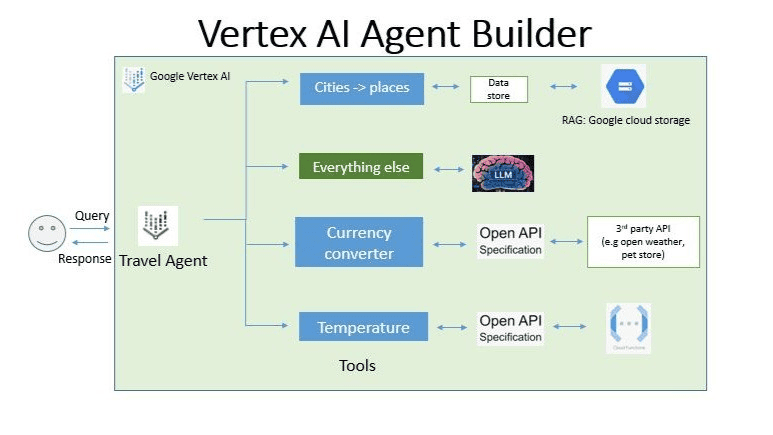
Best for: GCP-committed, data-heavy teams
Strong fit when:
- Enterprise is already standardized on GCP
- Use cases are multimodal — document, image, audio-heavy workflows
- Deep RAG pipelines against BigQuery or Workspace data are core to the use case
Worth knowing:
- Model Garden gives multi-model access, but governance stops at GCP’s boundary
- Agents built outside Vertex aren’t visible to it
A strong build environment for GCP-native agents. Doesn’t extend to whatever the rest of the org built elsewhere.
AWS Bedrock AgentCore
Best for: AWS-committed builders
Strong fit when:
- Team is deep in AWS and wants agents close to existing infrastructure
- Bedrock Guardrails already fit the risk model
- IAM is the org’s established access-control standard
Worth knowing:
- Guardrails and identity apply to agents built on Bedrock — not agents built anywhere else
- Consumption-based pricing needs modeling as agent volume grows
Solid for AWS-native builds. If Salesforce or LangChain agents also exist, Bedrock won’t see them.
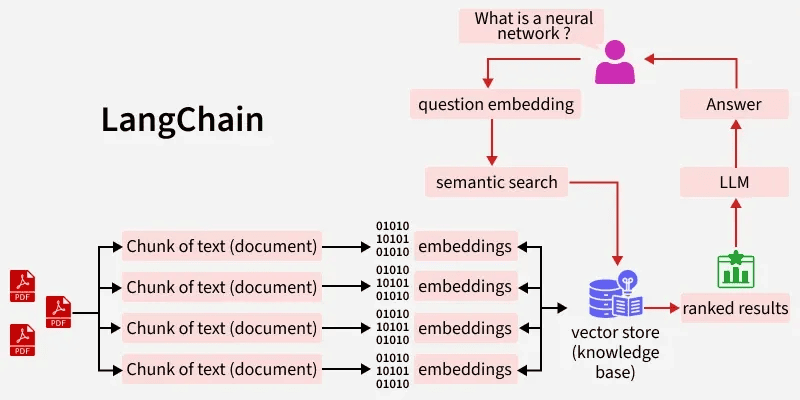
LangChain / LangGraph Platform
Best for: engineering-led teams
Strong fit when:
- Team wants full code-level control over agent architecture and behavior
- Engineers are comfortable building their own eval, tracing, and access layers
- Self-hosting or LangGraph Cloud both work for the deployment model
Worth knowing:
- No native per-agent identity or governance layer — that’s on your team to build
- LangSmith gives tracing and eval, but promotion, rollback, and audit are DIY
The most flexible option for builders. The flexibility is exactly what a control plane sits on top of once governance becomes non-negotiable.
Which Platform Actually Fits Your Situation?
Answer these honestly — the point is to save you a bad procurement cycle, not to flatter your current stack.
1. What does your current agent estate look like?
- All built inside one vendor ecosystem (Salesforce, Microsoft, Google, or AWS)
- Spread across multiple frameworks, clouds, or vendors
- Mostly prototypes and custom code, nothing at scale yet
2. What’s actually stopping agents from reaching production?
- Security or compliance won’t sign off without a real audit trail
- We need something live fast and don’t have engineering bandwidth to spare
- We don’t want to be stuck rebuilding everything if we switch tools later
3. What are your data residency requirements?
- Data cannot leave our VPC or on-prem environment, no exceptions
- Vendor-managed cloud is fine for our use case
How to read your answers:
- Mostly single-vendor, speed-focused, cloud is fine: Your native platform (Agentforce, Copilot Studio, Vertex, or Bedrock) is a reasonable starting point. Revisit the moment a second framework or team enters the picture — that’s exactly when a control plane starts paying for itself.
- Multiple frameworks, or governance/lock-in/data-residency is the blocker: This is the situation the Lyzr Control Plane exists to solve. One registry, one identity model, one audit trail across everything you already built, no rebuild required.
- Early-stage, mostly prototypes: Early is the cheapest time to put a control plane underneath everything you build next. Registering, evaluating, and governing agents from day one costs far less than retrofitting it after a production incident forces the question.
Not Pilots: Production
Accenture runs 200+ agents in production across deal sourcing, due diligence, and investment memo generation for its venture arm — all governed from one plane. 200+ agents in production, 15+ functions automated.
WTW brought customers back from generic chat tools to a fully governed, compliant retirement advisor that’s been live for more than a year. 1 year+ in production, 100% compliant.
An enterprise financial services company went from zero agents in production to 17, governed, in six months — the evaluation gate is what made it repeatable, not just fast. 17 agents in 6 months, from zero.
FAQ: Questions Worth Asking Any Vendor on This List
Do we have to rebuild our existing agents to switch? With Lyzr Control Plane, no — point it at your existing repository. It accepts agents built on LangGraph, CrewAI, Strands, Agentforce, or custom code, and you keep ownership of the code. Vendor-native platforms (Agentforce, Copilot Studio, Vertex, Bedrock) generally only govern agents built inside their own environment.
We already use two of these platforms. Can one control plane cover both? Yes — that’s the exact scenario a control plane is built for. Agents from different frameworks pass through the same registry, evaluation gate, and audit trail, each with its own identity, regardless of which vendor built them.
What happens when an agent fails evaluation? Everything provisioned in non-prod gets cleaned up automatically — compute, containers, IAM roles, identity entries. The failure is logged and routed back to the team that built it. No partial deployments left running quietly in your cloud.
How does any of this help with the EU AI Act? Regulators are asking for evidence, not policy documents. A control plane produces that evidence automatically — immutable deployment logs, evaluation results, approval chains, and step-level traces — audit-ready from the first deployment rather than retrofitted later.
How fast can we actually see this working? For Lyzr Control Plane, 48 hours from connecting a repository to a governed production deployment for the first agent — every agent after that follows the same repeatable path instead of a custom rebuild.
Bring Your Messiest Agent. We’ll Show You What Governing It Actually Looks Like.
30 minutes, on your stack, no slides. Bring the lowest-scoring control point and the one agent that’s stuck in staging.
Book an architecture review → Download the one-pager →
A working reference deployment in your environment within 4 weeks.
Book A Demo: Click Here
Join our Slack: Click Here
Link to our GitHub: Click Here