
Meta description: Explore the best platforms for agent-to-agent (A2A) communication, orchestration, interoperability, and multi-agent collaboration across enterprise AI systems.
Suggested slug: best-platforms-agent-to-agent-communication
Building one AI agent to handle a task is becoming easier. But what happens when that task requires five different agents working together?
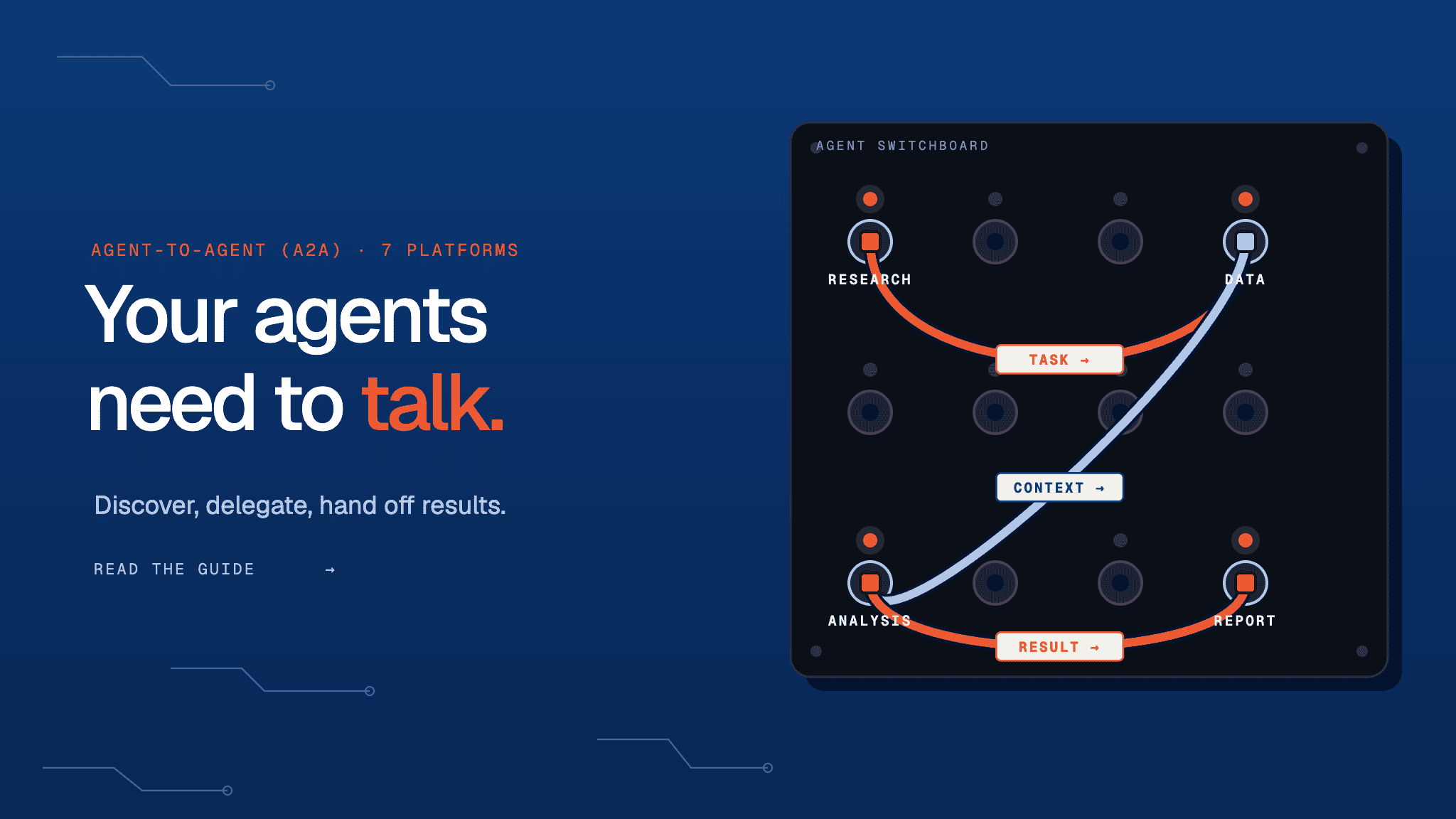
A research agent may need to gather information, a data agent may need to validate it, another agent may need to run an analysis, and a final agent may need to prepare a report. Each agent might be capable on its own, but without a reliable way to communicate, coordinate tasks, share context, and pass results, the entire workflow can break down.
This is the challenge behind agent-to-agent (A2A) communication.
As enterprises move toward multi-agent systems, they need platforms that allow AI agents built on different frameworks, models, and infrastructure to interact without tightly coupling every workflow. This is where A2A protocols, agent orchestration platforms, and interoperable runtimes become important.
In this guide, we’ll compare the best platforms for agent-to-agent communication, their strengths, and what to consider when building multi-agent systems.
What should you look for in an A2A communication platform?
Agent-to-agent communication is more than allowing agents to exchange messages. Agents need to discover each other’s capabilities, delegate tasks, exchange structured information, manage execution states, and handle failures.
A good platform should support:
- Agent interoperability: Agents built using different frameworks should be able to interact.
- Capability discovery: Agents should be able to identify which other agents can perform a task.
- Task delegation: Agents should assign work, receive results, and manage task states.
- Orchestration: Coordinate multi-agent workflows with dependencies, conditional logic, and execution sequences.
- Security and governance: Control access, monitor interactions, and manage agent permissions.
- Deployment flexibility: Support the environments where enterprise agents actually run.
A2A protocol vs. orchestration platform: A communication protocol establishes how agents interact, while an orchestration platform helps coordinate how agents work together. Some platforms support both, while others focus on one layer.
7 best platforms for agent-to-agent (A2A) communication
1. Lyzr Agent Studio – Best for enterprise multi-agent systems
Best for: Enterprises building, deploying, and orchestrating multi-agent workflows.
Lyzr Agent Studio enables organizations to build multi-agent systems where specialized agents collaborate across business processes. Teams can create agents, coordinate workflows, connect tools and knowledge sources, and deploy agents into enterprise environments.
Instead of treating agent communication as an isolated messaging layer, Lyzr supports the development and orchestration of collaborative agents within production workflows.
- Multi-agent workflow orchestration.
- Support for A2A and MCP-based integrations.
- Agents with specialized roles and task dependencies.
- Deployment flexibility, including self-hosted environments.
- Production lifecycle management and monitoring capabilities.
Why consider it: Lyzr is relevant for enterprises that want to move from standalone agents to coordinated, production-ready agent systems.
Explore Lyzr Agent Studio.
2. Google Agent Development Kit (ADK) – Best for structured multi-agent development
Best for: Developers building structured agent systems with Google’s ecosystem.
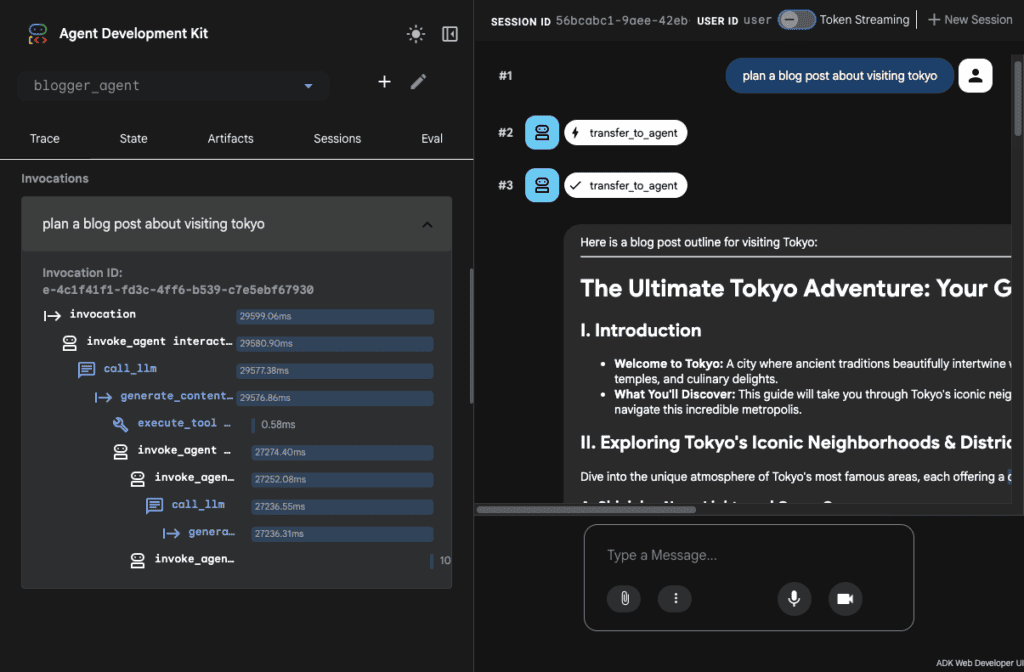
Google ADK provides a framework for building, testing, and orchestrating agents. It supports multi-agent architectures through specialized agents, workflow patterns, and agent delegation.
- Multi-agent composition.
- Sequential, parallel, and workflow-based execution.
- Tool integration and agent delegation.
- Testing and evaluation support.
- Integration with Google Cloud environments.
Why consider it: ADK is useful for developers who want to design multi-agent systems using a structured framework, particularly within Google’s ecosystem.
3. Microsoft Agent Framework – Best for Microsoft-centric agent development
Best for: Enterprises building agents around Microsoft technologies.
Microsoft Agent Framework provides developer abstractions for building agents and multi-agent workflows, including orchestration patterns and integration capabilities.
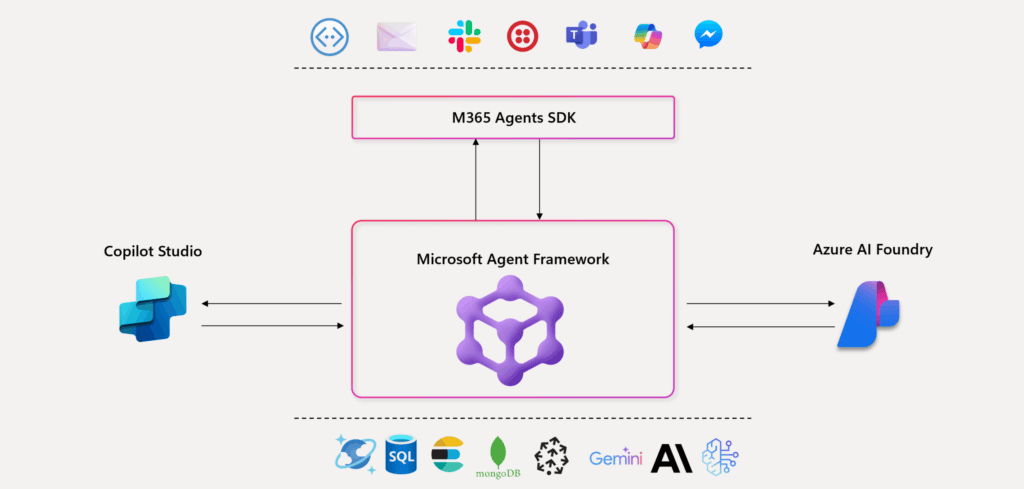
- Multi-agent orchestration.
- Workflow-based agent collaboration.
- Integration with Microsoft AI services and tools.
- Developer-focused abstractions for agent creation.
- Support for enterprise development environments.
Why consider it: Organizations already invested in Microsoft’s development and cloud infrastructure may find it easier to integrate agent collaboration into existing workflows.
4. LangGraph – Best for complex, stateful agent workflows

Best for: Developers requiring fine-grained control over agent execution.
LangGraph enables developers to create stateful agent workflows using graph-based execution. It is useful for coordinating agents that need to share state, branch, retry, pause, or resume workflows.
- Stateful graph-based orchestration.
- Multi-agent coordination.
- Conditional execution and branching.
- Checkpointing and workflow recovery.
- Human-in-the-loop workflow patterns.
Why consider it: LangGraph is particularly useful when multi-agent systems require explicit control over workflow states and execution paths.
5. CrewAI – Best for role-based agent collaboration
Best for: Teams building collaborative agents with defined responsibilities.
CrewAI organizes agents around roles, goals, tasks, and collaborative processes. Teams can define how agents interact and delegate work within a structured multi-agent workflow.
- Role-based agent design.
- Task delegation and collaboration.
- Sequential and hierarchical process patterns.
- Tool integrations.
- Workflow automation.
Why consider it: CrewAI is useful when teams want a clear way to define responsibilities and interactions among specialized agents.
6. AutoGen – Best for conversational multi-agent experimentation
Best for: Developers experimenting with collaborative agent conversations.
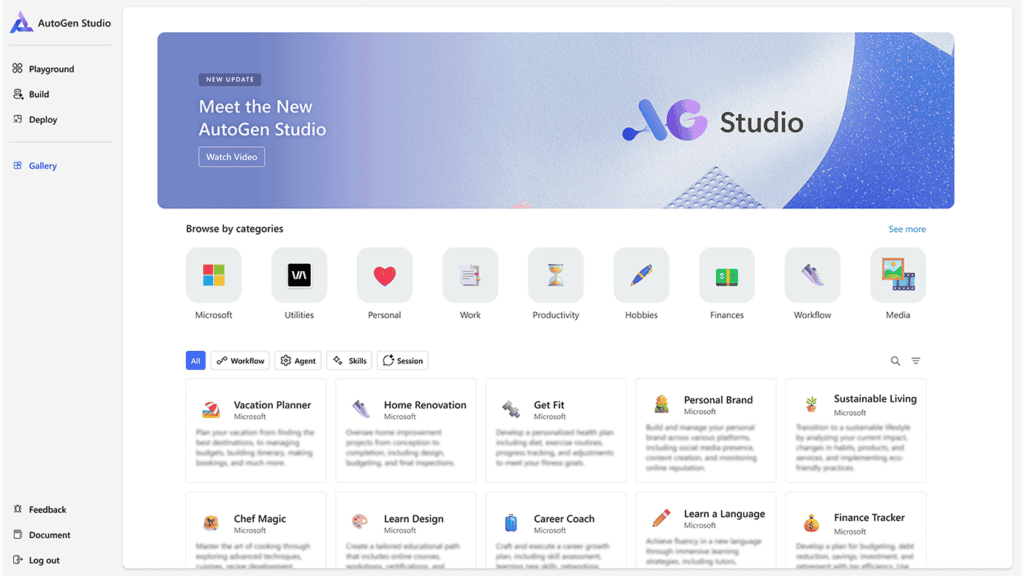
AutoGen has been used to build systems where multiple agents collaborate through conversations, task delegation, and specialized roles. Microsoft’s newer Agent Framework direction is also relevant when evaluating the evolving ecosystem.
- Conversational multi-agent patterns.
- Agent collaboration and delegation.
- Extensible agent integrations.
- Experimentation with agent interaction patterns.
- Developer-oriented implementation.
Why consider it: AutoGen is worth evaluating for existing projects and conversational multi-agent implementations, while new Microsoft-based development should also assess the Agent Framework.
7. A2A Protocol – Best for cross-framework agent interoperability
Best for: Enabling agents developed using different frameworks to communicate.
A2A (Agent-to-Agent) is an interoperability protocol designed to enable AI agents to communicate, collaborate, and delegate tasks across different implementations.
Unlike an agent development framework, A2A focuses on the interaction layer between agents, helping them exchange tasks and results without requiring access to each other’s internal implementation.
- Agent discovery through capability descriptions.
- Structured task and message exchange.
- Task lifecycle management.
- Interoperability between different agent implementations.
- Support for cross-platform collaboration.
Why consider it: A2A is relevant when enterprises want to connect agents built using different frameworks or deployed across different environments. It is a protocol rather than a standalone orchestration platform.
Best A2A communication platforms: Comparison matrix
| Platform | Multi-agent orchestration | Cross-framework communication | Workflow control | Best suited for |
|---|---|---|---|---|
| Lyzr Agent Studio | ✅ | ✅ | ✅ | Enterprise multi-agent systems |
| Google ADK | ✅ | ⚠️ | ✅ | Google ecosystem development |
| Microsoft Agent Framework | ✅ | ⚠️ | ✅ | Microsoft-centric environments |
| LangGraph | ✅ | ⚠️ | ✅ | Stateful, complex workflows |
| CrewAI | ✅ | ⚠️ | ✅ | Role-based agent collaboration |
| AutoGen | ✅ | ⚠️ | ✅ | Conversational agent systems |
| A2A Protocol | ⚠️ | ✅ | ⚠️ | Agent interoperability |
⚠️ indicates that cross-framework communication or orchestration may require additional integrations, implementations, or complementary infrastructure. A2A is a protocol, not a full agent orchestration platform.
How to choose the right A2A platform
The right choice depends on what you’re trying to accomplish with your multi-agent architecture.
| Your requirement | Platform to consider |
|---|---|
| Build and manage enterprise multi-agent workflows | Lyzr Agent Studio |
| Develop agents within Google’s ecosystem | Google ADK |
| Build agents using Microsoft technologies | Microsoft Agent Framework |
| Manage complex, stateful agent execution | LangGraph |
| Organize agents around roles and responsibilities | CrewAI |
| Experiment with conversational agent collaboration | AutoGen |
| Connect agents across frameworks and environments | A2A Protocol |
If your goal is simply to enable communication between two agents, a protocol may be enough. But if you’re building a multi-agent system that needs task delegation, execution control, retries, workflow dependencies, monitoring, and deployment, you’ll likely need an orchestration layer alongside communication protocols.
Where agent-to-agent communication is headed
The future of enterprise AI isn’t necessarily one agent doing everything. It’s specialized agents working together, exchanging information, delegating tasks, and coordinating actions across systems.
But communication alone doesn’t make a multi-agent system reliable. Agents need defined responsibilities, controlled access, execution boundaries, monitoring, and a way to manage their interactions in production.
Platforms that combine interoperability with orchestration and lifecycle management will become increasingly important as organizations move from individual AI agents to interconnected agent systems.
Frequently asked questions
What is agent-to-agent (A2A) communication?
A2A communication enables AI agents to exchange information, delegate tasks, share results, and collaborate with other agents without requiring every agent to operate within the same framework.
What is the difference between A2A and MCP?
A2A is designed for communication and collaboration between agents. MCP (Model Context Protocol) enables AI applications and agents to connect with external tools, data sources, and context. They address different layers and can complement each other.
Do AI agents need an A2A protocol to communicate?
Not necessarily. Agents can communicate through APIs, messaging systems, custom integrations, or shared workflows. A standardized protocol can make interoperability easier when agents are built using different frameworks or deployed across different environments.
Which platform is best for multi-agent orchestration?
The best platform depends on your requirements. Lyzr Agent Studio is suited to enterprise agent development and orchestration, LangGraph offers fine-grained workflow control, CrewAI supports role-based collaboration, and Google ADK and Microsoft Agent Framework provide structured developer frameworks.
Book A Demo: Click Here
Join our Slack: Click Here
Link to our GitHub: Click Here
Got a use case in mind?
8 weeks from use case to agents running in production.
Platform, people and FDEs, all in. Bring your environment. We'll co-build and stay until it's live.
Talk to UsFree resource
101 AI Agents Use Cases
100+ production-ready AI agent use cases across Marketing, Sales, HR, Banking, Insurance, Operations and a lot more
Download now